Uncovering China’s attacks on investigative journalism in the Philippines
The article centers anti-China framing while relying heavily on activist and NGO voices (CPJ, PCIJ) without substantive direct sourcing from Chinese officials beyond diplomatic statements characterized negatively. Language choices like 'wolf warrior diplomacy,' 'weaponizes,' and 'hybrid effect' carry strong critical valence. The article frames China's embassy response as coordinated harassment and institutional assault on journalism, but provides limited space for examining competing narratives about PCIJ funding sources or alternative interpretations of embassy statements.
Primary voices: NGO or civil society, media outlet, elected official, state or recognized government
- This article does not address the specific funding sources and donor lists of PCIJ or acknowledge potential editorial patterns that might warrant scrutiny from non-hostile actors.
- This article does not examine comparable U.S. or Western government pressure campaigns against foreign media outlets or NGOs in other regions.
- This article does not provide direct response or rebuttal from Chinese Embassy officials beyond the characterized statements attributed to Guo Wei.
- This article does not clarify the specific claims in PCIJ's October 2025 reporting or present counterarguments regarding accuracy of those claims.
This framing may shift if details emerge about coordination between embassy and online networks, or if competing investigations reveal PCIJ editorial patterns or funding influences.
Activist-sourcedAnti-interventionistCharged language
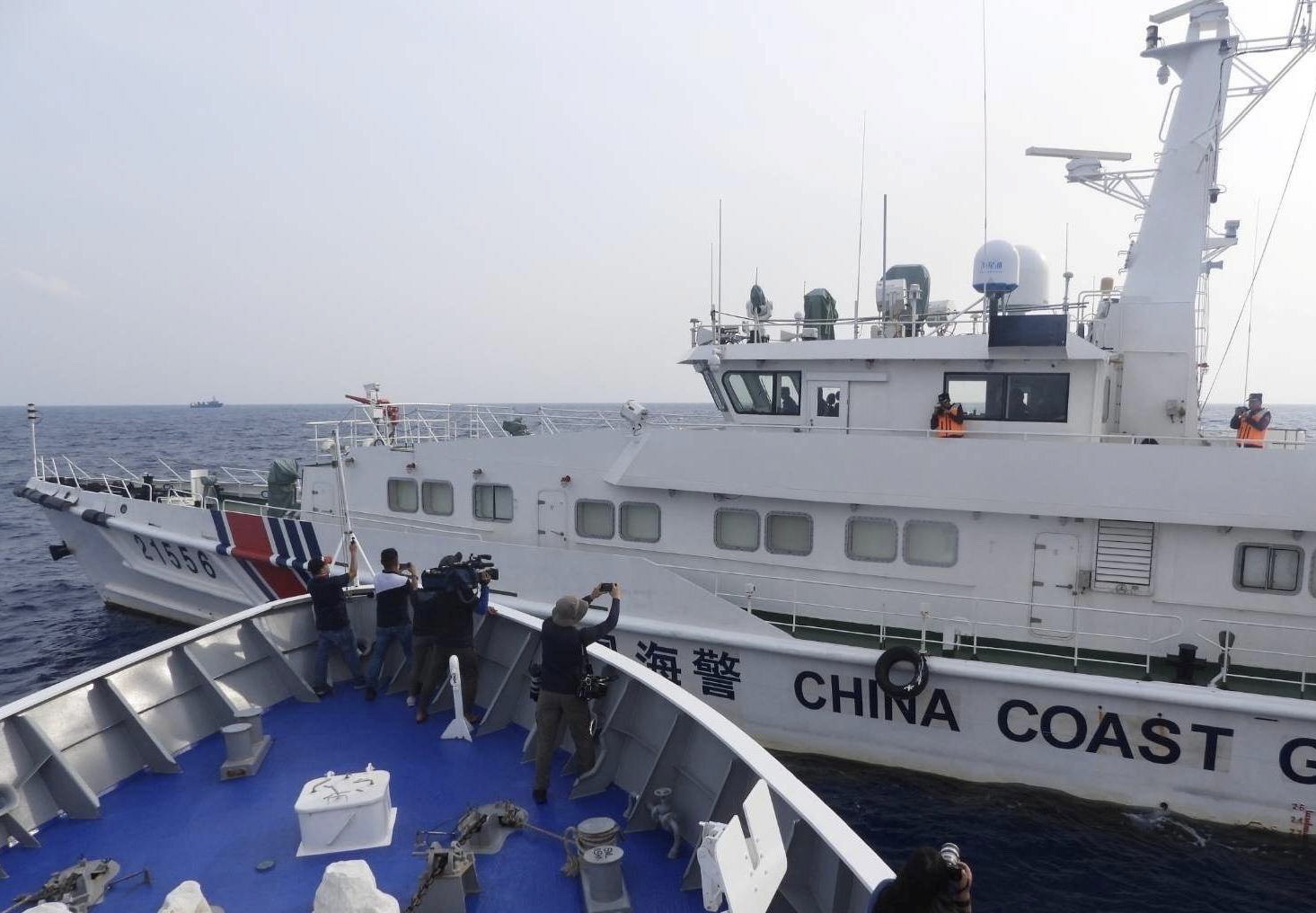
MANILA—Over the past two years, the Philippines has built one of the most visible transparency campaigns in the Indo-Pacific. The program has, for example, documented Chinese coast guard activity in the West Philippine Sea in real time and relied on independent journalists to verify and bring its findings to international attention.
The initiative has been a powerful tool in drawing attention to China’s suspicious activities in the region. But a recent episode shows the dangerous ways in which the Chinese Embassy in Manila is responding to such transparency.
Over the past few months, Chinese Embassy Deputy Spokesperson Guo Wei has issued several statements attacking the Philippine Center for Investigative Journalism (PCIJ), one of Southeast Asia’s most important investigative outlets. These attacks followed reporting by PCIJ contributor Regine Cabato on pro-China influence operations within Philippine media in October 2025. The Chinese Embassy’s pressure campaign reached such a pitch that, on March 9, the Committee to Protect Journalists (CPJ) urged the Chinese Embassy in Manila to stop.
Rather than respond to the CPJ’s call, Guo made a category-error argument that conflates funding source with editorial direction. If grant receipt from a government-linked funder were sufficient to compromise independence, the same logic would delegitimize the BBC, funded by a public license fee; Deutsche Welle, financed by the German federal government; NHK, funded through Japanese household fees; AFP, subsidized by the French state; and most serious Asian outlets covering China, including those Beijing cites approvingly when convenient. The relevant tests for any foreign-funded outlet are transparency of funding, editorial firewall, and track record. The PCIJ—founded in 1989, transparent about its donors, and the author of investigations into every Philippine administration regardless of geopolitical alignment—meets all three. The Chinese Embassy’s amplification network satisfies none of these criteria. Guo is not defending journalistic standards; he is selectively weaponizing standards he refuses to apply to his own side.
When PCIJ reposted the CPJ statement, Guo escalated his rhetoric, accusing the center of rallying “helpers that may share similar foreign funding sources to echo its anti-China narrative.” Within hours, Cabato became the target of sustained, coordinated online harassment that has persisted since. PCIJ responded directly, stating that “we are nobody’s tool.” It also noted that “the virality of the embassy’s message within a few hours attests to the coordinated nature of this online attack.”
What distinguishes this case is not the attack on a journalist itself. Chinese embassies are known for their so-called wolf warrior diplomacy and have engaged in similar confrontations before, for instance in France, Sweden, and Canada, where diplomatic smear campaigns have triggered protests and have since faded. What is different in the Philippines is the architecture of the assault: an official embassy statement activated an already primed online ecosystem of internet troll networks, influencers, and aligned accounts that quickly reproduced and scaled the message.
The result is a hybrid effect: whether or not explicit coordination exists, the outcome is functionally identical. Once the embassy identifies a target, the network falls into line. And what becomes increasingly obvious is that the real target is not an individual journalist who criticizes the Chinese government—it is the broader institutional foundation that sustains independent journalism.
Beijing weaponizes ambiguity
To put this approach into practice, the Chinese Embassy operates in a gray zone of diplomatic law. Embassies have the right to issue public statements and push back on reporting they consider inaccurate or biased. But given the new technologies and practices involved, the 1961 Vienna Convention on Diplomatic Relations is unclear and untested on coordinated harassment campaigns conducted through embassy social media and aligned online networks—a gap that Chinese representatives have sought to exploit. By keeping their operations just close enough to legitimate diplomatic communication, they can frame any host government response as an attack on diplomatic freedom itself.
The Philippine government’s options to counter this pattern of diplomatic overreach are limited. Expelling Chinese diplomats would be the most direct response—but also the most consequential. China has already signaled that it would not treat such a move in isolation and would respond asymmetrically: by applying economic pressure, withdrawing investment, and canceling direct flights. Moreover, important ongoing diplomatic initiatives—such as negotiations on a coast guard cooperation agreement between Beijing and Manila and a South China Sea Code of Conduct between members of the Association of Southeast Asian Nations (ASEAN) and China—might be derailed.
Manila has already lodged formal protests through its Department of Foreign Affairs, including “firm representations” made to China’s ambassador in Manila, Jing Quan, over the Chinese embassy’s escalating attacks. But Beijing has inverted the logic of the protest mechanism: by claiming the Vienna Convention authorizes the embassy’s conduct, it reframes any Philippine objection as a violation of diplomatic norms rather than a legitimate response to Chinese overreach. The protest channel is not ignored—it is turned back on the protesting state.
The last option—platform intervention—runs into a different ceiling: While the Philippines has had some success in exposing and shutting down China-linked troll networks, dealing with pro-China propaganda disseminated through verified diplomatic pages and accounts is a different matter entirely. That’s especially because the Philippine administration’s transparency campaign depends on the same open platforms—Facebook being one of them—that the Chinese embassy is now weaponizing. Beijing is not bypassing Philippine press freedom—it’s exploiting it.
Taken together, these constraints reveal the core principle of the Chinese operation: it is designed in such a way that the cost of a countermeasure exceeds the price that any rational government managing deep economic and security interdependence with Beijing is willing to pay.
Documentation as deterrence
The timing of the escalation is not incidental. As the Philippines assumes the ASEAN chairmanship and pushes for a legally binding South China Sea Code of Conduct, it is mounting a direct challenge to Beijing’s preference for deliberate ambiguity. At this moment, a self-censoring Philippine press becomes a strategic asset. If investigative journalism can be successfully recast as US-funded propaganda, then Manila’s credibility in documenting Chinese maritime activity and encroachment is weakened, further isolating the country at a time when Washington’s commitment to the region appears increasingly uncertain.
This approach also reinforces Beijing’s preferred narratives about the Philippines, strengthening figures such as Sara Duterte, who politically profits from casting the Marcos administration’s transparency efforts as provocation rather than documentation.
Still, the Philippines has more tools than it has applied so far. Domestically, it could accelerate passage of Senate bill 2951, the so-called Counter Foreign Interference Act, which defines coordinated electronic communications campaigns on behalf of foreign principals as a penalizable offense and would provide a legal basis for countering such operations. Moreover, the administration could systematically document and publish each instance of embassy-linked targeting, making the architecture of the Chinese campaign as visible as maritime incursions into the West Philippine Sea. In addition, the Philippines could coordinate bilateral statements with the United States, the European Union, and Australia condemning the targeting of PCIJ, adding to the documentary record at low cost to the signatories and signaling that the operation is being tracked beyond the Philippine bilateral relationship. Meanwhile, the CPJ and its partners should ensure sustained attention to the embassy’s pressure against Philippine journalism rather than sporadic responses, so the pattern of Chinese pressure campaigns remains visible to international audiences instead of fading after each incident.
What other options are available? The Philippines is unlikely to leverage its ASEAN chairmanship to launch a joint statement criticizing Chinese conduct. Cambodia and Laos would likely block such a move, and Vietnam and Malaysia have their own bilateral sensitivities. But Manila can still use its position to elevate the issue: for example, through working group sessions, via statements that reflect the chair’s own assessment, and in bilateral sideline meetings where like-minded members can coordinate without formal unanimity. A referral to the United Nations Special Rapporteur on freedom of expression would not create binding obligations, but it would add another documented record of Chinese actions to the international file.
As with the other instruments available to the Philippines, the goal would not be immediate enforcement but sustained visibility—raising the cost of the next operation, normalizing documentation as the response, and building the record that future coalitions will draw on.
Comments
No comments yet. Be the first.
Sign in to leave a comment.