Texas firm looking to explore oil in rural Georgia
The article presents factual information about a corporate drilling proposal with balanced treatment of company claims and environmental concerns. It centers government sources (Georgia EPA, USGS) and corporate statements from Pilot Exploration, while acknowledging water contamination risks without inflammatory language. The framing is straightforward and informative rather than advocacy-oriented, though it does note the proposal in the context of 'renewed calls for domestic energy production,' which carries subtle pro-energy resonance without explicit editorial bias.
Primary voices: corporate or institutional spokesperson, state or recognized government, academic or expert, media outlet
- This article does not address local community opposition or support for the project beyond general concern about water contamination.
- This article does not examine the environmental track record of Pilot Exploration or similar companies in other frontier basins.
- This article does not discuss potential economic benefits or job creation claims made by the company.
Framing may shift significantly depending on permit approval outcomes, environmental impact assessments, or community mobilization around the project.
Government-sourcedCorporate-sourcedNeutral language
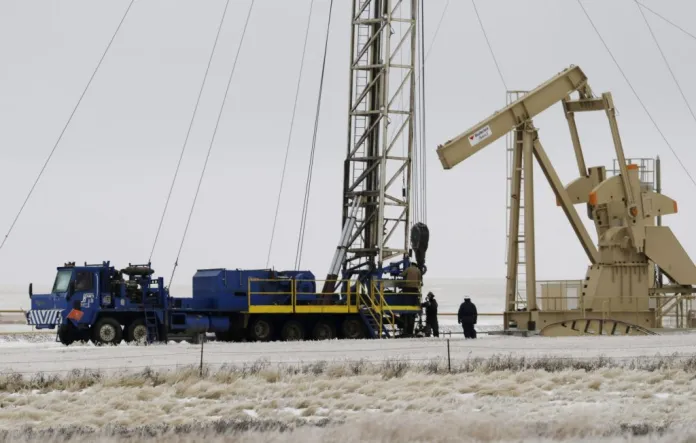
A Texas-based oil and gas company is seeking permission to drill exploratory wells in southwest Georgia, reviving the possibility of oil production in a state where commercial extraction has never taken hold.
Pilot Exploration, a Texas firm specializing in what the industry calls “frontier basins,” which are areas with little prior drilling activity, has applied to the Georgia Environmental Protection Division for permits to drill two exploratory wells in rural Quitman County near the Alabama border.
The proposed site would sit in one of Georgia’s least populated counties with fewer than 3,000 residents, according to the state’s Department of Community Affairs.
The project would mark the first oil and gas exploration wells in the state since 2014 if approved and could reopen a long-running debate over whether the Peach State holds untapped fossil fuel reserves beneath its red clay and farmland.
Pilot Exploration filed permit applications in March for wells it calls “Georgia On My Mind Wells #1 and #2,” with plans to drill roughly 8,000 feet, more than a mile and a half underground, to determine whether recoverable oil or gas deposits exist.
The company argues that earlier geological assessments are outdated and that advances in drilling and imaging technology could uncover resources missed in past surveys.
The planned drilling would pass through freshwater aquifers that supply drinking water to many rural communities in southwest Georgia, raising concerns about contamination or damage to underground water systems that farmers and residents depend on.
The Environmental Protection Division said there are safeguards in place to reduce those risks, including casing and well-construction requirements designed to protect aquifers during drilling, the Atlanta Journal-Constitution reported.
The effort comes as exploration remains politically and economically significant nationwide, particularly amid renewed calls for domestic energy production. But Georgia has rarely been considered part of the nation’s oil patch.
Federal and state geological assessments over the decades have suggested that portions of the broader Gulf Coast region may contain oil and natural gas resources, though few studies have closely examined and none have established whether any deposits would be commercially viable. A 2010 U.S. Geological Survey assessment found possible oil and gas resources beneath some Gulf States but offered limited conclusions about Georgia specifically.
Comments
No comments yet. Be the first.
Sign in to leave a comment.