Five ways the Iran war will forever alter the Middle East
The Iran war, currently in an extended but uncertain ceasefire, will leave a permanent mark on the Middle East. Historically, the region has been shock-prone, with each jolt leaving the area permanently altered and less stable. The 1948 establishment of Israel, Israel’s 1967 occupation of the West Bank and Gaza Strip, the 1979 Islamic Revolution in Iran, Saddam Hussein’s invasion of his neighbors (Iran in 1980 and Kuwait in 1990), and the 2003 US invasion of Iraq are only some of these shocks that left the region forever changed.
Likewise, the 2026 Iran war will alter the region in significant and subtle ways. Here are five dynamics to watch going forward.
1. Iran’s regime will be weaker and increasingly paranoid
The damage done to Iran in the combined US-Israeli offensive leaves the Tehran regime in place but severely weakened, more paranoid, and with less experienced leaders. What resources survive this war will initially be mobilized to protect the regime against internal threats. Tehran’s weakness, economically and militarily, after the war may trigger further popular demonstrations, although protestors may be understandably reluctant after the regime killed thousands of citizens to suppress widespread demonstrations last January. The regime will retain some of its tools of repression and will prioritize limiting opposition, as it has in the past, but it may lose its ability to fully control the entirety of its territory, opening the door to more active ethnic insurgencies.
On the regional and international fronts, the regime will, perhaps futilely, try to build some sort of strategic deterrence against another attack. Assuming Iran and the US don’t reach a deal to curb Iran’s nuclear program, the regime may consider the failure of its longstanding policy of sustaining only a threshold nuclear weapons capability. It’s not yet clear if Iran retains or can quickly recreate the enriched uranium and necessary facilities. But if it does, the postwar regime may see the benefit of a dash toward a demonstrated nuclear weapons capability, believing that a successful test could afford it protection that North Korea, for example, has achieved by declaring its capabilities.
2. The United States will remain in the region for some time
Although Washington, under different administrations, has expressed a desire to pull back from the Middle East, events of the past few years demonstrate the difficulty of this. The US-Israeli partnership grew closer as Washington continued resupplying Israel with military hardware during the Gaza war. US engagement to diminish that conflict and its planning for the future of Gaza, however ineffectual so far, further entrenched the United States’ role. The military partnership with Israel in the two Iran wars demonstrated yet another level of regional involvement.
But it goes beyond Israel. The United States will likely need to be involved in keeping the Strait of Hormuz fully open after the war—something it has not been able to accomplish thus far—although US President Donald Trump has attempted to lay the burden on Europe.
Gulf Cooperation Council (GCC) governments—Bahrain, Kuwait, Oman, Qatar, Saudi Arabia, and the United Arab Emirates—will also continue to want Washington’s support. After failing to prevent the offensive against Iran, GCC countries reportedly urged Washington not to end the war before eliminating Tehran’s military capability to attack them and to threaten oil shipping routes.
GCC countries will still prefer Washington as a security partner, despite anxiety about the United States’ commitment to their security—particularly after the US failed to prevent or retaliate for attacks against their territories going back to 2019. This is in part due to the fact that the region is clearly not ready for a region-wide integrated defense architecture, and only the United States can make progress in shepherding its partners toward that ultimate objective.
3. The US-Israel relationship will suffer
The unpopularity in the United States of the latest Iran war—combined with Washington’s inability to explain its rationale—has led to a facile narrative that Israel drew the United States into the war. As Americans suffer the economic consequences of this war, the conflict’s underlying reasons will continue to be debated.
Polls show Israel’s image already suffering in the United States due to its conduct of the Gaza war, and if Americans believe Israel dragged the United States into an unwanted war, that will only worsen. Calls for conditioning US military assistance on specific Israeli behavior; for holding Jerusalem accountable for any violations of human rights, the rules of war, and US laws; and for a review of any US strategic benefits from the bilateral relationship will gain further traction among politicians and the public.
4. Regional hostility toward Israel will grow
Prior to the start of the Iran war on February 28, Israel was already toxic to Arab publics, according to Arab Barometer polling in 2023-24, with majorities across the Arab world condemning Israel and describing the Gaza war as genocide, massacre, or ethnic cleansing. The devastation and humanitarian crisis in Gaza have made Arabs deeply skeptical of Israeli military offensives elsewhere. For many Arab observers, the war against Iran is viewed not as an isolated conflict, but as part of a broader Israeli hegemonic escalation that includes not only Iran, but also Gaza and the West Bank, Syria, Lebanon, and Qatar. The United States, perceived as Israel’s enabler, is almost equally unpopular among Arabs, likely leading to greater gaps between Arab publics and their governments, which continue to rely on the US.
In a recent Arab Opinion Index poll across the Arab world, Israel was selected by the largest number of respondents as the greatest threat to the region. While Arab publics also considered Iran a threat (6 percent), it was a distant third after Israel (44 percent) and the United States (21 percent).
The Arab Opinion Index shows that, by viewing Israel as their principal adversary, overwhelming majorities of Arabs are forcing a hold on diplomatic normalization; 87 percent of those surveyed oppose normalization with Israel, while only 6 percent support it. Half of the 6 percent made it contingent on the establishment of a Palestinian state. This further forestalls the US objective of enhanced regional transportation corridors and economic integration. Most Arab leaders remain unwilling to risk public backlash by seeking closer cooperation with Jerusalem.
5. The Gulf states will grow closer
The GCC has never fully lived up to its promise of an effective, coordinated economic and defense structure. But the successful attacks by Iran—in its bid to raise the cost of this war—should provoke a reckoning among the GCC states. Anchoring their respective defenses in bilateral relationships with the United States did not immunize them to attack—and in fact made them more of a target for attack-–since Iran targeted US military bases in GCC states along with energy and civilian infrastructure.
GCC states will see the need to enhance their security postures—while maintaining US support—and consider a closer level of defensive integration. Differences among the Guf states will likely prevent a NATO-like treaty that commits all six nations’ defensive resources if one of them is attacked; however, closer integration would help repel aggression more effectively and raise the cost for any future attacker. GCC states are also likely to consider whether an enhanced and more integrated security posture may require collaboration with other states (China, Pakistan, Russia, and others) as they continue to perceive US support as vacillating, and whether to pursue their own deterrent against weapons of mass destruction.
The way forward
Given the Middle East and North Africa region’s tendency to develop in unexpected and unpredictable ways, it is likely that the violence, breadth, and destruction of the Iran war will lead to unanticipated future challenges for US policymakers. Nonetheless, the dynamics described above will most likely dominate the postwar period.
If the United States and Israel are unable to translate their operational successes into strategic gains, as has been the norm for Israel’s recent conflicts, the perception that the war was fought for no long-term gain, largely a waste of blood and treasure, will amplify each of the dynamics predicted above.
Amir Asmar is a nonresident senior fellow at the Scowcroft Middle East Security Initiative in the Atlantic Council’s Middle East Programs. He is an adjunct professor of Middle East issues at the National Intelligence University. He was previously a senior executive and Middle East and terrorism analyst in the US Department of Defense.
Further reading
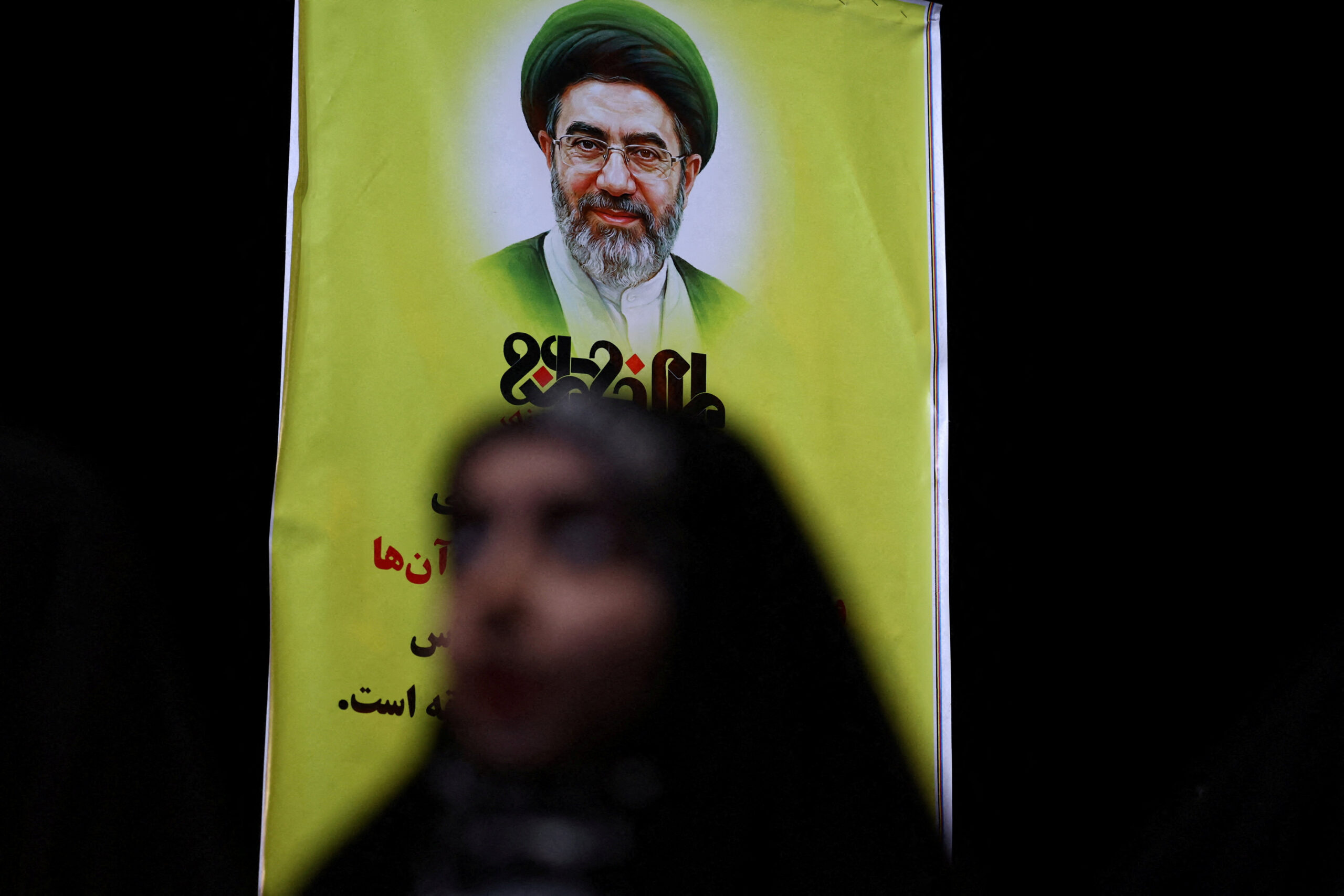
Image: A banner with a picture of Iran’s new Supreme Leader, Mojtaba Khamenei, during a rally in Tehran, Iran, May 6, 2026. Majid Asgaripour/WANA (West Asia News Agency) via REUTERS
Comments
No comments yet. Be the first.
Sign in to leave a comment.