Inside the historic crossroads facing the Fatah movement
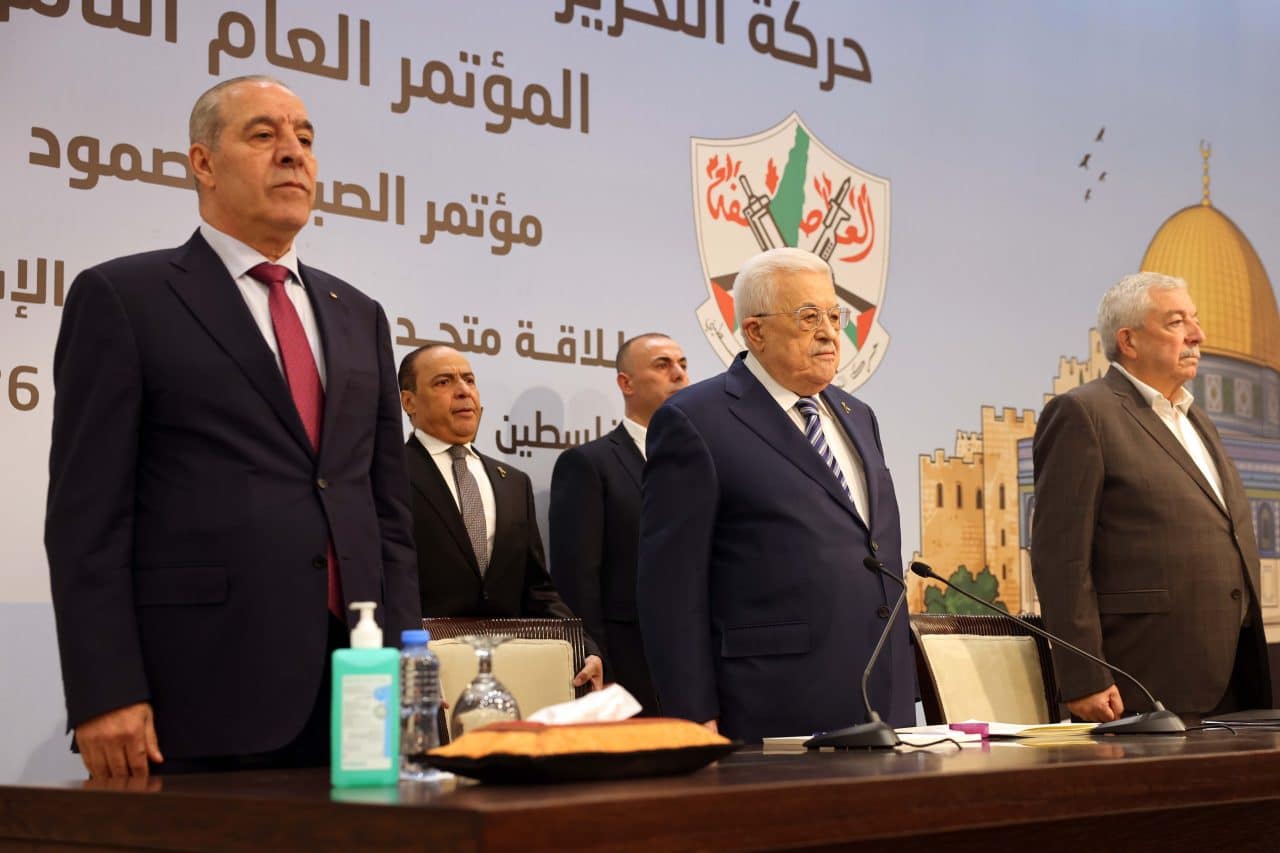
Today, the Palestinian National Liberation Movement, commonly known as Fatah, held its Eighth Congress in Ramallah. As the ruling faction in the Palestinian Authority (PA) and the dominant force within the Palestine Liberation Organization (PLO), the movement’s Congress convened during what PA President Mahmoud Abbas described at its opening session as a “pivotal” milestone in the Palestinian struggle.
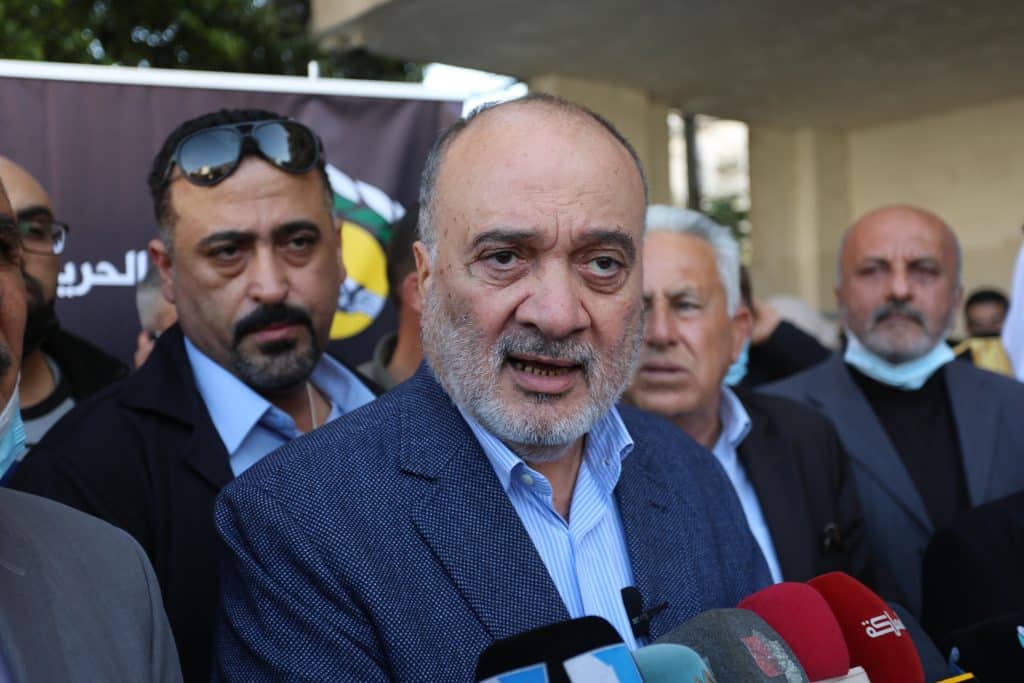
But Nasser al-Qudweh, a notable opposition figure within Fatah and a senior member of its Central Committee, previously said the gathering was not a real Congress at all.
“The process”, he explained, “had no properly ratified internal bylaws, no genuinely elected regional delegates, and no meaningful democratic procedure — only preparatory committees hand-picking participants, reproducing the same leadership through the appearance of a vote.”
In the lead-up to today’s meeting, Mondoweiss spoke with several Fatah insiders and political analysts to discuss its significance and the historic crossroads the movement faces. They described a state of internal disarray and power struggles, characterized more by conflicts over who controls the PA than by political or ideological tensions.
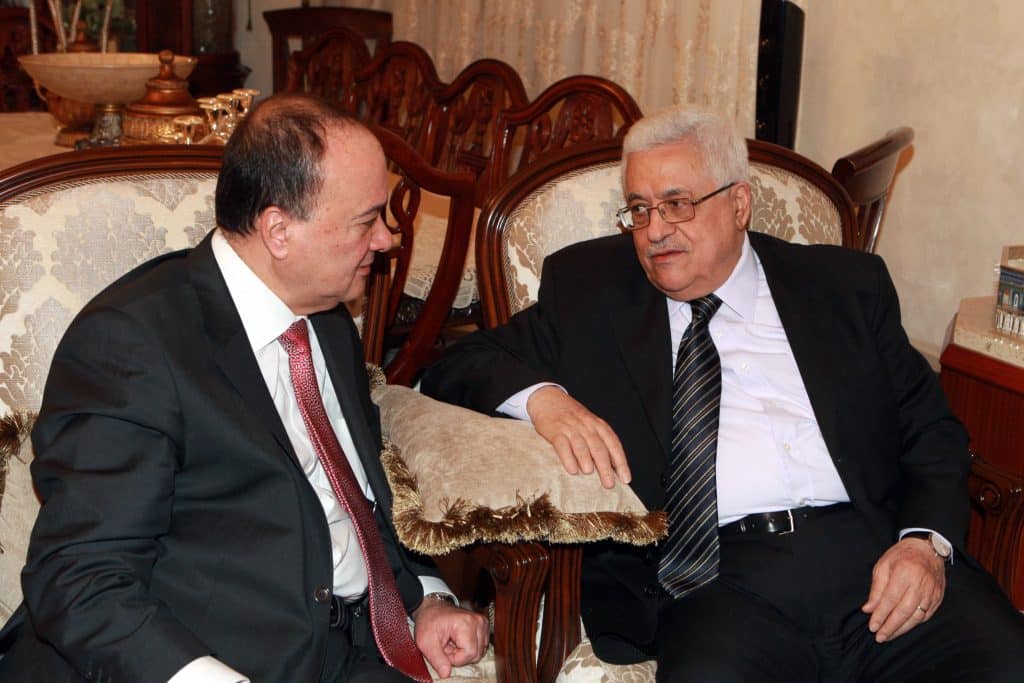
Al-Qudweh represents one of Fatah’s main reform currents, which has come into repeated conflict with its mainstream leadership, represented by President Abbas. He had spent years chairing a committee tasked with reforming Fatah’s internal bylaws following the Seventh Congress held between November and December of 2016, holding dozens of sessions and completing substantial amendments, but his escalating conflict with Abbas led to the work being quietly shelved. The committee was reassigned, the amendments were ignored, and he was expelled from the movement in 2021 after running on an independent electoral list as part of the short-lived PA legislative elections, which were ostensibly canceled after Israel didn’t confirm whether it would allow Palestinian Jerusalemites to vote, as had been permitted in the two previous election cycles in 1996 and 2006.
Al-Qudweh was readmitted in October 2025 following President Abbas’s move to “pardon” opposition figures such as Muhammad Dahlan, Sufian Abu Ziadah, and others. Now he is refusing to participate.
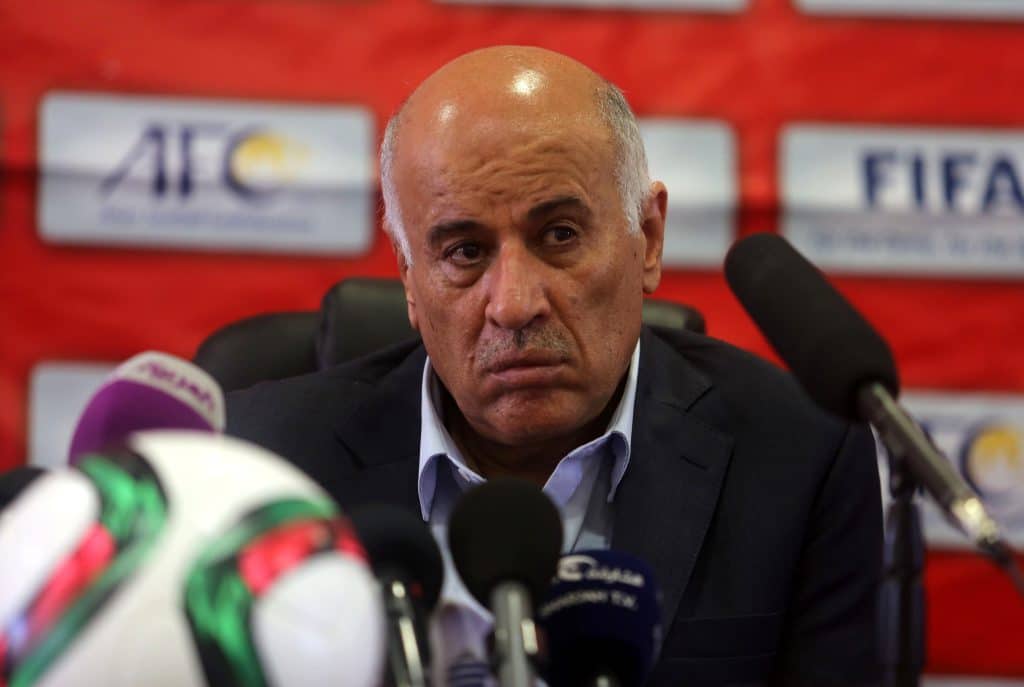
That trajectory — expulsion, readmission, boycott — captures something essential about where Fatah stands as it entered what its own Secretary-General, Jibril Rajoub, called “the most important Congress since the first.”
Prior to the Congress, Rajoub told Mondoweiss with unusual candor that the movement had suffered years of “organizational fatigue” due to successive heavy defeats. That admission, which Rajoub offered as a prelude to an argument for reviving the organization, doubles as an indictment of the present.
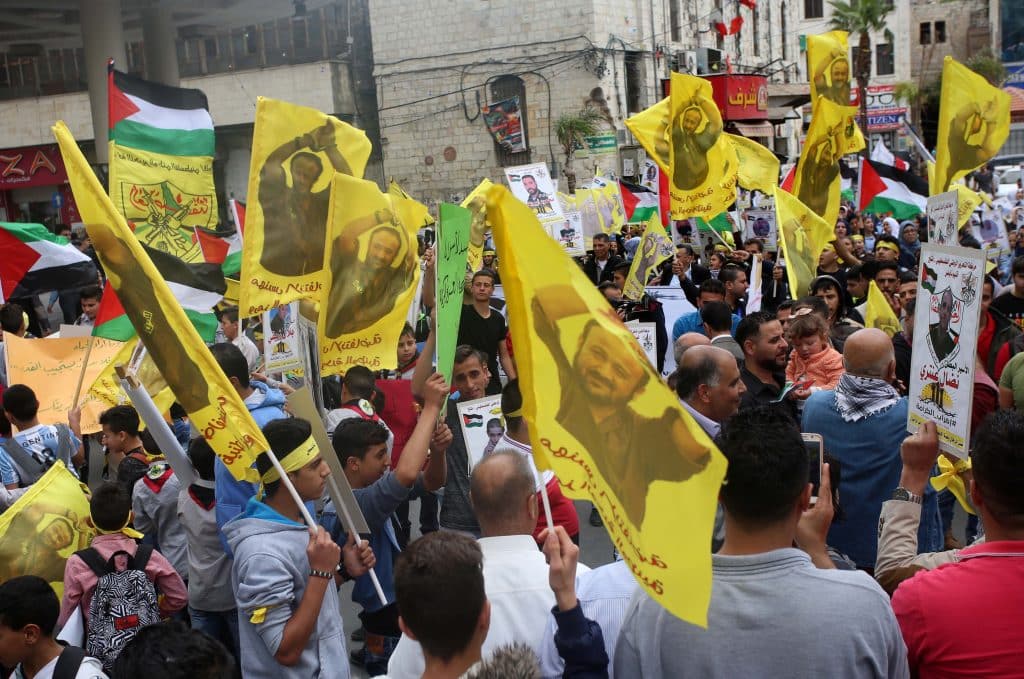
And hovering over the entire Congress proceedings is the figure Fatah cannot incorporate and cannot ignore: Marwan Barghouti, the movement’s most recognized face, still in Israeli detention, whose wife, Fadwa, told Mondoweiss that the family will not participate, and that what divided them from the current Palestinian leadership was not a passing disagreement but a “fundamental difference of approach.”
That condition — lethargy at the top, legitimacy withheld from below — plays out against a landscape that makes Fatah’s internal disarray something more than a factional squabble.
Rajoub’s confession of institutional laxity is not merely a rhetorical gesture toward humility; it is an acknowledgment of structural rot at precisely the moment when coherent Palestinian political agency is most needed.
Palestinian politics has become more widely fragmented to the point where the crisis is no longer merely internal: with the West Bank being progressively absorbed through de facto annexation, and Gaza suspended in a limbo that a tenuous ceasefire has done little to resolve, the space for Palestinian political agency is narrowing by the month.
U.S. President Donald Trump’s so-called Board of Peace is advancing reconstruction plans for Gaza with minimal Palestinian input, while foreign actors increasingly fill the vacuum left by Palestinian institutional collapse.
Into this landscape — one that demands a coherent, representative national politics — Fatah arrives at its Eighth Congress consumed by a struggle over committee seats. It remains, on paper, one of the two dominant forces in Palestinian political life. In practice, it is a movement whose own Secretary General feels compelled to confess its exhaustion before making the case for its indispensability.
The machinery of self-reproduction
The tension that surrounded the Eighth Congress in the lead-up to the meeting is not primarily about policy platforms or ideological direction. It is about who controls the process that determines who leads, and whether that process is capable of producing anything other than a reshuffled version of what already exists.
Political analyst Ibrahim Abrash, speaking from Gaza, put it plainly: the internal discussions have drifted away from existential questions and toward a struggle over organizational positions, seats on the Central Committee, the body which includes all Fatah leadership, and the Revolutionary Council, the body which includes all Palestinian factions.
The polarization between veteran leadership figures trying to preserve their positions and younger cadres seeking entry into decision-making centers has become impossible to ignore, Abrash told Mondoweiss. More damaging still, he argued, is the absence of any genuine debate about the movement’s political project: the future of popular resistance, relations with other Palestinian factions, and internal reconciliation within Fatah itself.
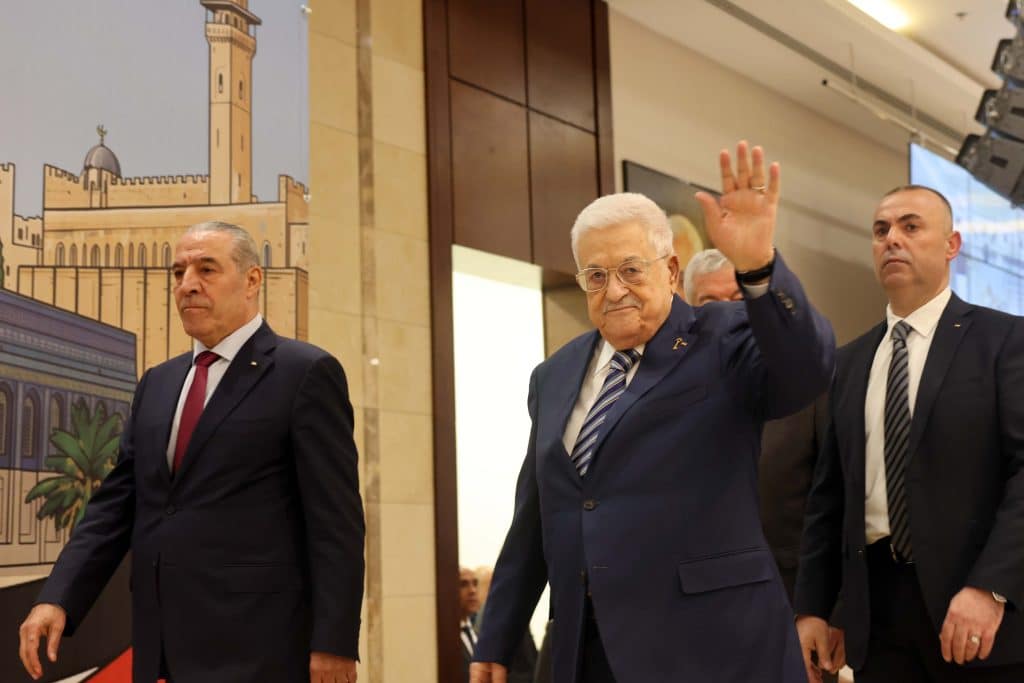
Abrash raised a pointed concern about the composition of the Congress: allegations that historic cadres were being sidelined while figures with no real organizational standing were being admitted, alongside an inflated presence of administrators and bureaucrats tied to influential figures within the leadership. When the people overseeing Congress preparations are themselves candidates for leadership, he noted, the integrity of the entire process becomes questionable.
Political scientist Ali al-Jarbawi was equally direct. What is unfolding inside Fatah, he said, is not a passing organizational dispute but the expression of a structural crisis accumulated over the years. The most likely outcome of the congress, he argued, is the reproduction of the existing order with cosmetic adjustments, the same balance of power, with new names attached.
Jarbawi went further on the question of what genuine renewal would require. Changing names on the Central Committee, he said, is not a political transformation. Rather, real change would mean reopening the question of how decisions are made and by whom, redefining Fatah’s role in light of the region’s changed landscape — not simply cycling different personalities through the same positions.
Without that, Jarbawi argued, any language about a new direction will remain hollow. “If the core of political decision-making and how it is produced is not touched,” he said, “there will be no real strategic transformation.”
On the question of Hamas, Jarbawi was precise about the stakes: Fatah’s relationship with Hamas will remain conditioned entirely by whoever the Congress produces. A leadership that continues the current approach will mean continued stagnation in the matter of national reconciliation between the two dominant Palestinian factions, not only because of programmatic differences, but because of the collapse of trust and the collision of interests on both sides.
But a leadership more genuinely representative of Fatah’s different currents might create conditions for rebuilding a national partnership, particularly given the regional and international pressures both movements now face.
“The arithmetic”, Jarbawi noted, “runs in both directions: internal weakness in Fatah directly reduces its negotiating capacity with Hamas, and the reverse is equally true.”
The figures the Congress cannot contain
Three names hang over these proceedings, each in a different way, illustrating the limits of what the Congress can resolve.
Nasser al-Qudweh’s reform current within Fatah’s formal structures has been systematically blocked. His boycott of the Congress is a statement that, as constituted, it cannot deliver the accountability it is supposed to.
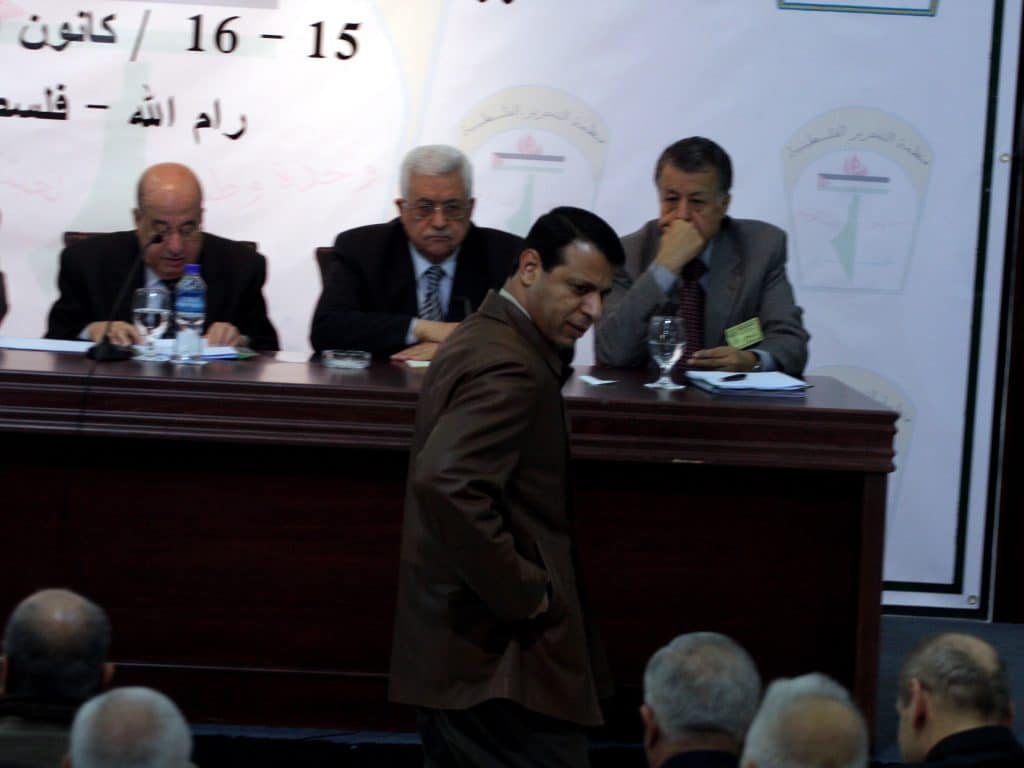
Muhammad Dahlan represents a harder rupture. Once one of Fatah’s most powerful operators heading the Preventive Security Service in Gaza through the 1990s and early 2000s — a period marked by extensive security crackdowns that generated lasting controversy — he fell into escalating conflict with Abbas following Hamas’s takeover of Gaza in 2007, and was formally expelled from Fatah in 2011.
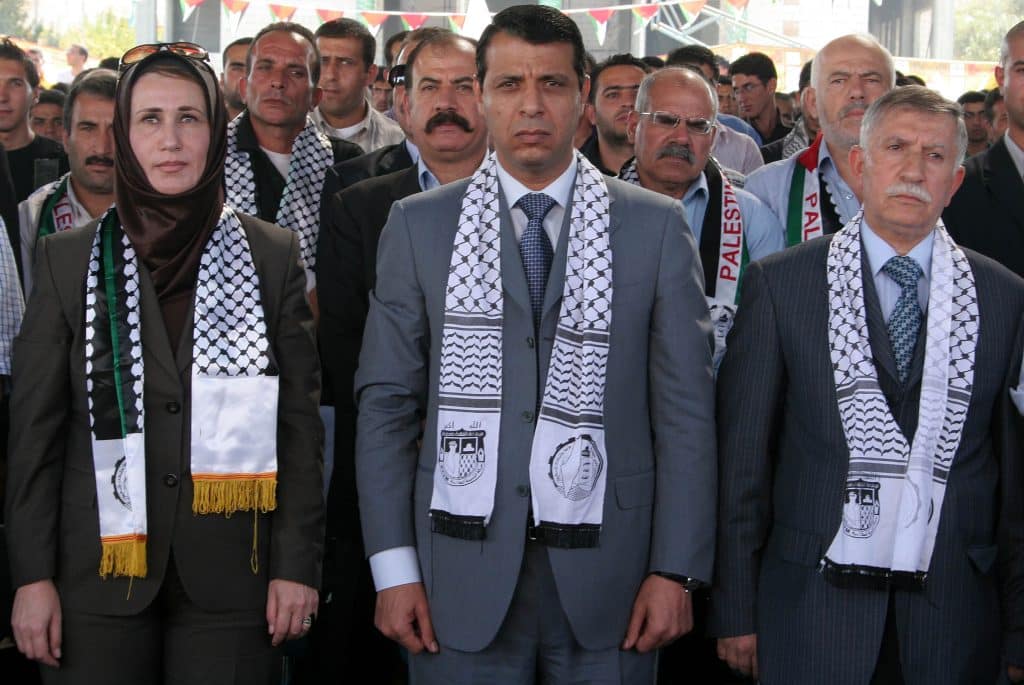
He has since built a substantial base in the United Arab Emirates, where he operates with the financial backing and political patronage of Abu Dhabi, positioning himself as an alternative Palestinian leadership figure with Gulf support and reported contacts with Israeli officials. He remains entirely outside Fatah’s institutional framework, with no sign of reintegration in the current period.
Al-Jarbawi noted that the differential treatment of Qudweh and Dahlan — one readmitted, one excluded — does not reflect consistent organizational principles, but shifting political calculations about which currents need to be contained and which can be safely ignored.
Then there is Marwan Barghouti, a central figure in both the First and Second Intifadas and one of Fatah’s most prominent leaders on the ground before his arrest by Israeli forces in 2002. He was subsequently convicted in an Israeli civilian court and sentenced to five life terms, a trial widely rejected by Palestinian and international human rights organizations as politically motivated.
He has since spent more than two decades in Israeli detention, during which some Western outlets have taken to calling him the “Palestinian Mandela,” a comparison that reflects both his symbolic standing and the aspirations projected onto him. His name surfaced prominently in prisoner exchange negotiations on the eve of the October 2025 ceasefire in Gaza, underscoring the extent of his stature beyond Fatah’s internal politics.
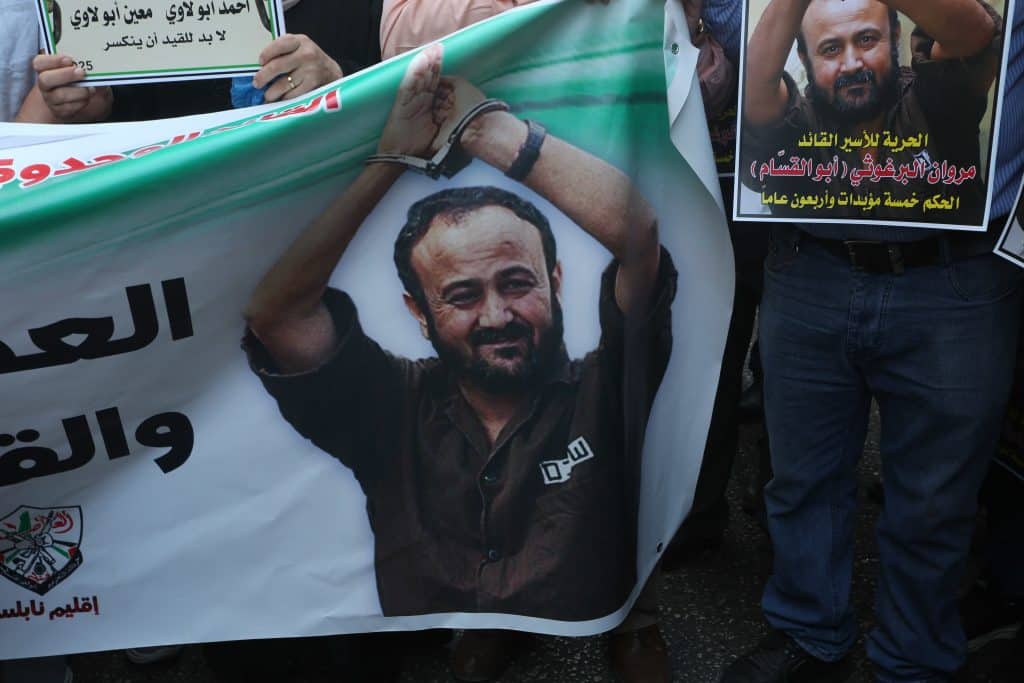
More recently, his detention conditions deteriorated sharply under Israeli National Security Minister Itamar Ben-Gvir, whose tenure brought reported abuses against prominent Palestinian prisoners.
His wife, Fadwa Barghouti, in a conversation that moved between anger and resignation, made clear that the family’s position is one of non-participation. She and her children did not attend meetings convened by Fatah leadership figures, and would not, she told Mondoweiss.
When asked about proposals to include Barghouti’s name as a representative of freed prisoners, she asked the obvious question. “Shouldn’t a leader of his stature be free among them rather than listed as an abstraction in a delegate roster?” she said.
“The issue today,” she said, “is one of approach, not passing disagreements. What is built on this approach will determine Fatah’s future and its role in the coming period.”
Barghouti’s popularity within Palestinian public opinion, broader and less contested than that of almost any figure inside Fatah’s formal structures, makes his continued absence a standing rebuke to the process. A congress that cannot incorporate the movement’s most recognized face is, by definition, not resolving its legitimacy problem.
What renewal would actually require
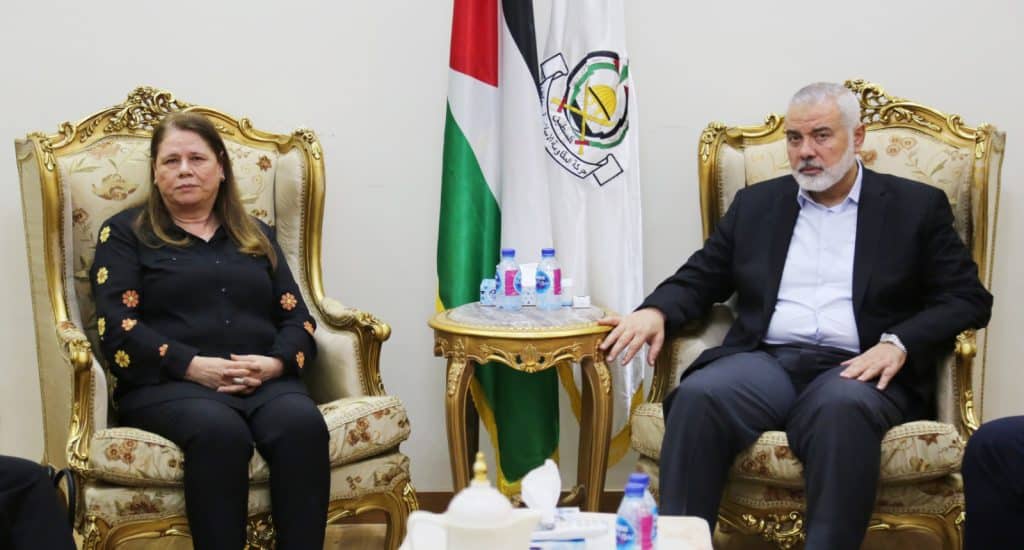
Jibril Rajoub, for his part, insists the congress is equal to the moment. Rajoub’s biography is in many ways Fatah’s biography condensed: arrested at seventeen, eleven years in Israeli prisons, deportation to Lebanon and then Tunisia (where he worked under the PLO’s late leader, Yasser Arafat), a return after Oslo to build the West Bank’s Preventive Security Service, expulsion by Israeli forces during Operation Defensive Shield in 2002, and a long repositioning since as a political and diplomatic figure, currently heading both the Palestinian Football Association and the Palestinian Olympic Committee while serving as one of Fatah’s most senior Central Committee members.
His election as Secretary-General ahead of the Eighth Congress placed him in the position of simultaneously defending the Congress’s legitimacy and, in less guarded moments, acknowledging the dysfunction it is meant to address.
He described the Congress as the platform from which Fatah would relaunch a broader national dialogue leading eventually to general elections encompassing all Palestinian factions. Any partnership with Hamas, he said, must rest on a clear political program, respect for what Fatah calls “international legitimacy” — a shorthand for the movement’s acceptance of UN Security Council Resolution 242, recognition of Israel, the two-state solution framework, and the renunciation of armed struggle — as the basis for negotiation and the principle of a single authority and single legitimate armed force.
He was also candid, in ways unusual for a senior Fatah figure, about the movement’s condition.
“Fatah”, he acknowledged, has suffered years of organizational fatigue and what he called “slackening” or organizational laxity — the result of the accumulated weight of long experience and heavy defeats.
But he insisted that “Fatah remains the political framework best placed to represent Palestinian national aspirations, not as a temporary authority or a passing organization, but as a national liberation movement carrying a comprehensive political project”.
The Congress, in Rajoub’s framing, would be demanding: it would hold accountable those who had exploited their positions or assumed their leadership was permanent, and ballot boxes alone would determine what came next.
The framing of accountability through elections, renewal without rupture, and building on the legacy of Fatah’s founding figures (while opening space for new leadership) is, in Rajoub’s account, the official story of what the Eighth Congress is meant to be.
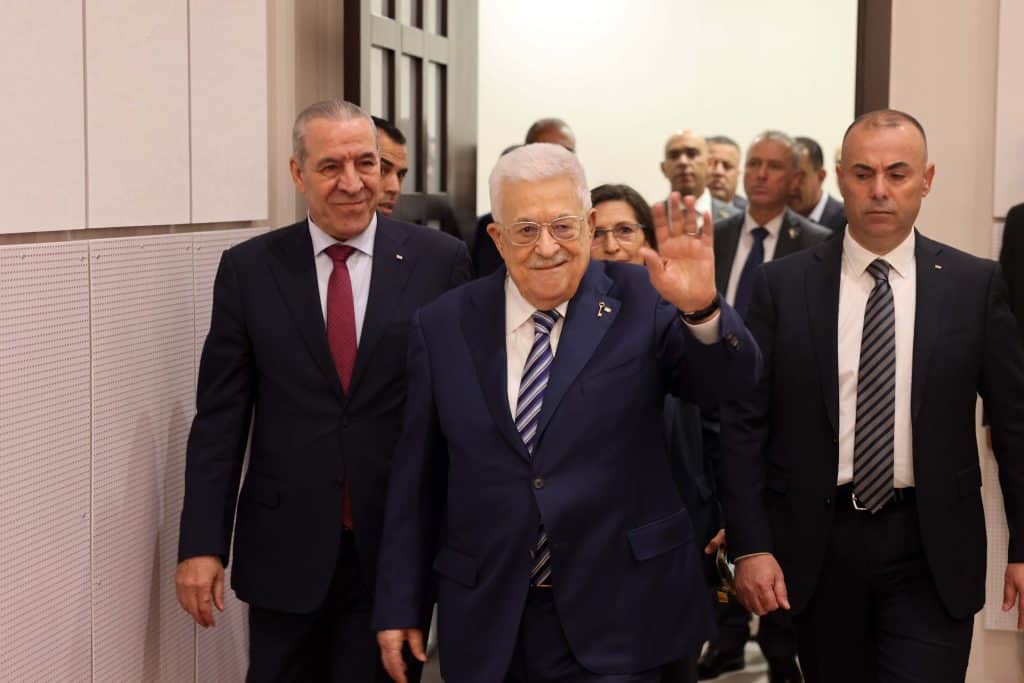
Jarbawi’s verdict on that story is brief: Fatah’s future depends on its capacity to transform itself from a traditional historic movement into a modern political framework capable of absorbing “plurality.” If it continues managing internal disagreements through exclusion, Jarbawi said, it will gradually lose its leading role in the Palestinian political system. If it achieves genuine self-examination, it might recover its position as a unifying national umbrella.
“The Eighth Congress is an opportunity,” he added, “but it is also a test — either the beginning of reconstruction, or confirmation that the crisis continues.”
Abrash’s warning remained the starkest: a Congress that proceeds on its current trajectory risks producing not unity but deeper fracture, and a structure that carries Fatah’s name while steadily moving away from its historical identity as the leading Palestinian national liberation movement. The question none of its organizers have publicly answered is whether a process designed to reproduce existing power can deliver the accountability that the movement’s own most credible voices are demanding.
Comments
No comments yet. Be the first.
Sign in to leave a comment.