DOJ issues rare subpoenas to Wall Street Journal over alleged leaking of classified material
The article centers government and corporate institutional voices (DOJ, Dow Jones/WSJ spokesperson) with roughly equal weight, but frames the Trump administration's enforcement actions as newsworthy escalation while presenting the DOJ's national security rationale without deep scrutiny. Word choices like 'escalating a feud' and 'crackdown' carry negative valence toward government action, yet the article also catalogs multiple leak investigations across outlets without editorial skepticism about prosecutorial scope or First Amendment implications.
Primary voices: state or recognized government, corporate or institutional spokesperson, media outlet
- This article does not address precedent for DOJ subpoenas of reporters under previous administrations or how current practice compares to historical norms
- This article does not examine the First Amendment implications or protections for journalists' sources under the Espionage Act
- This article does not present voices from press freedom advocates, civil liberties organizations, or legal scholars on the chilling effect of these prosecutions
- This article does not clarify the distinction between leaking classified material (potentially criminal) and journalists' protected newsgathering and publication rights
Framing may shift if courts rule on First Amendment defenses, if additional leak prosecutions succeed or fail, or if future administrations adopt different leak prosecution policies.
Government-sourcedEstablishment framingCharged language
The Justice Department issued subpoenas to the Wall Street Journal, escalating a feud between the Trump administration and the media over alleged leaks of classified information.
The subpoenas were issued in early March and relate to the outlet’s reporting in February about the Pentagon’s alleged concerns about the risks of the Iran war, the Wall Street Journal said on Monday. The DOJ requested the records of reporters involved as it investigates allegations that they leaked sensitive data endangering national security. The move sparked backlash from the outlet.
“The government’s subpoenas to The Wall Street Journal and our reporters represent an attack on constitutionally protected newsgathering,” a Dow Jones spokesperson told the Washington Examiner. “We will vigorously oppose this effort to stifle and intimidate essential reporting.” Dow Jones & Company owns the Wall Street Journal.
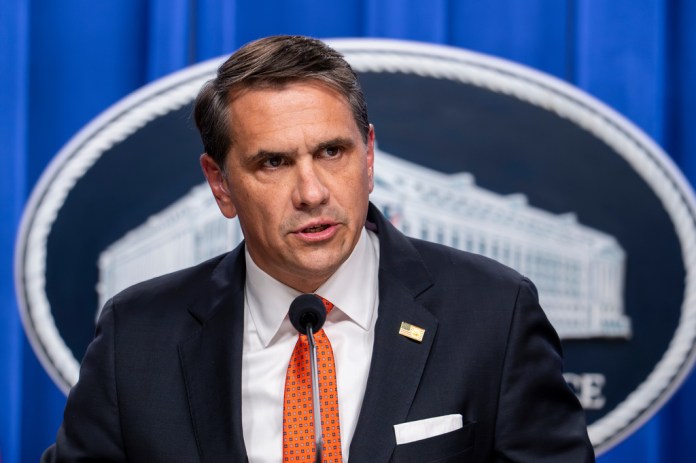
The DOJ argued the subpoenas are not targeting reporters, but rather the sharing of allegedly classified material that jeopardizes national security and the safety of U.S. soldiers.
“In all circumstances, the Department of Justice follows the facts and applies the law to identify those committing crimes against the United States,” a DOJ spokesperson told the Washington Examiner.
The development comes as part of the Trump administration’s crackdown on media outlets and journalists it believes are illegally sharing or leaking classified information. In addition, Washington has vigorously sought to target individuals, including lawmakers, believed to be leaking information to the press.
In one instance, the DOJ has opened an inquiry into allegations that a Pentagon contractor illegally retained classified documents and leaked them to Washington Post reporter Hannah Natanson, who is accused of using the data to write “at least five articles that contained classified information.” The FBI has sought to review Natanson’s two phones, two laptops, a recorder, a portable hard drive, and a Garmin watch as part of the government’s inquiry into the pair.
In another case, a former soldier and employee at Fort Bragg was recently arrested and charged with leaking classified information about Delta Force to journalist Seth Harp, who published some of the information in his book, The Fort Bragg Cartel: Drug Trafficking and Murder in the Special Forces.
The Trump administration has brought a number of lawsuits against media outlets it believes have distorted facts or published classified information.
President Donald Trump filed a libel lawsuit against the Wall Street Journal last July, alleging it misrepresented his relationship with convicted sex offender Jeffrey Epstein. Last fall, the president brought a $15 billion defamation lawsuit against the New York Times, alleging that the publication maliciously crafted false reporting in the lead-up to the 2024 presidential election designed to undermine his campaign and cause him “reputational and economic harm.”
In December 2025, Trump filed a $10 billion lawsuit against the BBC after the outlet faced backlash for selectively editing the president’s Jan. 6, 2021, speech. The lawsuit triggered the resignations of two of the BBC’s top executives.
Comments
No comments yet. Be the first.
Sign in to leave a comment.