James Comer targets federal payouts amid concerns over taxpayer-funded employee claims
The article centers Republican oversight criticism of Biden-era federal settlement practices, using language like 'sue-and-settle culture,' 'opaque,' 'weak or frivolous claims,' and 'shielding misconduct' that frames settlements negatively without substantive counterargument. The sourcing is heavily weighted toward Comer's letter and his framing of the issue; no federal employee advocates, union representatives, or OPM officials are quoted to defend settlement practices or provide context. The data presented (attorney fees, settlement amounts vs.
Primary voices: elected official, state or recognized government
- This article does not address reasons why agencies might prefer settlements (cost certainty, speed, employee retention, management burden).
- This article does not include responses from labor unions, federal employee representatives, or the Office of Personnel Management defending settlement practices.
- This article does not contextualize whether settlement rates are typical across public and private sectors or explain comparative efficiency metrics.
- This article does not address whether MSPB win rates reflect selection bias (agencies pursue winnable cases to formal decision).
Framing may shift if OPM responds with data contradicting Comer's characterization or if Democratic oversight members issue counterarguments.
Government-sourcedEstablishment framingCharged language
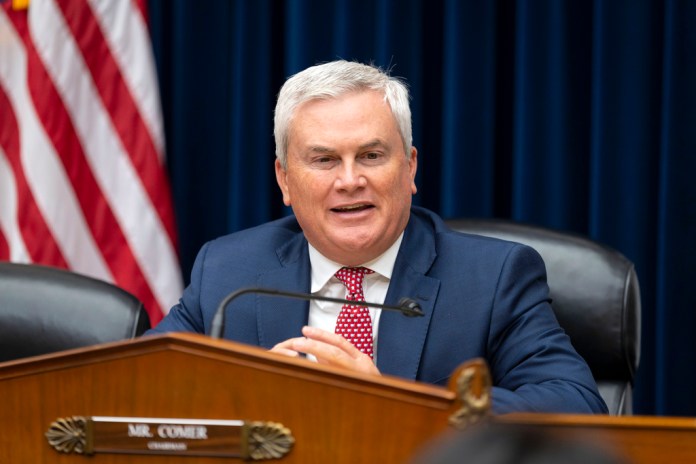
EXCLUSIVE — House Oversight and Government Reform Committee Chairman James Comer (R-KY) is demanding a sweeping review of taxpayer-funded settlement payouts to federal employees, arguing that agencies may be quietly paying out millions of dollars to resolve workplace disputes they could otherwise win in court.
In a letter obtained by the Washington Examiner sent Monday to Office of Personnel Management Director Scott Kupor, Comer raised concerns that a federal “sue-and-settle” culture had ballooned under the Biden administration, creating incentives for employees to file weak or frivolous claims while discouraging managers from disciplining workers.
“Congress cannot exercise meaningful oversight of the federal workforce when a supermajority of disputes are resolved through opaque, non-public agreements,” Comer wrote.
The letter asks the OPM and several federal adjudicatory bodies to turn over extensive records related to settlements, mediation programs, attorney fee payouts, and internal performance metrics tied to case resolution.
Comer pointed to Equal Employment Opportunity Commission data showing the federal government secured more than $202 million in taxpayer-funded payouts to federal workers through mediation and settlements in fiscal 2023, compared to roughly $22.6 million through litigation judgments.
Comer also cited data showing attorney fee payouts in Merit Systems Protection Board “sue-and-settle” cases climbed to nearly $11 million during the Biden administration, compared to about $3.6 million during President Donald Trump’s first term.
The letter argued that agencies frequently settle cases despite a strong chance they would prevail if disputes proceeded to a formal ruling. Comer noted that in MSPB adverse action cases that reach a decision, agencies win more than 80% of the time.
The oversight committee chairman suggested that internal incentives may be driving agencies and adjudicators toward rapid settlements instead of formal decisions on the merits. Comer warned that performance metrics emphasizing quick case closures could encourage settlements that increase taxpayer costs while shielding misconduct and personnel disputes from public scrutiny.
The letter also highlighted a need to reexamine certain nonmonetary settlement agreements, which can still involve “substantial operational costs,” such as forcing agencies to restore prior working conditions, rescind disciplinary actions, or negotiate with unions before implementing operational changes.
“These prospective obligations can effectively expand the scope of collective bargaining beyond what the Federal Service Labor-Management Relations Statute authorizes, and may constrain agency management rights … without going through the formal adjudicatory process that would subject such expansions to appellate review,” Comer wrote.
Comer further argued that the settlement-heavy system has contributed to a culture in which federal managers are reluctant to discipline underperforming employees. The letter cited a MSPB survey finding that roughly 40% of supervisors believed they could remove employees for serious misconduct, while just 25% felt confident they could terminate workers for poor performance.
The chairman requested records from the OPM, the MSPB, the EEOC, the Federal Labor Relations Authority, and the Office of Special Counsel covering Jan. 1, 2020, through the present.
Among the requested materials are settlement templates, nondisclosure agreements, internal communications discussing fiscal impacts, and documents showing whether settlement rates are considered in performance evaluations for administrative judges or enforcement personnel.
Comer gave agencies until May 25 to comply.
Comments
No comments yet. Be the first.
Sign in to leave a comment.