Trump Admin Plans More Drug War, AI Surveillance, Wastewater Testing
The article centers a single critical expert voice (Dr. Herzberg) whose charged characterizations—'toddler,' 'cowboy,' 'visiting violence'—frame administration policy as reckless and immoral rather than examining the strategy's stated rationale or empirical debates. Language choices ('Department of War,' 'fear-mongering,' 'bizarre') editorialized rather than descriptive; omission of administration or law enforcement defense of kinetic operations; emphasis on harm-reduction framing as pragmatic baseline suggests the reporter's normative stance on drug policy.
Primary voices: academic or expert, state or recognized government (quoted policy, not interviewed)
- This article does not address whether any boats targeted contained drug shipments or how intelligence assessments are conducted.
- This article does not present the administration's rationale for kinetic operations or cite enforcement officials defending the strategy.
- This article does not include experts who support drug interdiction or supply-chain disruption approaches.
- This article does not examine data or studies on the effectiveness of faith-based recovery programs versus medication-assisted treatment.
Framing may shift if subsequent reporting reveals drug seizures from targeted operations or legal/diplomatic challenges to the strategy emerge.
Activist-sourcedAnti-interventionistDissenting framing
On May 8, the United States “Department of War” struck another boat in the Caribbean, the third in five days. Two people were killed while a third survived, bringing the total number of known deaths to almost 200 in a campaign the administration claims targets “narcoterrorists.” Once again the Trump administration offered no proof that there had been drugs on board.
The strike came a few days after the release of the National Drug Control Strategy, a sprawling, 195-page document, which—besides some bizarre fear-mongering about marijuana—praises these “kinetic strikes against narcoterrorists,” and promises to expand crackdowns along trafficking routes and within countries that produce or ship drugs.
“There is literally zero evidence that the ‘kinetic strikes against narcoterrorists’ are working,” Dr. David Herzberg, a Buffalo University history professor and drug policy expert, told Filter. “I don’t think it’s useful to try to discern reality based on what the administration says about anything.”
Drug use “can be dangerous,” and the issue is “something we need to be serious about,” he added, “But you can’t be playing cowboy, walking around blowing up boats. It’s how a toddler would handle things.”
“At best … a few years of a supply chain being disrupted at a massive cost, often only to be replaced by something worse. You’d think at some point that lesson would sink in.”
The Strategy pledges to broaden the fight against trafficking abroad and at the border using artificial intelligence, though despite its length the report does not provide much detail on what AI drug-route tracking would look like. The Department of War is also set to play a bigger role at the border, suggesting further militarization in the drug war.
“Maybe a particular supply chain can be disrupted but at best what you have is winning a few years of a supply chain being disrupted at a massive cost, often only to be replaced by something worse,” Herzberg commented. “You’d think at some point that lesson would sink in.”
He characterized the administration’s plans for more violations of other nations’ sovereignty in pursuit of the drug war as “visiting violence on countries where business enterprises are located that happen to send this product.”
The plan also claims to help people experiencing substance use disorder in the US, primarily through programs that tap into the “healing power of faith.” Although the report also cites science-based approaches to recovery like medications for opioid use disorder, its emphasis is squarely on religious groups and approaches.
“It’s concerning because it involves a belief there’s only one way to be healthy, to ‘salvation’—and we have to be pragmatists about drug use.”
“The United States is, and will always be, one nation under God,” it states. “Over two-thirds of Americans affiliate with a religion, and for the first time, the Strategy is grounded in the healing power of faith for those suffering from drug addiction.”
“Some people are helped by religion,” Herzberg noted. “It should be all hands on deck; I’m not opposed if it works. But, the emphasis on religion above other methods, especially in the context of other comments made by the Trump administration, including RFK, there’s real concern about what they think people who use drugs need,” he continued. “It’s concerning because it involves a belief there’s only one way to be healthy, to ‘salvation’—and we have to be pragmatists about drug use.”
Pragmatism about drug use means harm reduction, which acknowledges the reality that many people will continue to use drugs, and the need to protect them from associated risks.
Harm reduction also stands against the stigmatization of drug use—not an approach favored by the administration. “The Strategy is a road map for the United States to defeat the scourge of illicit drugs and achieve a safe and healthy America, where a drug-free life is the prevailing norm,” states a White House “Fact Sheet.”
To spread the message that drug use is bad, the administration plans to use influencers and launch what sounds like a revamp of the DARE program. “Prevention in school settings is particularly important, as it helps ensure youth are receiving appropriate and positive messaging to make them more resilient to pressures that can increase the likelihood of drug use,” the document reads.
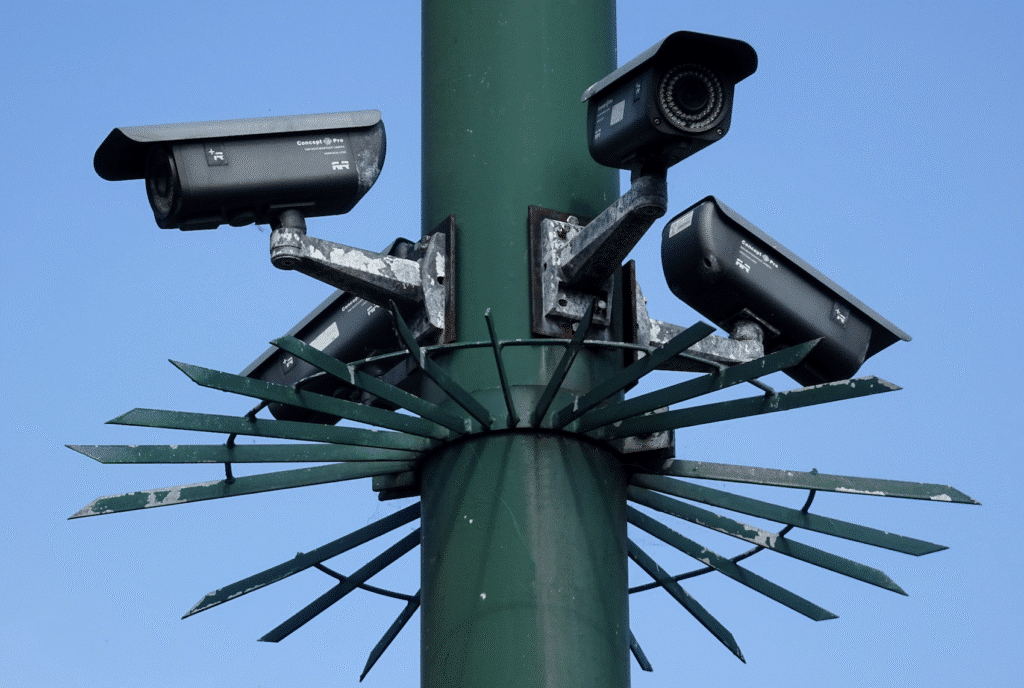
Besides increased use of AI—both to pursue the drug war and to scan medical records to identify people at risk for overdose—one of the few things in the Strategy that hasn’t already been tried and shown to have failed is a plan to test wastewater for drug residue on a national scale.
Herzberg said that in theory, novel ways of gathering information about the drug supply can be used for good—such as for monitoring national and local trends, and being able to warn people and service providers about emerging risks.
“The more information you have, the better,” he said. “But that’s if it’s used to make drug use safer.”
Given what he’s seen from the administration, he envisions the tech elements as yet more ways to surveil and punish. “This knowledge, you have to think about how it works and who it works for.”
Herzberg suspects AI will be used to tag travellers as suspicious based on profiling. And the surveillance of medical records could have extremely negative consequences for people who use drugs, like being denied jobs and housing.
“This kind of surveillance is going to most heavily come down on people it always lands on: the most vulnerable,” he said. “The harm caused in the community will come not just from drugs but drug policy.”
Comments
No comments yet. Be the first.
Sign in to leave a comment.