In Talks with Israel, Lebanon is Walking a Thin Line
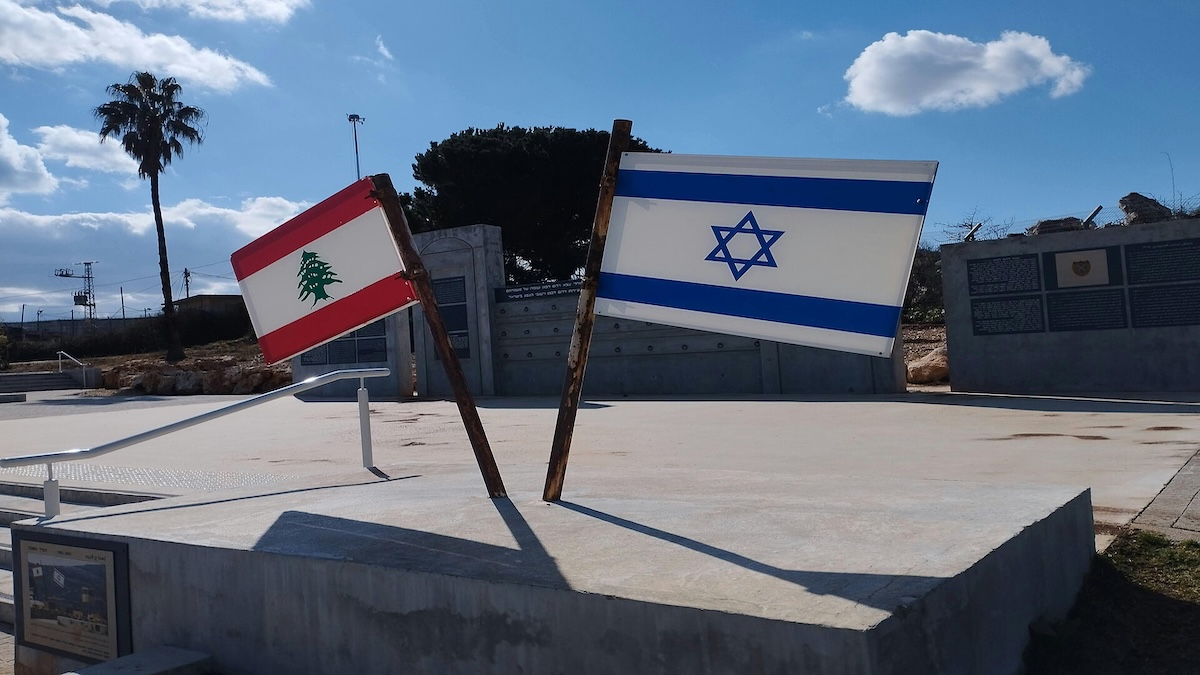
This week, Israel and Lebanon are holding their third round of unprecedented direct talks on crucial issues, including borders, the disarmament of Hizballah, and ongoing Israeli military action. The United States, which is clearly driving these talks, views them expansively as seeking a “comprehensive peace and security agreement,” although one that is contingent on Lebanese action against Hizballah. Ironically, as the most injured party, the Lebanese government is the one that can least afford a comprehensive agreement that would isolate it at home. This twist represents the single greatest obstacle to a settlement that would satisfy the United States or Israel. The talks will require some masterful statecraft by the weakest actor here, the Lebanese.
The Lebanese cabinet continues to insist on disarming Hizballah despite threats by the party and its Iranian sponsors to take revenge to forcibly reverse Lebanese decisions to pursue peace with Israel or the party’s dismantlement. Lebanon is in a bind, and it is an uncomfortable one for Lebanese to highlight: The only reason there is a serious conversation about disarming Hizballah is that Israel fought a two-year, relentless war against its leadership, fighters, and arsenal, destroying much of Lebanon itself in the process. Lebanon obviously cannot ask Israel to continue this, not least because it is killing civilians, displacing hundreds of thousands of people, and targeting areas outside traditional Hizballah control. Yet Lebanese understand Israeli operations will continue as long as Hizballah exists, whatever happens in Washington. This leaves the Lebanese with an awkward choice: Promise to finish off Hizballah on their own, while publicly insisting on an end to the war that made this feasible.
Although, as a matter of policy, Lebanon is committed to Hizballah’s disarmament, discussing the practical details has fallen outside its comfort zone thus far. In the past, Lebanon has either been dishonest or mistaken (or both) about what it can achieve against Hizballah, promising and failing to disarm it over nearly two years. Officers we spoke to in the Lebanese Armed Forces insist they do have the ability to make life difficult for Hizballah, especially while it is also under Israeli attack, but this raises legitimate concerns about the army’s relations with Hizballah’s Shia base and the possibility that Shia soldiers would disobey orders to fight the militia, thereby fracturing the armed forces. Some of the party’s critics insist this won’t happen, and polls show widespread support for Hizballah’s disarmament. However, the Shia appear to be an exception, with a mere 27 percent saying only the Lebanese Armed Forces should have weapons.
So where does that leave Lebanon? Its negotiating team, which includes the competent Lebanese Ambassador to the United States, Nada Hamadeh, is not trying to break new ground but to convey the position of the government. While the United States and possibly Israel are likely to push for an expansive negotiated settlement up to and including normalization, the Lebanese should be wary of deals that place unnecessary domestic pressure on the government. It does seem like there is broad support in Lebanon for an end to the wars with Israel, but normalization (and managed optics around it, such as meeting with Israeli Prime Minister Bibi Netanyahu) seems clearly less popular. Indeed, even a full “peace agreement” recalls Camp David and the Abraham Accords, and amidst the killing, the government will want to position itself as restoring the 1949 armistice with Israel and ending hostilities, not beginning a brave new era of friendship, whatever Washington may prefer.
This time, the Lebanese also ought to avoid the trap they set for themselves with the Lebanese Armed Forces during the last ceasefire agreement (after which fire did not cease). Then, Lebanon accepted an American promise: “If and only if you disarm Hizballah, we will give your army more money and materials.” This conditionality persists. The army does need more, but quicker, starting with deep financial support to pay salaries. There are very few scenarios in which helping the Lebanese Armed Forces hurts the United States, as the era of cooperation between Hizballah and the Lebanese Armed Forces has ended. If disarmament proceeds slowly, that is better than not at all. This is not an impossible mission, but the concerns about social cohesion are real, and time is working against Hizballah’s stature and credibility, which are suffering in the current open-ended wars with Israel.
A potentially dangerous obstacle here would be Israeli single-mindedness: An inability to recognize Lebanon’s domestic realities about confronting Hizballah and a move towards total resumption of hostilities, occupation of Lebanese land, and so on. This would make the Lebanese cabinet’s job far more difficult as it would then be unable to sell a peace agreement with a hostile occupying power to much of the Lebanese. The Lebanese delegation’s most difficult job will be working with the United States to ensure compliance by Israel with at least some limits on the use of force.
Israel is by far the stronger party and is in a position to set its own terms. It is reportedly proposing a plan to create three zones in South Lebanon: A narrow, long-term militarized zone that will persist until Hizballah is dismantled, a broader zone that reaches the Litani River in which Israel would gradually hand control over to the Lebanese Armed Forces, and an area north of the river in which the Lebanese army would have sole responsibility for Hizballah’s disarmament. On the one hand, this does not impose a premature normalization on Lebanon and aligns with government policy on disarming Hizballah. On the other hand, it carries the stigma of ceding territory to Israel and what is effectively security cooperation with it against Hizballah. This raises the same risks of communal agitation and army fragmentation mentioned above, made more inflammatory by Israeli involvement and insistence on full peace with Lebanon.
The home front is crucial in Lebanon. Lebanon is a democracy, however imperfect, and leaders do prefer to have their constituencies’ support for ambitious foreign policy maneuvers. Worse, the fragmented structure of its politics allows for spoilers to easily derail ambitious policies within Lebanese institutions. The Lebanese delegation is hopefully mapping the positions of key leaders such as the Shia Speaker of the House Nabih Berri, whose support will be crucial in any attempt to marginalize Hizballah, and who could save or destroy any agreements with Israel.
Finally, there is the crucial matter of Iran. Interestingly, it was the United States that insisted on linking the U.S.-Iranian and Israeli-Lebanese tracks — Israel had wanted to treat Lebanon as a self-contained issue. The role of Iran here is frustrating: It could solve Lebanon’s (and Israel’s) problems with a simple decision to abandon Hizballah. That would spare Lebanon all the risks of confronting Hizballah. There was some speculation that U.S.-Iranian talks would include such a concession. But that seems unlikely, as the United States has struggled to impose its will on Iran and the latter appears to have no appetite or need for disarming its crown jewel. The Lebanese should avoid linking their fate to U.S.-Iranian talks.
One could argue that Lebanon, by far the weakest party, has no choice but to agree to Israeli conditions and U.S. pressure, accept Israel’s security proposal (whatever that turns out to be), and turn its guns immediately and directly on Hizballah. It is true that Lebanon is a weak, impoverished, and fragmented country. Its main leverage lies in the U.S. commitment to reaching an agreement. The United States and likely Israel as well understand the limitations the Lebanese government faces politically and operationally. Sadly, Lebanon’s only real leverage is to threaten to walk away. That may seem self-defeating, but the Lebanese would probably prefer to endure more wars with Israel than experience another civil war. The Israeli proposals and U.S. pressure for a comprehensive settlement may prove too much.
In other words, while the upcoming talks themselves are interesting and significant, the Lebanese must walk a rather thin line to benefit rather than lose from them. They have to insist on Israeli restraint even as Israeli actions weaken and isolate Hizballah. They have to resist U.S. pressure to enter into a premature expansive agreement. They have to socialize the talks with Lebanese people and elites. They have to secure support for the Lebanese Army to gradually pressure Hizballah without acting recklessly toward it. They have to have a real plan to disarm the militia. And they have to decouple these talks from Iran, which is the only party that can easily solve Lebanon’s problems. The Lebanese do not lack the talented politicians and diplomats to pull this off, with some flexibility from the United States.
Faysal Itani is a senior fellow at the Middle East Policy Council. He teaches Middle East politics and security at Georgetown and George Washington Universities. He is a native of Beirut, Lebanon.
Dania F. Arayssi, Ph.D., is a program head and senior analyst at the New Lines Institute for Strategy and Policy. She teaches Middle East Studies at Georgetown and George Washington Universities. She is a native of Beirut, Lebanon.
Comments
No comments yet. Be the first.
Sign in to leave a comment.