Catch a rat, get paid: inside the grassroots campaign against Gaza’s rat epidemic
The article centers a grassroots activist's framing of municipal failure and frames his intervention as heroic problem-solving born from journalistic responsibility. Language choices emphasize official negligence ('complacency,' 'numbness,' 'no response at the required level') and celebrate modest individual action as more effective than institutional spending. The narrative implicitly critiques governance structures while celebrating bottom-up mobilization, and the incomplete ending suggests the story was truncated mid-publication.
Primary voices: activist or civil society organizer, international body, media outlet, state or recognized government
- This article does not address the perspective or response of Gaza Municipality or other official institutions named, beyond their joining the campaign
- This article does not provide independent verification of the WHO statistic cited (70,000 rodent-borne disease cases since beginning of 2026)
- This article does not examine potential sustainability or scalability limitations of a reward-based incentive model
Framing may shift if the campaign's long-term effectiveness, financial viability, or unintended consequences (e.g., ecological or disease control outcomes) become clearer.
Activist-sourcedDissenting framingPro-labor framing
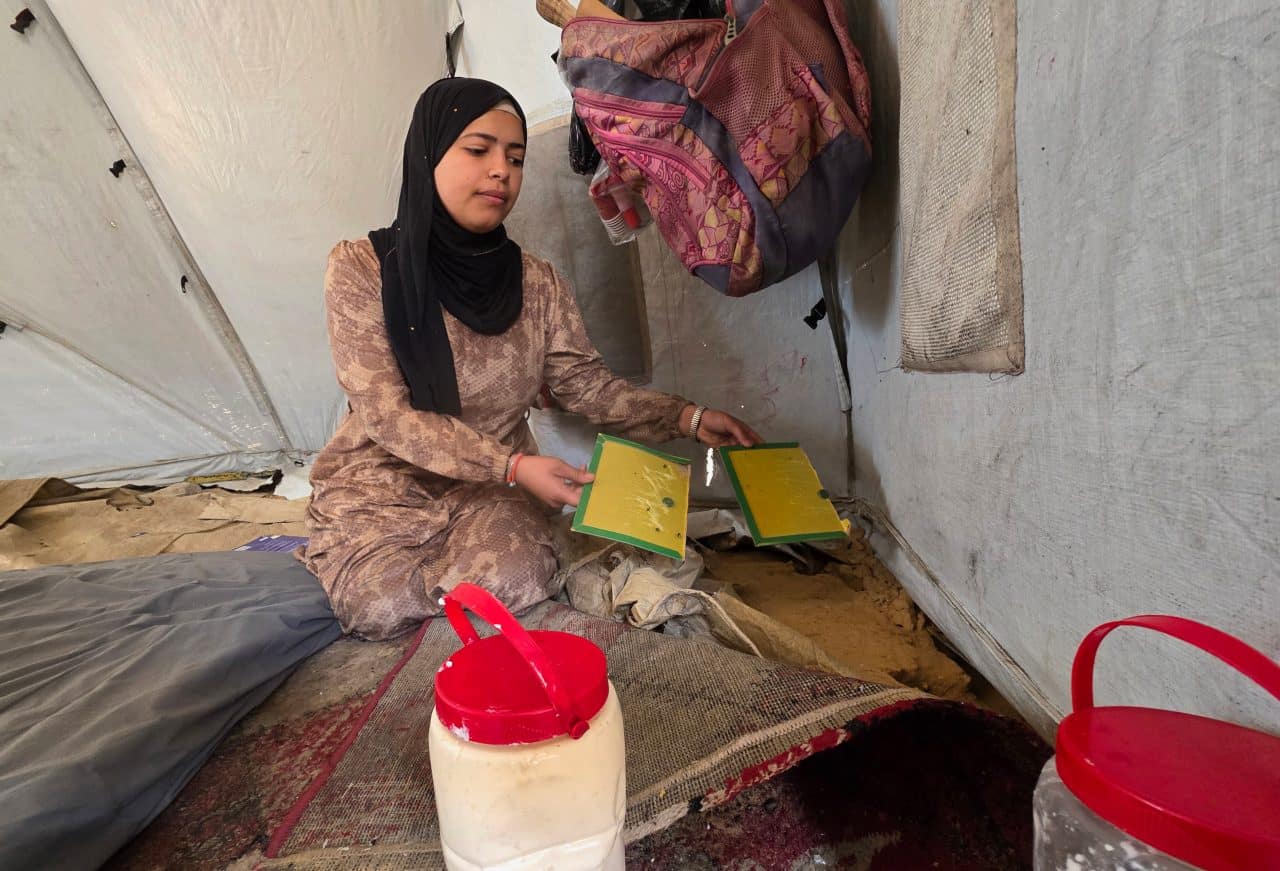
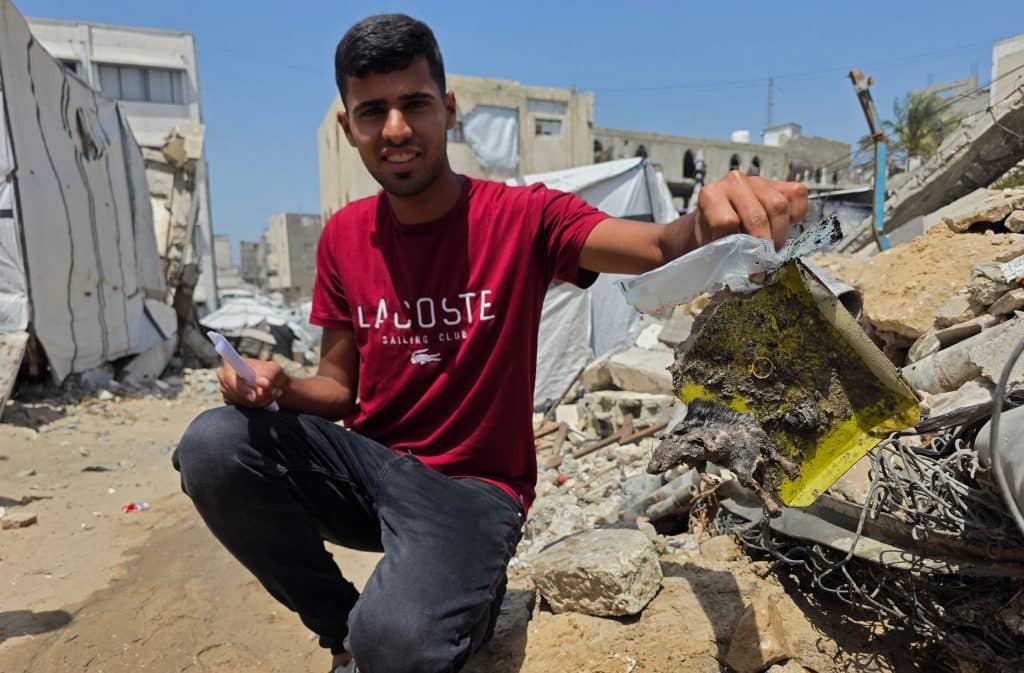
The videos have a grim humor to them: young men standing among the tents, holding up dead rats, counting them out before claiming their reward — 34 cents per mouse, $1.70 per rat, $3.40 for women who film themselves cleaning their tents and the area around them. The videos spread across social media among Palestinians in Gaza within days, and what began as one man’s Facebook post has since mobilized displacement camps in a wave of self-organized hunting and cleaning campaigns.
Driven by the hope of receiving these rewards, people across Gaza rushed to document themselves killing and removing rats, and to send the footage to the person who announced the campaign: Abdel Hamid Abdel Ati, a Palestinian journalist from Gaza now living in Cairo after being displaced by the war. Before his displacement, he worked as a program director at a local radio station, hosting a show that focused on people’s daily problems and gave them a platform to convey their voices to officials.
In early May, Abdel Ati announced these rewards through his Facebook page. “I felt a responsibility because I am from this country, and I had to carry part of that responsibility and intervene,” Abdel Ati told Mondoweiss. “I wanted to embarrass municipalities and officials in Gaza so they would move and stop being complacent.”
Although the financial rewards are neither large nor particularly lucrative — one shekel, about a third of a dollar per rat killed — they generated widespread engagement. The idea spread rapidly, and camps and displacement centers began self-organizing into campaigns to clean the streets and sweep away the rubble accumulated between tents. Official institutions also joined, including the Gaza Municipality, the Egyptian Committee in Gaza, and the Saudi Center.
“If such a small amount achieved this impact, then look at all the money being spent that never achieved anything like this,” Abdel Ati observed. “We started with a very small amount, yet in a very big way, and you can see in front of you what people are doing.”
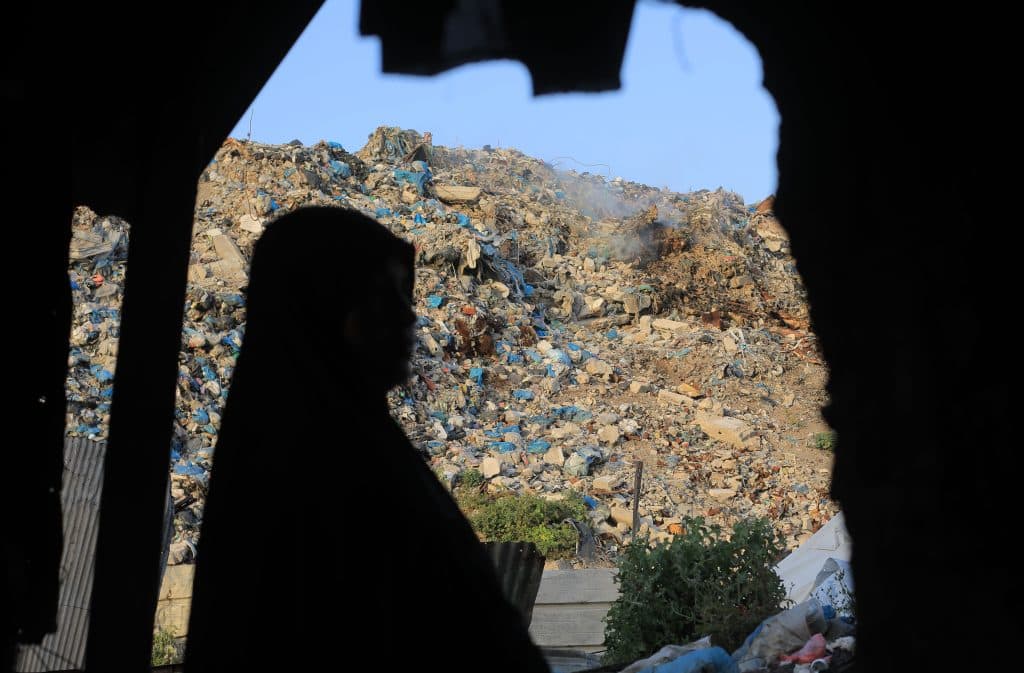
Rodents have spread extensively throughout Gaza since the ceasefire with Israel took effect in October 2025. The bombardment, destruction, accumulated rubble, and near-total collapse of infrastructure created ideal conditions for rodents to thrive and reproduce, leading to what health officials warn is a public health emergency. Residents of tent encampments have also begun raising the alarm, with testimonies of children bitten while they slept and people getting their fingers gnawed off in the middle of the night. According to the World Health Organization (WHO), more than 70,000 cases in Gaza have been affected by rodent-borne diseases since the beginning of 2026, including ectoparasitic infections. And the rodents haven’t only been spreading disease; they’ve also been damaging the food supplies the displaced store in their tents, adding to their suffering.
Journalism beyond telling the story
Abdel Ati had been watching the crisis build for months. Tens of thousands of rodent-related infections had already been recorded, with the summer season and its swarm of flies and mosquitoes fast approaching. As a journalist, he said, his perspective on the danger differed from that of ordinary citizens. He and his colleagues had written reports and warned officials, but “there was no response at the level required,” he said. “We felt the danger. We felt we had to have a role.”
Abdel Ati said he felt as if everyone had fallen into a kind of numbness, surrendering to unemployment and the exhausting daily search for drinking water and firewood for baking bread. That’s why he felt an intervention was necessary.
He spent nearly $5,000 of his own money in just a week after launching the campaign. He had initially allocated a much smaller amount, but was surprised by the response. People began cleaning places and tents, actively hunting rodents, and even discovering snakes and unfamiliar insects spreading throughout the area.
According to Abdel Ati, the public response was so broad because people were desperate for any sign of hope. “People need encouragement, leadership, and someone who is independent of any faction or political organization,” he said.
‘We are intruders in the world of rodents’
Abdel Ati said that some bulldozers and trucks are now volunteering to clear rubble and launch cleaning campaigns across displacement areas. “The amount was small, and the goal was small, but all these results came afterward,” he said. After the initiative became widespread, he no longer had the capacity to continue providing financial rewards. But the effort had expanded into a broader collective movement, with young people carrying out these tasks themselves.
In Gaza City, inside one displacement center, Abdel Qader al-Basyouni — a displaced man from Beit Hanoun who had spoken to Mondoweiss previously about the rodent crisis — said that every day he caught at least two or three rats trying to enter the tent while he was awake. “When I’m asleep, I have no idea what moves between my children, above them or beneath them,” he said, adding that he constantly heard disturbing stories from neighbors in nearby camps.
Al-Basyouni described his tent: sand underfoot, canned food and flour stacked around him, a small fire lit for cooking, wastewater pooling near the sidewalk outside. “This environment was never meant for human life,” he said. “But because of this war, we were forced to live in an environment that does not suit us.”
“We are the intruders in the world of rodents,” he said. “This is not our place. We were supposed to be in our homes, behind closed doors, enjoying air conditioners.”
The voluntarism and collectivity that evolved out of Abdel Ati’s campaign have also extended to community reconstruction efforts. In a displacement camp in Gaza City, Arafa Abu Assi participates in rubble removal and public street cleaning campaigns — not for pay, but as part of self-organized volunteer groups who have taken it upon themselves to clear roads and remove debris from public streets.
“In Gaza, we have a spirit of collective work, and we love working, even voluntarily,” he said. “What began today as an individual effort, we hope will end with reconstruction, with the complete removal of rubble, and with rebuilding and renewing our city once again.”
Abu Assi said Gazans themselves will rebuild Gaza. “We have long waited for reconstruction and for the ceasefire agreement to be implemented, but nothing has happened. All that happens is the denial and theft of Palestinians’ rights without giving them anything,” he said. “We are all ready.”
Comments
No comments yet. Be the first.
Sign in to leave a comment.