Momentum builds to pass bill after Jack Smith’s secret Arctic Frost subpoenas
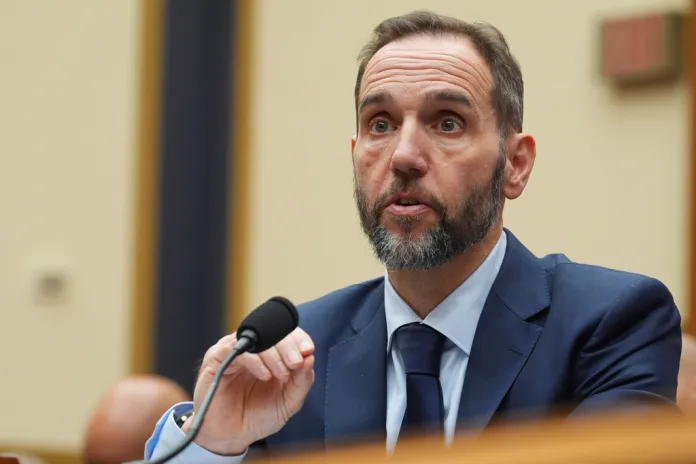
EXCLUSIVE — Congress is weighing bipartisan legislation to curb secret federal subpoenas as former special counsel Jack Smith has become increasingly outspoken in attacking the Trump administration’s Justice Department, renewing scrutiny of the investigative tactics Smith used during his infamous “Arctic Frost” investigation.
The push behind the bill, known as the nondisclosure order or “NDO Fairness Act,” has accelerated in recent weeks as Smith publicly accuses President Donald Trump‘s DOJ of corruption and political weaponization. Republicans have responded by reminding the country of what occurred during the Arctic Frost investigation, where Smith quietly obtained phone records from GOP lawmakers and conservatives through nondisclosure orders that prevented targets from learning their data had been seized.
Sen. Mike Lee (R-UT), who is leading the Senate version of the legislation, told the Washington Examiner the bill is intended to stop politically motivated surveillance from being concealed behind secrecy orders.
“The deep state should not be able to cover up politically motivated spying against law-abiding Americans — unfortunately, nondisclosure orders have been used to do exactly that,” Lee said. “The NDO Fairness Act bolsters protections for your digital property under the 4th Amendment and establishes a review system to ensure that NDOs aren’t abused.”
House Judiciary Committee Chairman Jim Jordan (R-OH) similarly framed Arctic Frost as an example of unchecked federal surveillance powers being used against political opponents, arguing Smith’s investigators were able to gather records from members of Congress secretly with insufficient judicial scrutiny.
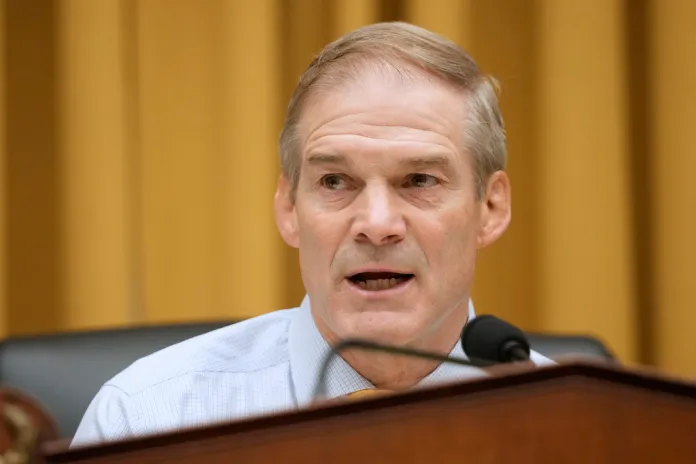
“Jack Smith and partisan Arctic Frost investigators abused nondisclosure orders to secretly seize data from members of Congress,” Jordan told the Washington Examiner.
“The NDO Fairness Act takes a critical step to rein in this surveillance overreach,” he said. “It forces the government to justify how long the order can last and makes sure those affected are notified.”
Lawmakers and aides involved in the legislation say Smith’s sharper public posture has refocused attention on the investigation and strengthened arguments that Congress needs to impose stricter guardrails on secret electronic surveillance authorities before another politically charged investigation emerges.
The renewed spotlight comes after Smith delivered a private speech in Washington last month, reported by the New York Times, in which he accused the Trump administration’s DOJ of being “corrupted” and targeting political opponents. Republicans have seized on the remarks as evidence that Smith remains politically motivated even after his prosecutions against Trump collapsed following the 2024 election.
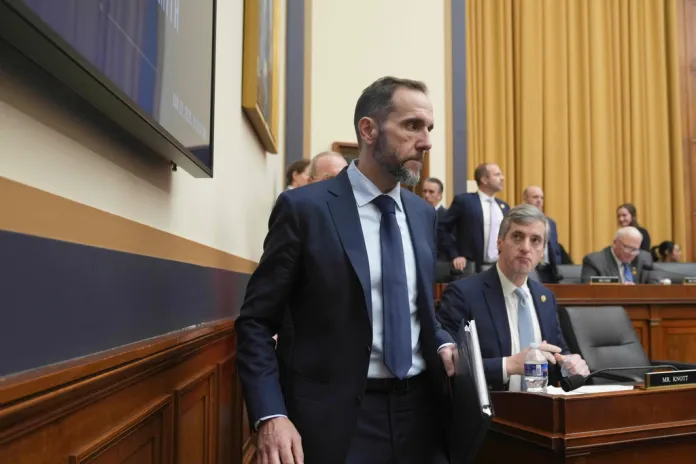
Arctic Frost began in 2022, initially as an FBI inquiry, as part of the Biden administration’s broader investigation into Trump and his allies’ efforts to challenge the 2020 election results.
The inquiry expanded further once Smith was appointed as special counsel by former Attorney General Merrick Garland in November 2022 to include subpoenas for phone records and electronic data tied to GOP lawmakers, congressional aides, conservative organizations, and Trump allies.
According to records released in September through congressional oversight efforts led by Sen. Chuck Grassley (R-IA), the FBI under the Biden administration sought tolling and phone data connected to multiple GOP senators and hundreds of conservative-linked individuals or groups, even though they were not criminal targets themselves. The records obtained included metadata such as call logs and associated phone information rather than call content. The specific reasons why Biden-era investigators needed so many private records from the conservative movement are unclear, leading critics to accuse Smith of engaging in a partisan fishing expedition.
Among the lawmakers whose records were sought were Sens. Lindsey Graham (R-SC), Josh Hawley (R-MO), and Ted Cruz (R-TX), along with current Trump officials such as FBI Director Kash Patel and White House chief of staff Susie Wiles, and several more. But it was only revealed in early November that their records had been obtained because Smith’s team used NDOs to block providers such as AT&T and Verizon from notifying them.
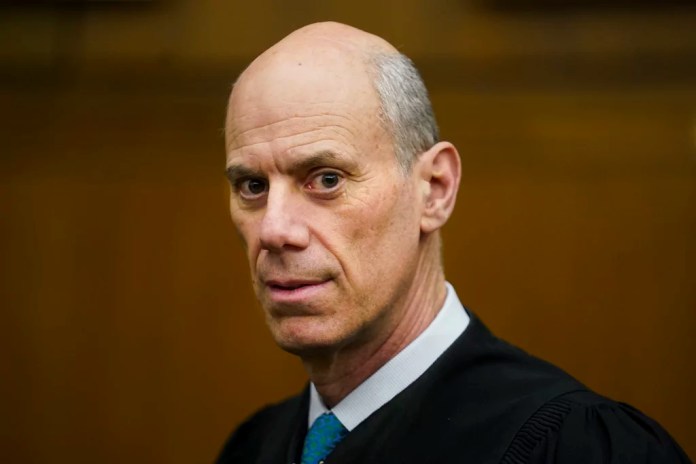
Republicans have increasingly focused blame not only on Smith, but also on Judge James Boasberg, an appointee of former President Barack Obama, who approved the secrecy orders tied to the subpoenas. Lee and Graham, among others, have called for Boasberg’s suspension and even his removal from the bench.
Critics, such as the targeted lawmakers, have argued Boasberg failed to provide meaningful judicial scrutiny and instead enabled Smith’s expansive investigative theories targeting lawmakers involved in post-2020 election disputes and constitutionally protected political activity surrounding electoral certification.
The controversy has also fueled broader concerns among conservatives about separation-of-powers troubles after federal investigators secretly gathered records tied to sitting members of Congress involved in election certification proceedings.
One Senate adviser familiar with the negotiations told the Washington Examiner that lawmakers increasingly view the bill as the lone Arctic Frost-related reform effort with a realistic path to becoming law, in part because Democrats, too, have historically been skeptical of unchecked surveillance powers.
“There’s been growing frustration from Republicans that for all the investigations into Arctic Frost and all the exposure of Jack Smith, nothing has happened,” the adviser said. “This is the one exception.”
The adviser said the bill still preserves the ability for authorities to pursue secrecy in terrorism and child exploitation cases but forces prosecutors to establish an actual evidentiary basis before subjects can be kept unaware their records are being seized.
Under the legislation, prosecutors would have to provide written justification before obtaining an NDO and demonstrate “specific and articulable facts” showing that notifying the target would create an adverse result, such as destruction of evidence or flight from prosecution. The bill would also impose time limits on secrecy orders and allow providers to challenge them in court.
Supporters say those safeguards would have made it significantly harder for Smith’s team to quietly obtain records from lawmakers based on broad theories tied to their public statements, meetings, and election-related political activity.
An initial variant of the bill passed the House Judiciary Committee by unanimous voice vote last November, giving supporters optimism it could advance through the House under suspension procedures typically reserved for bipartisan legislation.
The Senate remains the larger obstacle because a single senator could slow or block expedited passage. Still, supporters believe the measure has unusually strong prospects because it has attracted Democratic backing, including from Sen. Chris Coons (D-DE).
“The Constitution protects Americans’ right to privacy in their personal communications, but we can only assert that right if we know our privacy has been violated,” Coons said in January.
A Trump administration official said the legislation would make it harder for future administrations to replicate Smith’s tactics, regardless of the party in power.
“Whether they were colluding or Boasberg was unaware makes no difference,” the official told the Washington Examiner. “The fact that Smith could secretly seize cell phone records from congressmen and senators as part of his witch hunt is un-American.”
Alex DeGrasse, CEO of North Country Strategies and a longtime GOP leadership adviser, said Smith’s increasing public criticism of the DOJ has only intensified Republican interest in advancing the legislation quickly.
“If Jack Smith can do it, the next one can do it, and that’s what we’re worried about,” DeGrasse told the Washington Examiner. “This is a rare opportunity where there is Democratic support to get this fixed.”
The issue is likely to gain further attention in Congress as Democrats have sought to defend Smith and his prosecutions of Trump during his recent testimony in late January.
Grassley has indicated Smith will likely come before his committee in due course but has emphasized a need to expand the record of Smith’s misdeeds before bringing him in for questioning on matters directly related to this legislative push.
Comments
No comments yet. Be the first.
Sign in to leave a comment.