South Korea’s 500,000 Drone Warriors Will Be a Hollow Force
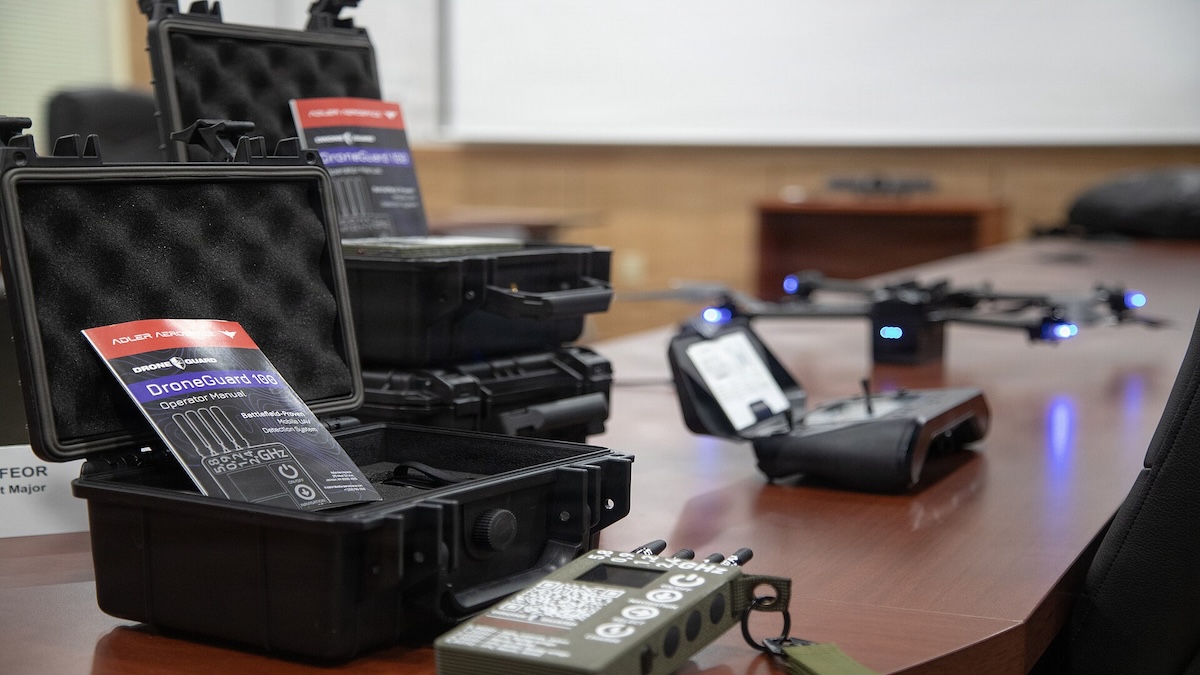
Ukraine has reshaped the battlefield with cheap, expendable drones. South Korea reads the signals and wants to match the scale. North Korea has been reading the same signals through a more direct channel. Since late 2024, North Korea has rotated thousands of troops through Russia’s war in Ukraine, alongside what is currently the world’s most combat tested drone force — tied with Ukraine’s, of course. Ukrainian defense intelligence reports that some of those troops have begun returning home and moving into instructor roles within the North Korean military.
What exactly they are bringing back is harder to pin down from the outside, and reasonable people will disagree on what counts as modern warfare. But it is hard to argue that they are returning with nothing.
Rapid investment and advances from North Korea have motivated South Korea to make bold promises to increase its own drone forces. Pyongyang moved from Harop-style airframe prototypes in August 2024 to containerized, truck-mounted launchers in October 2025 — roughly 14 months from concept to deployable hardware.
Seoul announced its plan to train drone operators in between. In September 2025, South Korea’s Minister of National Defense Ahn Gyu-back announced a plan to train 500,000 “drone warriors” at the 36th Infantry Division base in Wonju. As part of this program, every conscript would have the opportunity to earn drone piloting credentials during mandatory service. Seoul plans to procure more than 11,000 commercial drones for units in 2026 under a 33 billion won (about $22 million) program the National Assembly approved in December 2025, raised from the Ministry of National Defense’s original 20.5 billion won request. The funds also cover training infrastructure and instructor pipelines. The ministry has required those drones to be built with domestic core components.
I am a former Republic of Korea Army surface-to-air missile operator and co-founder of Team Retriever, a counter-drone red team operating in South Korea. My company operates in the counter-drone space, so I have a commercial interest in the topic. However, this article does not advocate for any specific platform, vendor, or contract.
South Korea’s plan runs into two limits that Washington’s current planning hasn’t addressed. One is industrial. The U.S. defense base is too thin to ship what Seoul can’t make at home, and nine of 10 small commercial drones in Korea still come from China. The other is human and South Korean in origin: Army noncommissioned officer recruitment fell from 95 percent in 2020 to 42 percent in 2024. The alliance side is industrial. Start with reciprocal “Blue List” certification and pull Korean component suppliers in on the Australia model, extending the Defense Production Act’s Title III authorities to Korean firms as domestic sources.
Reshaping the Battlefield
Seoul’s 500,000 conscript program is being scoped at the same tier — first-person view drones and commercial quadcopters — and starts from a commercial training base that has not yet been built. Pyongyang is bringing back something from the front while Seoul is still designing the curriculum.
Yet Seoul’s plan runs into structural limits, and Washington cannot easily influence these restrictions. The doctrine is sound, the announcement is real, and the money is real. The Republic of Korea still cannot deliver on the announced timeline, and the reason sits in a layer most of the alliance conversations do not address. What South Korea lacks is the noncommissioned officer cadre that would carry 500,000 operators through training and into fielded units. The industrial gap is real, deep, and shared with most allies, including the United States — the kind of problem capital and time can address. The cadre gap is confined to South Korea and cannot be filled by others. Washington should treat South Korea as a clear test case exposing the limits of current alliance frameworks in the drone era.
Why Nobody Copies Ukraine
Ukraine’s drone training system is the case everyone wants to replicate. By late 2024, the Ukrainian Defense Ministry had certified more than 30 drone training centers, a mix that includes volunteer-run programs such as Victory Drones under the Dignitas Fund as well as formal military institutions. Defense One, citing Victory Drones founder Maria Berlinska, reported in late 2023 that a motivated student could become a first-person view drone pilot in about 30 days, at six to seven times the $35 cost of basic quadcopter training. The network has scaled rapidly since. By mid-2025, Berlinska stated that Victory Drones alone had trained over 150,000 military personnel in drone operation, electronic warfare, and allied skills.
The case for copying this model looks strong from a distance. If volunteer-run schools in Kyiv can prepare drone operators for the front at a 30-day tempo, a well-funded defense ministry in Seoul should be able to do the same. That reasoning misses three conditions that make Ukraine’s system work, and none of them exist in South Korea.
Wartime mobilization is the most obvious. Ukrainian civilians teach drone courses without pay, assemble drones with crowdfunded parts, and deliver graduates to the front within weeks. Instructors take the work because their country is under attack. That social energy cannot be purchased in peacetime. A South Korean Ministry of National Defense budget line can buy training drones and classroom space, but it cannot conjure the volunteer base that Victory Drones has built up since 2022.
Component access matters almost as much. Ukrainian drone production has long relied on Chinese motors, batteries, and flight controllers — sourced directly before Beijing’s September 2024 export restrictions and through intermediaries since. South Korea cannot take that route. Its Ministry of National Defense has already required domestic core components in the 500,000 drone warriors program, precisely because planning around a Chinese supply chain is incompatible with reducing exposure to it in a contingency. The domestic supply is not yet at the quantities the program envisions.
Regulatory flexibility is the least discussed but decisive. Ukraine runs civilian training centers under wartime rules that let private instructors work with military hardware, train uniformed personnel, and operate outside normal aviation restrictions. South Korea operates in a peacetime legal environment where drone policy is split across separate civilian ministries — Land, Infrastructure, and Transport handles aviation, Science and Information and Communications Technology handles frequency allocation, and Trade, Industry, and Resources leads industrial policy — with the Ministry of National Defense making a fourth when military pipelines are added. Moving a civilian training program into a military pipeline requires coordination across all four, and existing law does not make that easy.
Where the Plan Breaks
The most immediate obstacle is the commercial drone layer itself. Invest Korea, the government’s investment promotion arm, has reported that nearly nine out of 10 small commercial drones in service in Korea come from overseas markets, predominantly China. Defense contractors are investing in the loitering munition layer — Hanwha and LIG Nex1 are running programs on three- to five-year horizons — but those are weapon systems for combat fielding, not training drones for conscripts on a 2026 schedule. The commercial training layer that would turn a conscript into a pilot during routine service remains thin and import-dependent. The ministry can require domestic core components in its program but the supply to meet that requirement is not available in the numbers the rollout requires.
The manpower picture is worse and has two distinct fronts. The Army’s noncommissioned officer recruitment rate dropped from 95 percent in 2020 to 42 percent in 2024, according to data submitted to the National Assembly. Only 3,400 of 8,100 noncommissioned officer slots were filled that year. Voluntary departures among Army noncommissioned officers — those leaving before retirement eligibility — more than doubled over the same period, from 1,147 to 2,480.
The officer pipeline is drying up in parallel: Reserve Officers’ Training Corps applications — historically the main feeder for Army junior officers — fell from roughly 16,000 in 2016 to about 5,000 by 2023, and more than 2,200 Reserve Officers’ Training Corps cadets have dropped out in the last five years. In the first half of 2025 alone, 2,869 officers and noncommissioned officers voluntarily left across all services — a record for any six-month period and more than double the 1,351 who left in the first half of 2021 — and 86 percent of those departures were noncommissioned and company-grade officers. This is the precise layer that runs training and leads soldiers in frontline units.
Meanwhile, the total South Korean fertility rate rose to 0.80 in 2025, up from 0.75 in 2024 but still far below the replacement level of 2.1. The conscript pool itself is shrinking, and the eighteen-month Army conscription term leaves a narrow window to make a trainee useful. President Lee Jae-myung has now publicly called for a “selective conscription” reform that would cut short-term draftee service from eighteen months to roughly ten, paired with a thirty-six-month career track for skill-intensive combat noncommissioned officers — a plan the Ministry of National Defense is now building into its broader reform package. If the short-term track lands near ten months, the window to turn a conscript into a trained drone operator closes further, and the burden of meaningful drone instruction shifts almost entirely onto the noncommissioned officer career track that is already under strain. The longer career track will also have to take on responsibilities that competent second-year conscripts used to handle. The math is unforgiving: A force that already misses 58 percent of its noncommissioned officer targets is asked to recruit more noncommissioned officers with stronger skill profiles on a faster timeline. The shortfall does not stay flat. It deepens.
The solution does not lie in South Korea’s civilian drone certificate holders. The Ministry of Land, Infrastructure, and Transport grades drone certificates from first through fourth class. The Korea Transportation Safety Authority put the upper three classes at over 127,000 holders at the end of 2023. First class covers airframes above 55 pounds — agricultural sprayers, survey platforms, industrial inspection rigs — tested on fully assembled aircraft with GPS systems, inertial measurement unit stabilization, and altitude hold. The aircraft hovers when you let go. First-person view drones do not. The operator hand-flies every second, and the airframe drops the moment hands come off. The certificate is not a transferable skill, and the holders are not an instructor pool.
Underneath both problems sits the industrial gap. Chinese manufacturers produce roughly 90 percent of commercial drones globally and dominate the supply of airframes, batteries, motors, cameras, and radios. A December 2025 Center for Strategic and International Studies supply chain analysis identified five chokepoints in drone production where allied production lags Chinese scale or cannot be surged quickly. South Korea has genuine depth in some of these. Samsung SDI, LG Energy Solution, and SK On are among the world’s largest lithium-ion cell producers, and Samsung Electro-Mechanics supplies multi-layer ceramic capacitors and other passive components to global electronics makers.
However, lithium polymer cells, light-weight motors, and flight controllers used in training and first-person view drones come out of a different manufacturing ecosystem, one that is thin in South Korea and deep in China. The Korean industry has depth broadly, but not in the specific layer where small drones are built. The same gap shows up across the alliance: As of late 2025, most drones cleared through the Pentagon’s Blue Unmanned Aerial Systems list still use Chinese-sourced motors. Capital and time can address that. The harder constraint sits one layer up.
Korea’s defense industrial track record does not extend to this program. The K2 tank and the KF-21 fighter both slipped their announced timelines and still delivered, but those were platform engineering problems that allied imports and longer timelines could absorb. Korea fielded the K2’s first three production batches on German RENK transmissions because the domestic transmission could not pass durability testing, and the KF-21 still flies on U.S. GE F414 engines, with an indigenous replacement targeted for the 2030s. The 500,000 warrior plan is not that kind of problem. The bottleneck sits one layer up — in fielding operators at the announced number, with the noncommissioned officer cadre to bring them through training and into units. That layer is not a product of industrial policy or allied technology transfer.
There is also a defensive side to this. Even modest drone literacy — spotting low-altitude airframes, recognizing launch profiles, and calling in early warning against incoming loitering munitions — feeds directly into national air defense, which is a different ledger from offensive operations and expendable production. 500,000 conscripts with that baseline literacy is meaningful against a North Korea now fielding Harop-class systems on schedule. But Seoul announced 500,000 drone warriors, not 500,000 spotters. The industrial and workforce constraints described here bind whether the program is read as offensive or defensive.
What Washington Needs to See
The standard American response to an allied capability gap is to offer procurement support, technology transfer, or joint training. None of these, on their own, closes this gap. The United States confronts its own version of the same problem. A June 2025 War on the Rocks essay on refactoring the defense industrial base observed that U.S. manufacturing jobs accounted for only 9 percent of the workforce by 2019, down from 32 percent in 1953, and that small business participation in the defense industrial base has fallen by 40 percent in just the last decade. America cannot send Korea industrial capacity that it does not have itself.
There is one more dimension Washington has not engaged. Lee is pushing the transfer of wartime operational control on the same political timeline as the 500,000 warriors plan, and the two interact in a way the equipment-transfer conversation has missed. Wartime control matters because the 500,000 operators are a wartime asset. Under the current structure, those operators would fight under the U.S.-led Combined Forces Command, with a U.S. four-star general in authority over the operational plan. Washington has alignment leverage over how the program is sized and used. After the transfer of operational control — the planned shift of wartime command from the Combined Forces Command to South Korean leadership — the same operators would fight under a Korean four-star general, and Washington’s role would drop to support and coordination. The same conscripts and the same drones become a different alliance asset depending on when they become operational. Equipment-transfer talk does not distinguish between those two cases, and operational control is only part of the question. Whether 500,000 operators sit inside or outside the alliance structure also leaves rules of engagement, interoperability standards, and combined command authority over drone employment undefined.
Beyond the operational control dimension, two further issues of the Korean case are overdue in Washington’s alliance conversation. The first is in how it measures allied value. Proximity to adversaries and interoperability with U.S. systems have always mattered. The drone era adds another measure: whether an ally can keep producing when the adversary restricts exports. Right now, the Republic of Korea cannot do this, at least not at the attritable scale the battlefield now demands. If Beijing restricts motors and batteries during a contingency, Seoul’s replenishment timeline stretches from weeks to months, at prices several multiples higher.
The second issue is that the binding constraint has moved from defense procurement into political economy. The Ministry of National Defense cannot fix the noncommissioned officer shortage, build a commercial motor supply chain, establish civilian training institutions that feed into reserve specialties, or remove the regulatory friction keeping small drone manufacturers below a viable scale. These are problems that require trade, industry, and small business ministries to act jointly with defense. Washington’s current policy conversation treats allied drone capacity mostly as an equipment transfer question. The Korean case shows that equipment is the easiest layer to fix. The industrial and workforce layers, which determine whether Korea can keep producing drones during a fight, are political economy problems that require coordinated action across trade, industry, and small business ministries.
Concrete starting points exist even if none alone closes the gap: reciprocal Blue Unmanned Aerial Systems listing and Korean equivalent certification to unblock small component trade, a bilateral co-investment vehicle targeted at identified chokepoints, or extending the Defense Production Act’s Title III authorities to Korean component suppliers on the model already applied to Australia. None of these levers lives in the Pentagon’s column. They live in the U.S. Commerce Department, the Office of the U.S. Trade Representative, and Korea’s Trade, Industry, and Resources Ministry — which is why the alliance conversation needs to widen.
Japan and Taiwan Next
The same set of constraints shows up across the region with country-specific variations. Japan’s Self-Defense Forces hit only 51 percent of their Fiscal Year 2023 recruitment target, the lowest rate on record, and the pool of Japanese 18-to-26-year-olds has fallen by roughly 40 percent over the past three decades. Taiwan’s one-year conscription, which took effect in January 2024, brings more recruits into the training pipeline, but its drone sector faces the same Chinese component exposure as Seoul’s. None of these governments has the wartime mobilization, the direct component access, or the regulatory flexibility that lets Ukraine’s civilian system work. Each variant deserves its own treatment.
South Korea will fall short of 500,000 drone warriors on whatever schedule the Ministry of National Defense eventually settles on. What matters is that the clearest visible test of allied drone capacity under demographic and industrial constraint is already underway, and the Washington policy conversation still frames it as an equipment gap. Pyongyang’s launcher rollout is not a ceiling — it is a floor under what the next cycle will deliver. Seoul’s 500,000 warriors plan, announced and now funded at 33 billion won for 2026, is being built against a moving target. War on the Rocks has already examined how fast North Korea’s drone program is moving. The harder work belongs to Seoul: The Republic of Korea built the manpower system that is now collapsing, signed the supply chains it now wants to unwind, and announced the 500,000 number against constraints it has not solved. The harder question Washington cannot answer through equipment transfers is who will still be in uniform to train the next cohort of conscripts, and which ministries will work together to build a drone industry that does not depend on Shenzhen.
Min-Cheol Jung served as a surface-to-air missile operator in the Republic of Korea Army. He is a co-founder of Team Retriever, a counter-drone red team operating in South Korea. His co-founder, Park Hae-sin, served as a reconnaissance soldier at a guard post along the Korean Demilitarized Zone.
Comments
No comments yet. Be the first.
Sign in to leave a comment.