On Her Latest Album, KJADE Moves From Grief to Joy
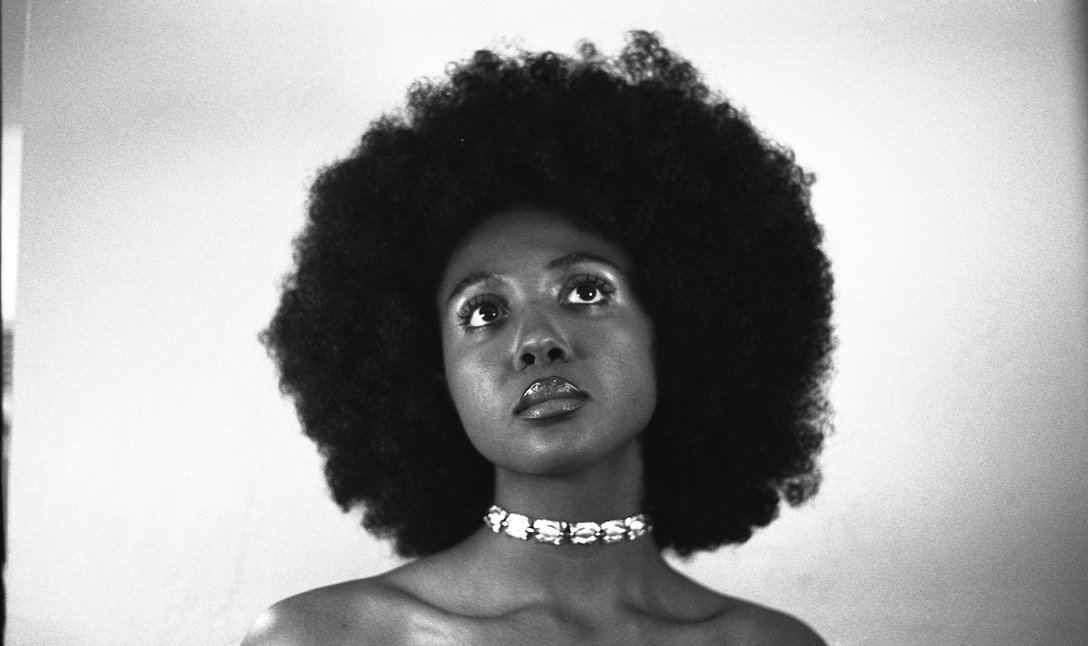
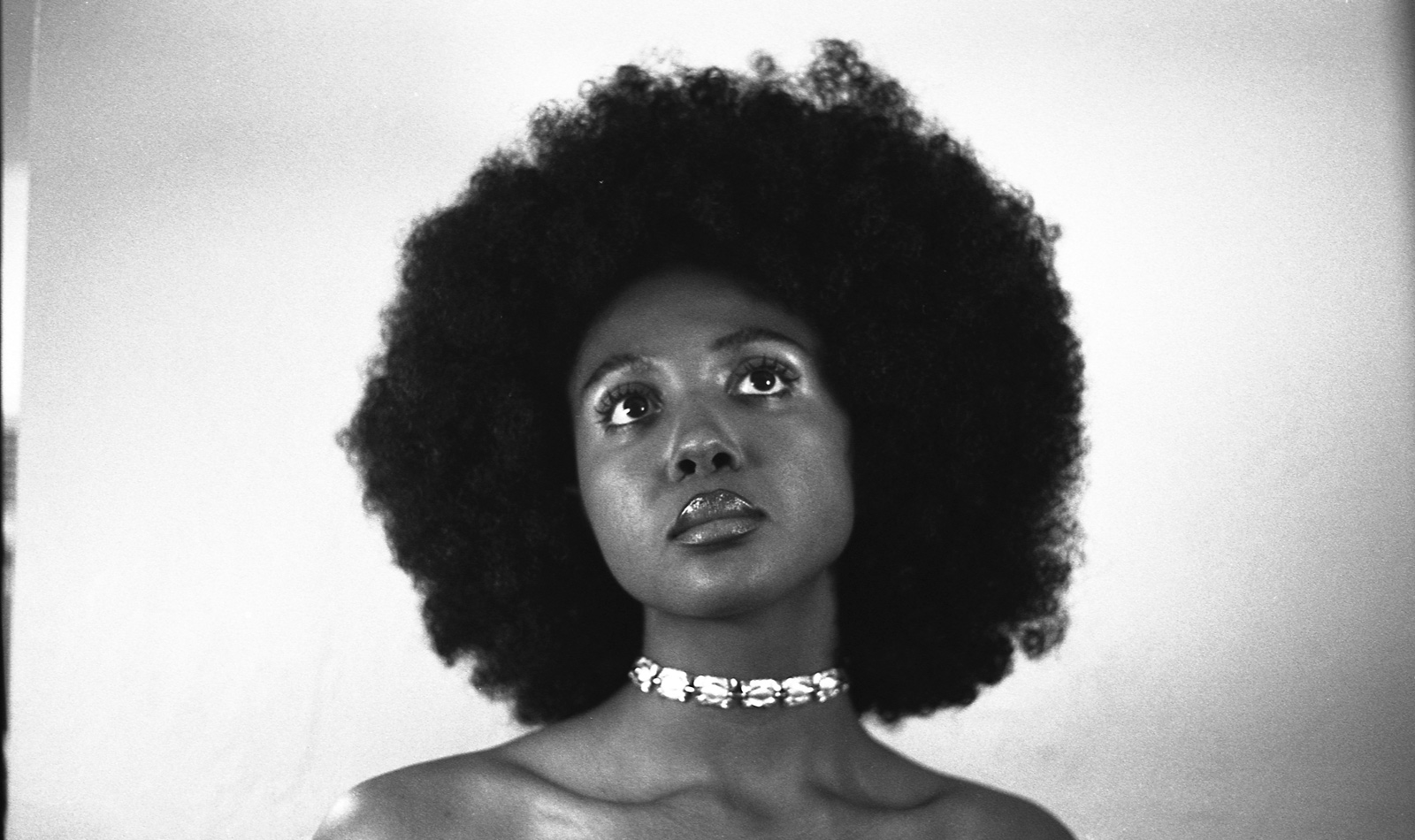
The opening moments of KJADE’s On Everything I Love, which was released this past February, feel like a deep, cleansing breath. “Live By The Sword,” opens like a hand-crank turntable, a harp sample slowly gaining momentum while the sound of laughter ripples through the air. As the loop reaches its proper tempo, the laughter swells—an explosion of pure, uncomplicated joy. In a barely-noticeable transition, producer esteban carries the harp snippet—and its blissful energy—straight into the album’s first proper song, “I’d Rather Soften.” His drums and KJADE’s voice float through the atmosphere, aerated by a fluttering delay. If you close your eyes and let yourself drift into the track’s textured cooing and billowing glissandos, you’ll feel yourself become weightless. Lean in closer, and you’ll discover hidden nuggets of wisdom from one of rap’s most cogent young philosophers: “If I die before I wake, I would still be me,” KJADE intones. At the core of the plainspoken homily is a message of resilience: “My token of my life is that I’ll die before I’m hopeless.”
Speaking via video call from her home in Phoenix, Arizona, KJADE—whose silent-K alias, simply pronounced “Jade,” is a portmanteau of her birth name, Kendall Jade—exudes a calm but palpable energy. On record, the 24-year-old rapper tends to pitch her voice up to a whispery mezzo-soprano and douse it in reverb, giving it the feeling of a transmission from the spirit realm. But in conversation, it’s clear and sonorous, with traces of a slight East Bay accent. She seems to process questions in milliseconds, responding as if she’d anticipated each query. “I metabolize information much faster than my peers,” she says, “or at least that’s what life has shown me.” As a result, topics as disparate as astrology, mathematics, and the cavernous depths of the internet can all comfortably coexist in her constantly active mind.

KJADE spent most of her childhood in Oakland’s Eastmont, a small, predominantly Black and Hispanic neighborhood at the foot of the East Oakland hills, where her grandmother had a house at 75th and MacArthur. When she was 10 years old, her family began moving around, landing first in Phoenix, then bouncing around Southern California, dipping into the Inland Empire before eventually heading back to Arizona. That kind of itinerance can be alienating, and KJADE spent much of her early years quietly observing her surroundings rather than engaging with them. She didn’t speak much; instead, she scribbled her thoughts in Moleskine notebooks, a habit she continues to this day.
It took a few years for her to feel comfortable in Phoenix, but she slowly began to weave herself into its fabric, attending shows as pandemic restrictions eased in 2021. In November of that year, she met esteban at the release party for Phoenix duo Apetight and Psypiritual’s album Free God—an event that brought together a wide swath of the city’s hip-hop scene. A freestyle session at the function turned into a recording session back at esteban’s, and she fell in with a group of talented Phoenix rappers who began working frequently at esteban’s home studio. KJADE and “Banny,” as she likes to call esteban, developed a deep friendship, the two bonding over artists like Alice Coltrane, Björk, and environmental music auteur Hiroshi Yoshimura (you can see a copy of his cult classic GREEN prominently displayed in the video for KJADE’s “More Fruit,” which was shot in esteban’s bedroom). She crashed on his couch when her housing situation became shaky, and the two started working on music more closely than before. “He was like ‘Hey, let’s make a project while you’re here,’” she explains. “‘You need to put out a body of work.’”
The resulting album, THE SOUND THAT TREES MAKE, is lush and moving, a swirl of honeyed jazz tones and lowrider soul. It’s hard to catch KJADE’s words at first, as her alternately syrupy and staccato flows—reminiscent of the Fly Anakin records she and esteban were jamming at the time—melt into Banny’s soundscapes. Songs like “Innr Child” and “Sankofa” float from the speakers and settle like a fine mist, KJADE’s vocals as hushed as a closely-guarded secret. When esteban focuses on groove over atmosphere, like he does on the shuffling, Sister Nancy-esque beat of “No Sudden Moves,” he still lets everything lie back in the pocket. Every element curls around itself, forming a protective shell around KJADE, a hyperbaric chamber where she can safely analyze her experiences.
For all of its sonic beauty, TREES is a record about heartbreak. “It’s pretty depressing,” KJADE says with a dry laugh. “I like to call it ‘a place to grieve.’ It’s what everyone will go through at least once in their lives, so it’s my contribution to that moment.” She raps like her eyes are closed, scanning painful memories, hoping a deeper meaning emerges. By the time she landed at esteban’s, she was only a couple of years removed from a time of profound loss: Both her mother and grandmother passed away within two weeks of each other. Her family’s living situation subsequently collapsed, and a romantic relationship—fraught as it was—came to its bitter conclusion. She’d been writing all of this down, preserving and processing, ending up with a record’s worth of raps in need of a home. “I didn’t come to him with a concept, I just came with things I was already writing about my life,” she explains. “I made little revisions here and there and Frankenstein’d a few lyrics, but I already had all these songs basically strung together.”
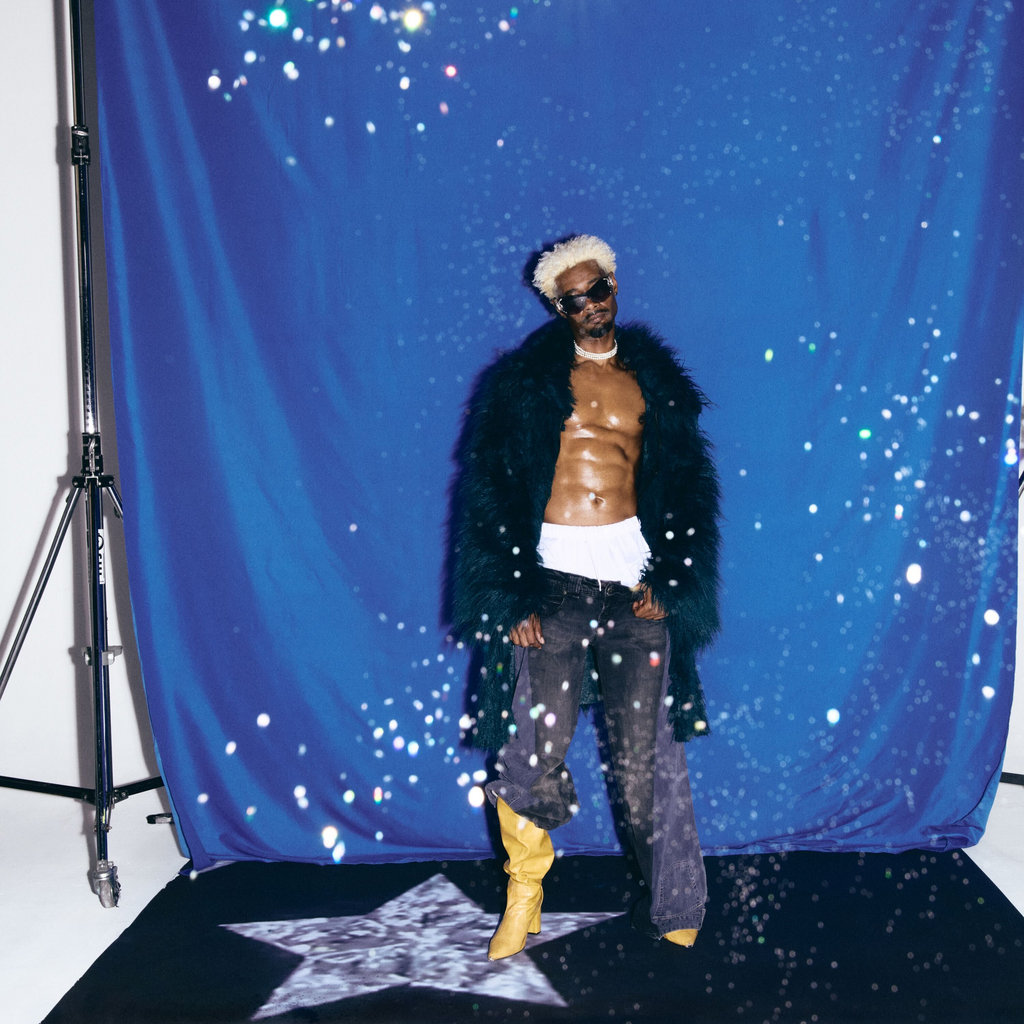
She quietly turned the album loose in May 2024 without expecting it to be a career-maker. But TREES began to take root, spreading organically through word of mouth. It even caught the ear of Danny Brown, who shouted it out on his podcast. Suddenly, KJADE was in demand. “I didn’t expect the splash of it,” she says, “but I picked up a lot of gigs and a couple of festivals here and there.” As her profile rose, and she started traveling beyond Arizona for shows, she wanted to capitalize on the momentum. True to form, she’d never stopped writing; by the middle of 2025, she began working in earnest on her follow-up.
On Everything I Love, which KJADE considers her debut album, is a striking change of pace. It shares TREES’ s similarly daydreamy palette, but Everything is a marked expansion, turning that album’s insular introspection into something warmer and more open-hearted. Esteban contributed half of the beats but other producers, like Pink Contrails, Melikxyz, and ovrkast., had also been sending over packs full of the hazy, romantic sounds she favors. And while she recorded the lion’s share of the album at Banny’s studio, she’d also been able to work at studios like EQT in Los Angeles and Three Times Louder in New York during her travels. As a result, the record has a more communal feel. Where TREES can sometimes scan as dissociative and distant, a bloodletting of sorts, Everything plays like an invitation to get to know who KJADE is and who she’s becoming. “I had to be mindful of my emotional hygiene,” she says of the album. “Do I want to protect myself? Do I want to make sure I’m not coughing up my trauma on people?”
If TREES was a deep dive into psychological distress, Everything is what comes after, the sweeping up and reassembling of a shattered life. The cover art, painted in bright colors by Ladon Alex (who has previously painted covers for McKinley Dixon), is a nude portrait of KJADE, arms outstretched in benediction, tears running from eyes that have no pupils or corneas. “When you experience a limitation on one of your senses, you lean on the others,” KJADE says of the blank eyes. “Instead of looking out, this represents looking internally.” The cover immediately projects vulnerability, setting the tone for the cathartic, emotional music within, and stands in sharp contrast to the cover of TREES, in which a skeletal tree, or perhaps a lightning bolt, sits atop KJADE in a black void.
She wanted the record to be lighter on its feet, allowing for moments that may slip into darkness, but never wallow in it. There’s a generous amount of space, like the psychedelic soul of esteban’s “Virginia Is For Lovers” (which gets even trippier in its chopped-and-screwed coda), or the low-bitrate boogie of Melikxyz’s “Superjail,” and KJADE slides through it all with the agility of a seasoned jewel thief sneaking past alarm sensors. Her voice appears higher in the mix, projecting confidence, allowing lines like “I could paint a picture with the ‘K’ that’s in my name” from “I’d Rather Soften” to land with their intended weight. Even when the “cruel world got [her] stoned again,” as it does on “STRANGER THAN FICTION,” she’s always a moment away from picking herself back up. “Trying to throw the scraps in my path/ Nah, I’m not fucking with that,” she asserts on “Pay Me In Pain.”
In the last few moments of On Everything I Love, there’s a sample from a Build-a-Bear that, when you press its foot, repeats “I love you.” It’s a fitting bookend to the laughter that opens the album, and it feels like a message to herself as much as the listener. In between those two moments of joy are the ups and downs of a relationship with oneself, the reevaluation of one’s values, and the ferocious promise to protect what matters. The title, On Everything I Love, is at once an exclamation and a summary. “Some call it ride or die, but I don’t know if the writing has to be synonymous with dying,” she insists. “It’s really about me on my path and mission, living and surviving, and what that really means.”
Comments
No comments yet. Be the first.
Sign in to leave a comment.