Starmer resists resignation calls after Labour Party loses local elections
The article presents Starmer's resistance to resignation calls with factual reporting of his statement and the mechanics of Labour's internal process, but frames the political crisis through establishment conventions ("the country expects us to govern") rather than interrogating substantive policy failures.
Primary voices: elected official, state or recognized government
- This article does not address the specific policy failures or voter grievances beyond passing reference to immigration and the Mandelson controversy.
- This article does not provide context on Reform UK's appeal or the broader ideological shifts reflected in local election results.
- This article does not examine Starmer's prior promises or campaign positions versus current implementation.
Framing will likely shift materially if a formal leadership challenge is triggered or if Starmer's position stabilizes; current reporting captures a snapshot of acute intra-party pressure.
Establishment framingBoth-sides framingNeutral language
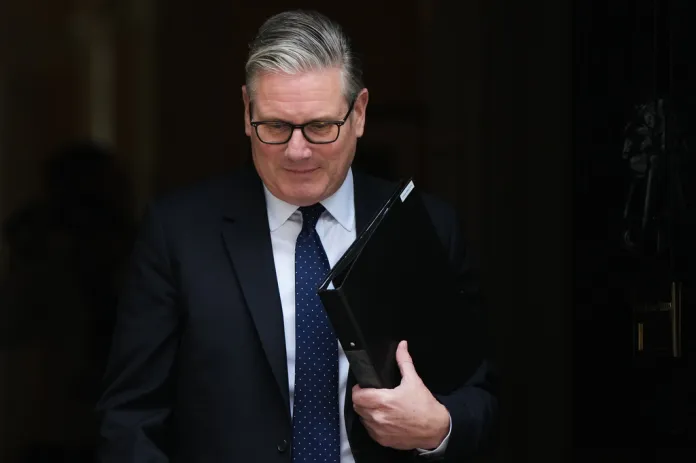
British Prime Minister Keir Starmer rebuffed resignation calls from lawmakers in Parliament on Tuesday after the Labour Party suffered major election losses at the local level last week.
Starmer’s own party is adamant about finding a successor, but the embattled leader plans on staying in office for now.
“The Labour Party has a process for challenging a leader and that has not been triggered,” he said at a meeting on Downing Street, according to his office. “The country expects us to get on with governing. That is what I am doing and what we must do.”
No Labour member has announced their intention to challenge Starmer for his post, but more are calling for his resignation by the day. At least 80 out of the party’s 403 lawmakers have demanded that he step down from the role or set a timetable for his departure.
After the prime minister said he won’t quit, Labour MP Jess Phillips resigned as safeguarding minister. The job pertains to combating violence against women and girls in the United Kingdom.
In her resignation letter, Phillips said she could not serve under the current leadership because she was “not seeing the change I think I, and the country expect.”
She is the second minister to step down, following the lead set by Labour-Co-op MP and junior minister Miatta Fahnbulleh.
At least four members of Starmer’s Cabinet, including Home Secretary Shabana Mahmood, want him to resign. Others wish for him to stay, with Defense Secretary John Healey saying he backs the prime minister to handle growing global instability.
There is no clear front-runner to replace Starmer yet, but Mahmood and Health Secretary Wes Streeting are among the leading contenders.
In the country’s local elections last Thursday, the Labour Party was dealt a heavy blow by smaller parties, such as the right-wing Reform UK party. Labour lost more than 1,400 English council seats, signaling voters’ discontent with the dominant party.
Starmer is facing intense scrutiny over his administration’s policies, particularly on immigration, and a controversy surrounding his decision to appoint Peter Mandelson, once associated with Jeffrey Epstein, to an ambassadorship. Mandelson was later fired, but the appointment underscored growing doubts about Starmer’s political judgment.
Comments
No comments yet. Be the first.
Sign in to leave a comment.