American Jews begin to chart a future without Zionism in the wake of the Gaza genocide
The ongoing Israeli genocide in Gaza that began in October 2023 has killed at least 72,000 people according to the Gaza Health Ministry, and an internal Israeli Defense Forces (IDF) database suggests that 83% of those killed were civilians. This indiscriminate violence has drawn international condemnation of the Jewish state for its treatment of Palestinians, and many of the same organizations that have concluded Israel’s actions in Gaza constitute genocide have also described the conduct towards Palestinians both inside Israel and in the occupied West Bank as a system of apartheid. As the world has witnessed and come to understand the systemic nature of Israeli violence against Palestinians, support for Israel has dropped to historic lows across the West, including among Jews.
This has had a profound impact on Judaism around the world, but perhaps nowhere as much as the United States, which is home to the most Jews of any country in the world, and Israel’s most important ally. The genocide in Gaza and increased scrutiny of Israel’s actions in the occupied Palestinian territories have led to a considerable growth of anti-Zionist and non-Zionist Jews, especially among younger Americans. These Jews no longer view the state of Israel as an integral aspect of their religion, and some want to completely disassociate from it.
Ithaca, New York, a small college town home to Cornell University and Ithaca College, is one place where the effects have rippled throughout the Jewish community. The small city’s sizable Jewish collegiate population and progressive political tendencies have created the conditions for small segments of anti-Zionist Judaism to pop up, perhaps showing what Jewishness could become in the next decades if support of Israel continues to decline. The following are the stories of the Ithaca Jews hoping to make this change a reality through religion, politics, and activism.
Michael Margolin
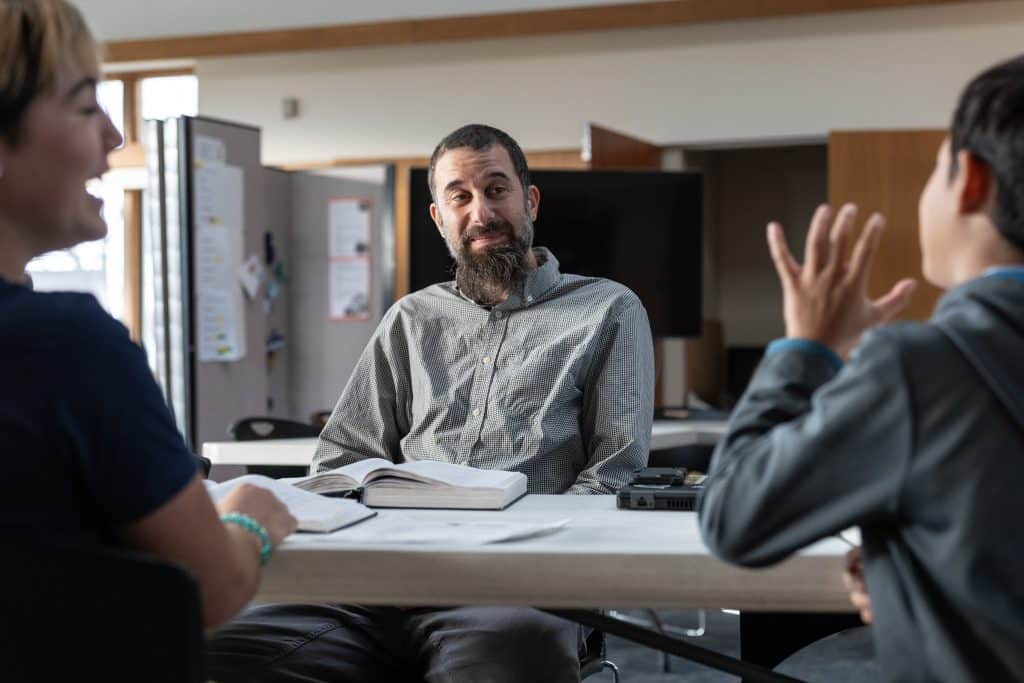
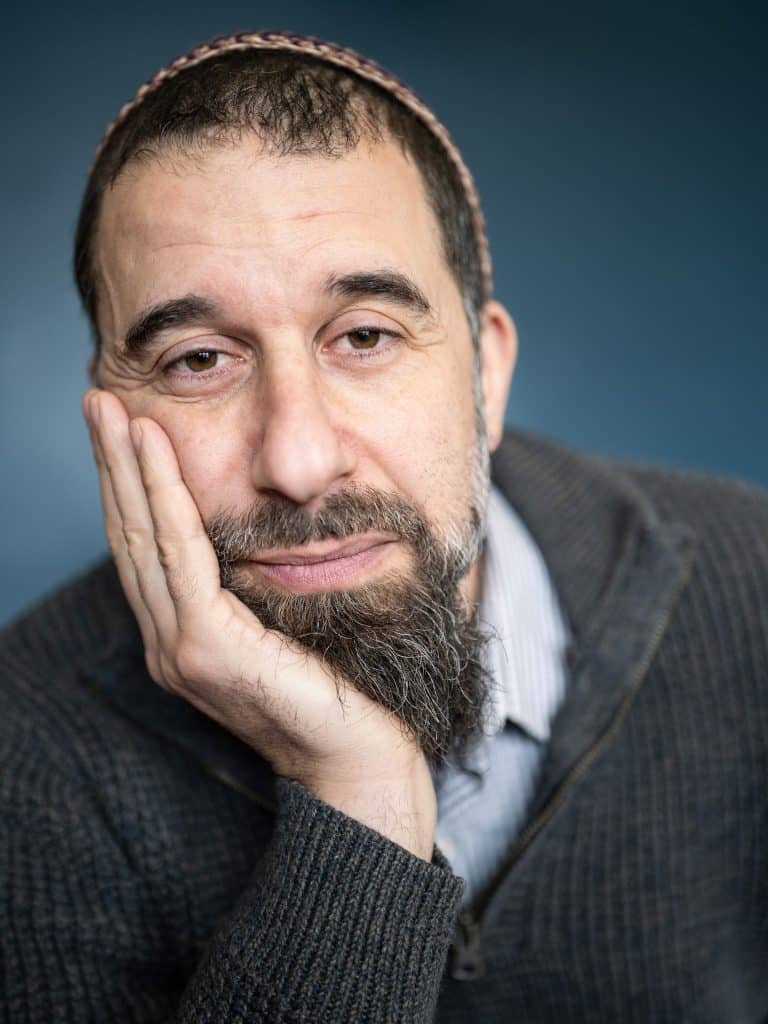
Michael Margolin walks a fine line. He is a Rabbi in training and a spiritual leader at the Tikkun v’Or Reform Temple in Ithaca, New York. He’s also a staunch anti-Zionist. Those two identities don’t always mesh. “Most synagogues would have never let me through the door,” Michael said, chuckling.
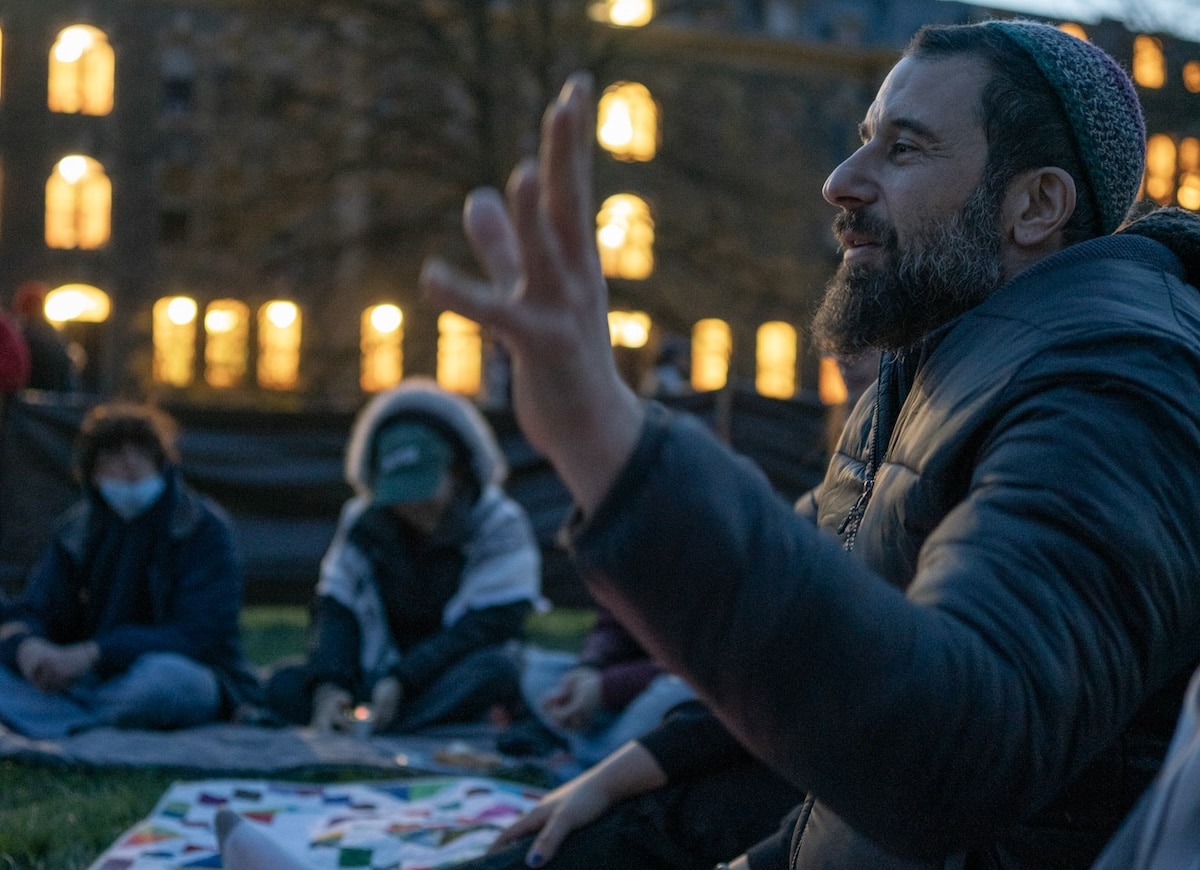
I met Michael in Spring 2024. He joined the students protesting against the genocide in Gaza at the Cornell University encampment, part of the student pro-Palestine movement popping up on campuses around the country. Michael led a shabbat service on the second night of the encampment, when many feared a police raid, although it never materialized. Michael had a warm personality that seemed to calm the students’ anxieties, and he had a deep knowledge of Jewish history that allowed him to relate current day struggles to the past. He explained that over and over again, Jews have been on the front lines of fighting for racial, economic, and social justice. He saw the contemporary Palestinian liberation movement as no different. In his mind, it was even more imperative to speak up at this moment because Israel oppresses Palestinians in the name of “Jewish safety.”
This was what made Michael an unlikely hire at most Jewish institutions. A long track record of publicly speaking up for Palestinian human rights while engaging in direct action that was highly critical of the Jewish state. And yet, through some luck and an exceptionally progressive board of directors, Michael had served at Tikkun v’Or for nearly a decade.
While Israel could be sidelined in the past, after October 7th, it became inescapable. For Michael, this created intense internal conflict. He didn’t know how to handle “being asked to lead a calm service” with “the backdrop of a genocide.” “It doesn’t make sense to remain calm,” he told me. But Michael works hard at the long term process of centering Judaism around justice at Tikkun v’Or. “I don’t have room in my heart for Zionism, but I have room in my heart for people,” he told me, including those who considered themselves Zionists. He acknowledged, while Israel was an obvious moral contradiction for him, it wasn’t for many at his congregation. He had to remain open-hearted while not shying away from uncomfortable topics.
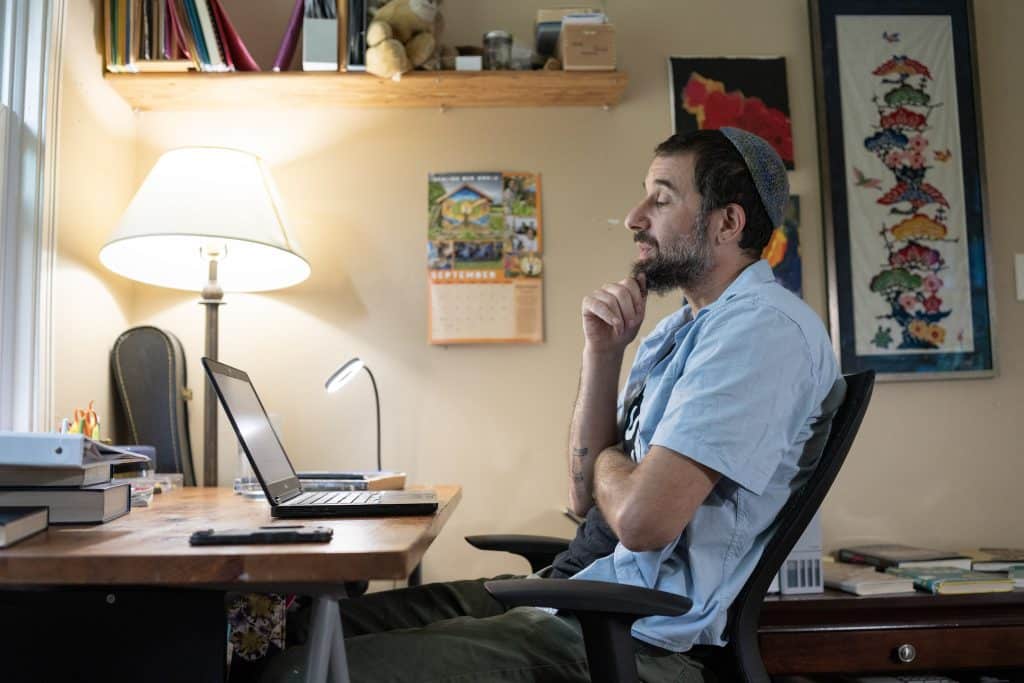
Yom Kippur is the Jewish day of repentance. In 2025, it carried a new meaning for Jews like Margolin. He said he could not honestly worship without confronting the destruction of Gaza by Israel. He spent weeks carefully crafting the sermon he was set to deliver to his congregation, writing over twelve iterations until he got the wording perfect.
Margolin delivered his speech in the packed nave of Ithaca’s United Unitarian Church, where Tikkun v’Or held their Yom Kippur services to accommodate the large crowd.“Even after the worst harm, teshuva is possible” and it begins “by facing the harm,” Michael said, using the Hebrew word for repentance and repair. He continued, “what has been done in our name? What have we allowed to happen?” The congregation was silent as Michael spoke, grappling with his words. “If we tried to read the names of the babies [in Gaza] who never reached their first birthday, it would take longer than our entire service,” Michael exclaimed. As he said this, a woman in front of me began to weep. With a keffiyeh wrapped around her neck, she held her hand over her mouth as her shoulders shook. Alone in her row, there was no one to comfort her.
Hannah Shvets and Sam Poole
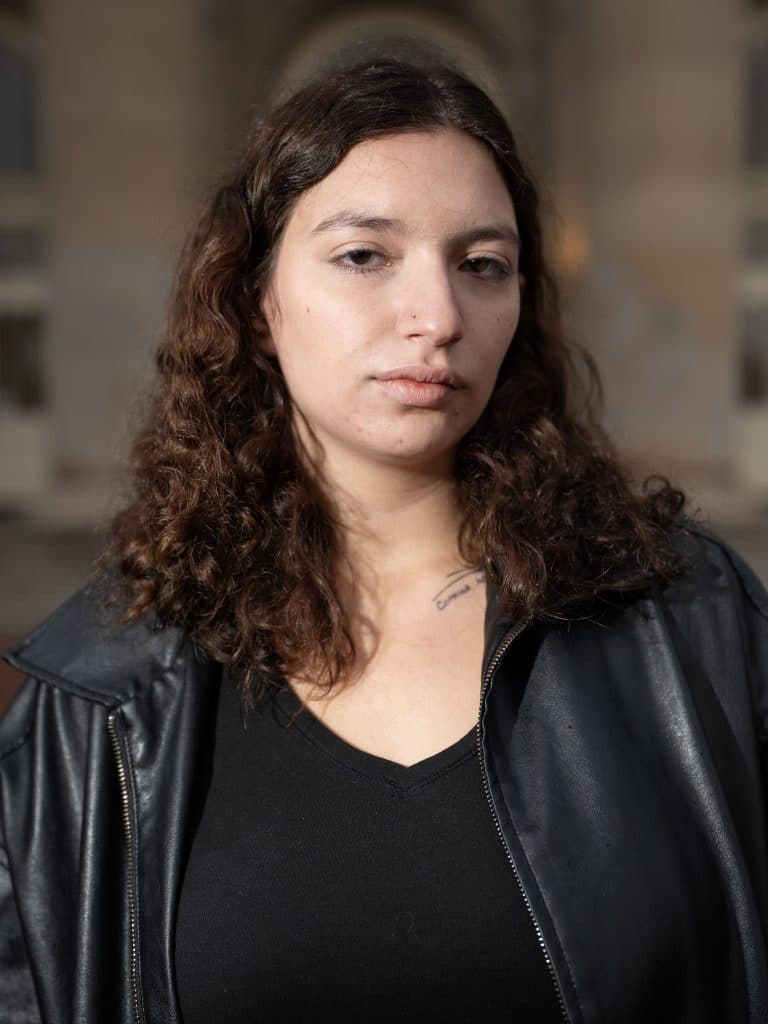
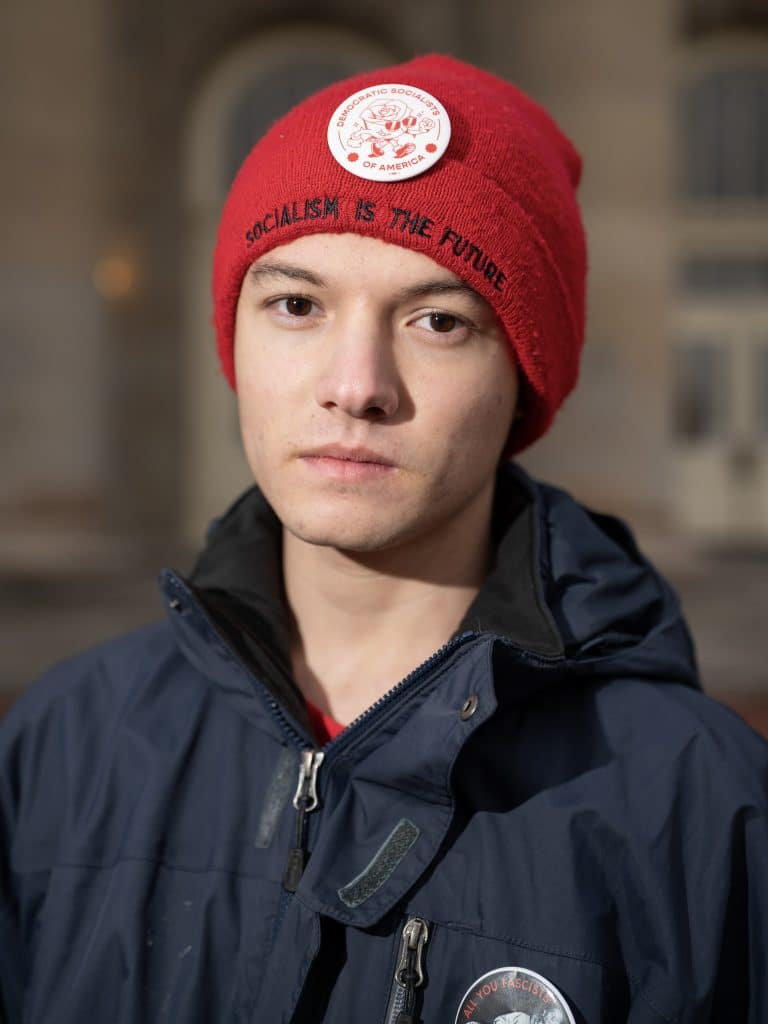
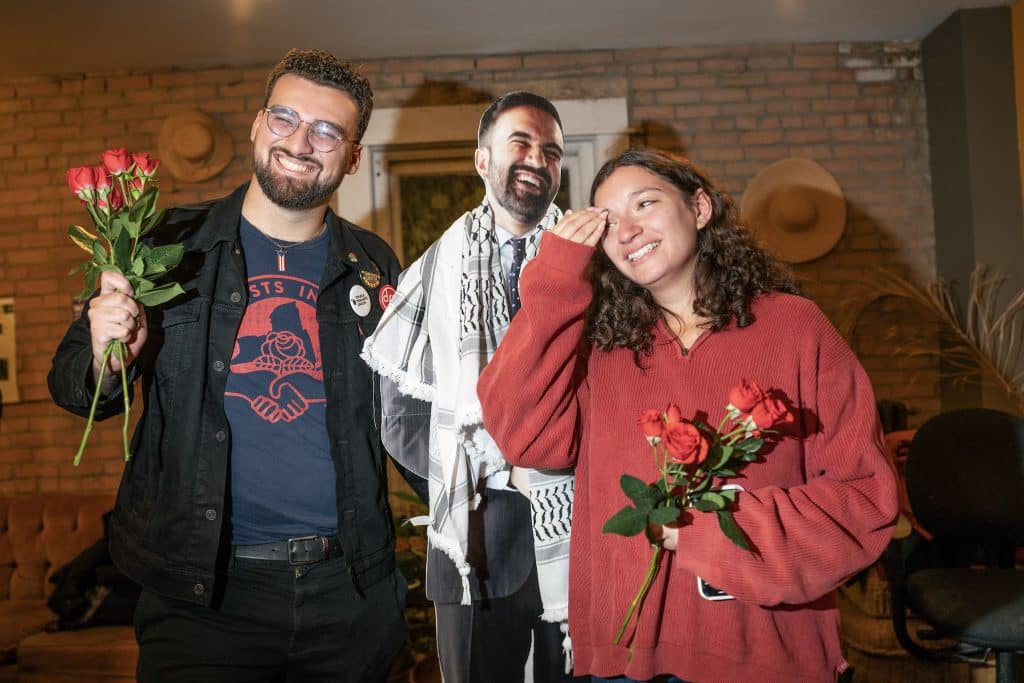
A young Jewish anti-Zionist socialist is entering the halls of power in Upstate New York. Or, at least the halls of Ithaca City Common Council.
Hannah Shvets, 21, is a Junior at Cornell University and, as of November 4th, the Alderperson-elect for ward five of Ithaca, NY. Shvets’ decision to run for common council was mainly to address the economic problems many of Ithaca’s residents are facing. There is an “affordability crisis in every city, including Ithaca,” she told me. Shvets gained the endorsement of the Democratic Socialists of America (DSA), a progressive political group she has been a member of for years.
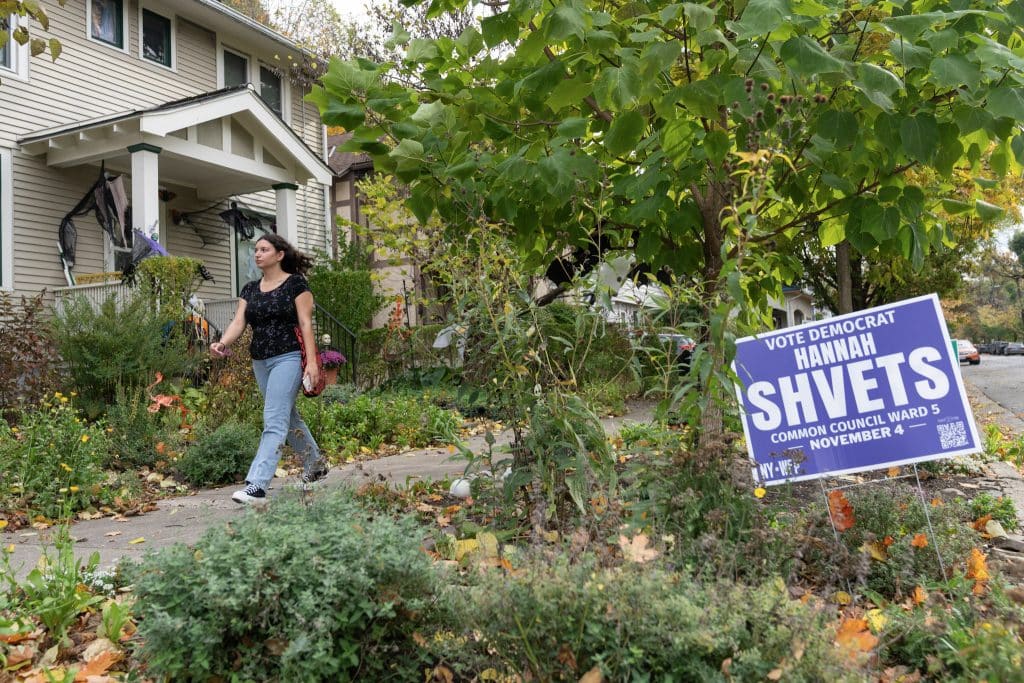
Ward five, the district Shvets ran in, is a mix of Cornell students renting off-campus and older homeowners. And while these groups are sometimes seen as adversarial, Shvets thinks they have more in common than some believe. “Both these groups are struggling with housing affordability, eviction, and not being able to pay rent,” said Shvets. She hopes to change that by opting Ithaca into the Emergency Tenant Protection Act, a New York state law that allows localities to opt into rent stabilization for certain properties. This is Shvets’ “first priority” because it is working within existing legislation and “there’s a lot of precedent for it.”
Despite Shvets running for a local office, her history as a vocal critic of Israel has had an impact on the race. Shvets says she advocates for “the rights of all vulnerable people” in Ithaca for the same reason she engages in the Palestinian solidarity movement. She believes all people should be safe from “imperialism and capitalist violence.” “So, it’s all kind of part of the same struggle to me,” said Shvets.
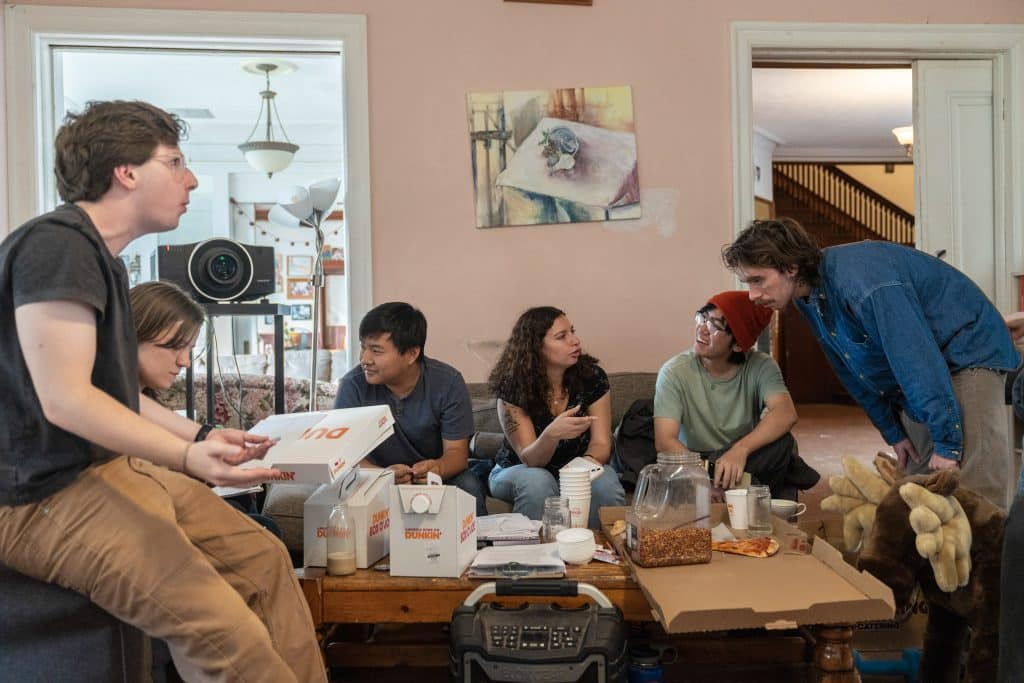
Shvets’ campaign was run by another young anti-Zionist Jew at Cornell: 19-year-old Sam Poole. In addition to being the campaign manager for Hannah Shvets, he is also working for NY state rep. Anna Kelles and is a delegate for the national Young Democratic Socialists of America, the DSA’s youth branch. Perhaps due to his hectic schedule, Poole seems to be in a constant state of multitasking, internal and external. Yet, he seems to handle the pressure well. “I still have above a 4.00 GPA, thank goodness,” said Poole.
Shvets and Poole both view their victory as part of a larger movement of new progressivism in the US. And like fellow DSA candidate and New York City Mayor, Zohran Mamdani, these progressives are harsh critics of Israel and are not shy about it. “In New York City, it might just be one mayor, but he’s united millions of people around a better vision for both national and local politics” as well as “international action,” said Shvets. According to Shvets and Poole, this movement is being driven in a large part by young American Jews who view Israel as counter to their progressive ideals. “Jewish Americans are starting to doubt what we’ve been kind of told our entire lives,” said Shvets, adding, “now we’re running more on the values that Judaism teaches us rather than a kind of blind support for Israel.” Poole feels that “safety can’t be contingent on oppression,” which is why he thinks young Jews “need Judaism without Zionism.”
Jacob Berman
Jacob Berman is a tall and soft spoken Senior at Cornell University, studying anthropology. He is also an active member of Chavurah, the non-Zionist religious organization at Cornell.
Berman’s perceptions of Israel began to change in high school as he attended an event hosted by the American Israel Public Affairs Committee, a pro-Israel lobbying group, in Washington D.C. At the event, Berman remembers being coached on “talking points” about “how to defend Israel,” and discussions of Palestinians being “barbarians.” “That [didn’t] seem very resonant with my own Jewish experience and my own experience with Zionism,” Berman told me. Then, during the Black Lives Matter protests, Berman became further disillusioned with Zionism, as protesters drew connections between the oppression of Black Americans and Israeli oppression of Palestinians.
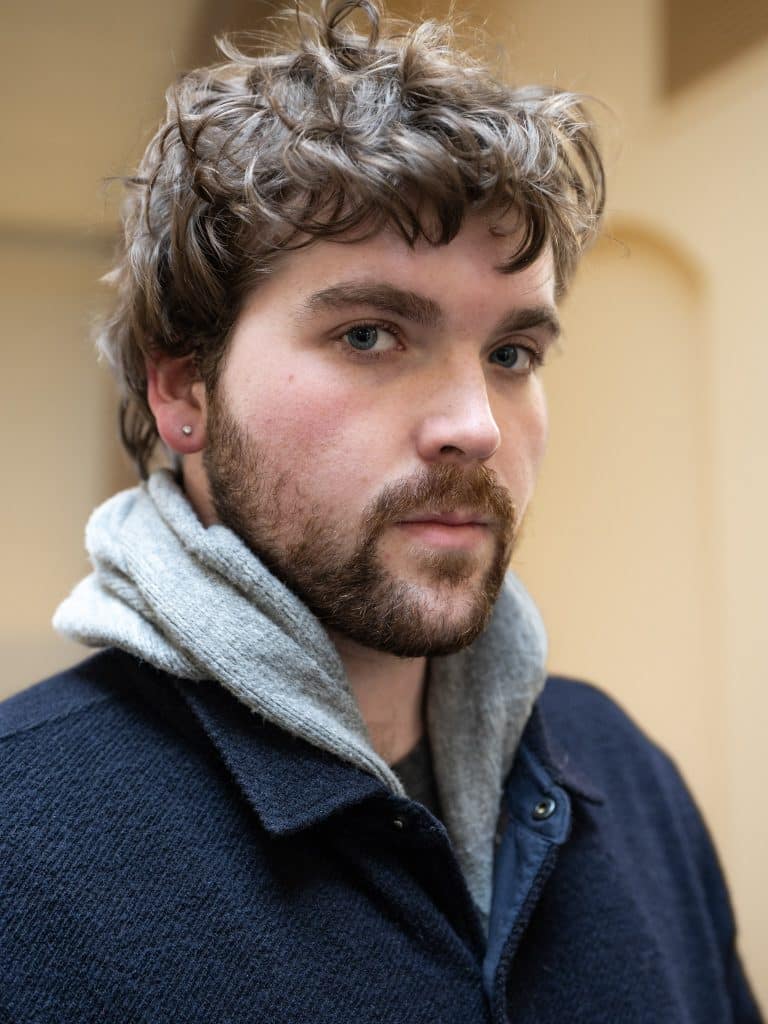
When the October 7th attacks happened in 2023, Berman said he “left the Jewish community” at Cornell altogether as he felt his viewpoint was not wanted. This led to Berman and a few others creating a Jewish Voice for Peace (JVP) chapter, a national Jewish anti-Zionist organization, at Cornell a few months later. Berman and other members of JVP would go on to participate in the Cornell encampment protests in the Spring of 2024.
Berman continued engaging with pro-Palestine actions at Cornell. This would eventually lead to his temporary suspension due to his involvement at a protest against arms manufacturers’ presence at an university career fair. Berman said that the university’s Office of Student Conduct accused him of “assaulting a police officer.” “I didn’t push a cop,” Berman told me. However, he decided to make an “Alternative Resolution” deal with the university rather than fighting his case and risking a harsher punishment. As part of his suspension, Berman was not allowed on campus, including to attend shabbat services. After failing to appeal to the administration, JVP moved their shabbat services off-campus to accommodate Berman and others who were suspended. “I think it goes to show that universities and the administration, of course, do not care about Jews,” Berman said of the situation.
Since returning from suspension, Berman has needed to stay in the good graces of the Cornell administration. This includes not attending protests except between “noon to 1:00” and “after 5:00 pm.” “If I get caught breaking the code of conduct, I’m instantly suspended for two years,” he said. This has led to Berman participating more in the religious aspect of anti-Zionist Jewish groups, like Chavurah, and volunteering at Tikkun v’Or. His experiences with these religious groups has also solidified his desire to go to rabbinical school, adding to the growing trend of American rabbinical students with more critical views of Israel. “I want to be a rabbi. I want to have a community like this,” Berman said.
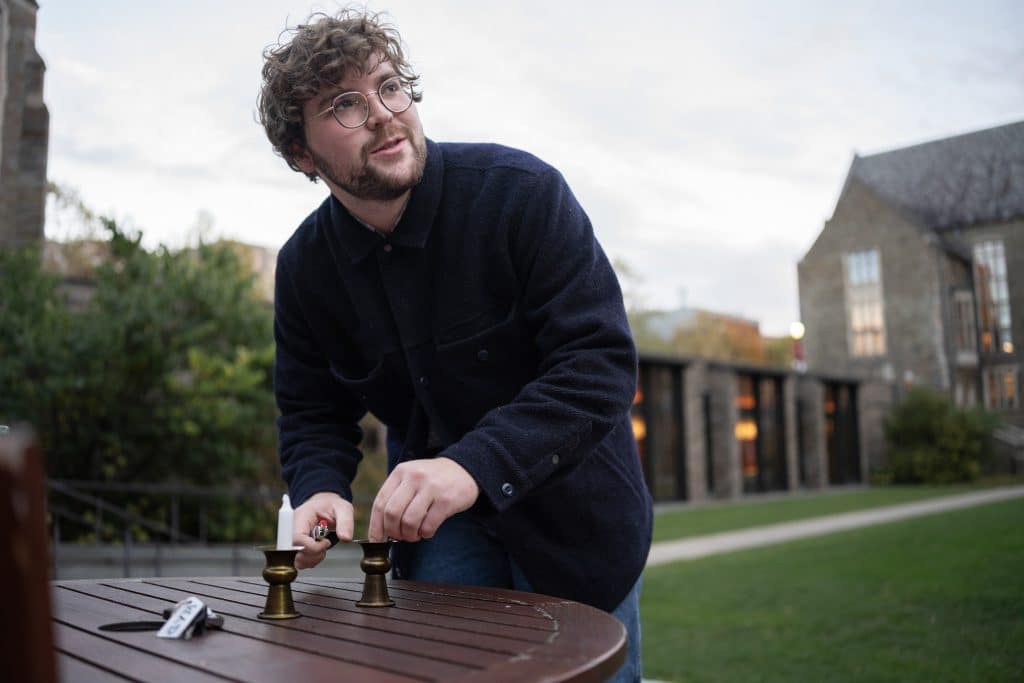
Berman thinks that American Judaism is going to see a large change in the coming decades and the current Jewish institutions will need to adapt. A lot of congregations are “still ignoring the fact that there are a lot of young Jews [who] are … going to leave Judaism if they are not allowed space in,” he said. In his view, American synagogues will have to “accept the fact that anti-Zionist Jews are a contingent of the broader national Jewish community.”
Quincey Fireside
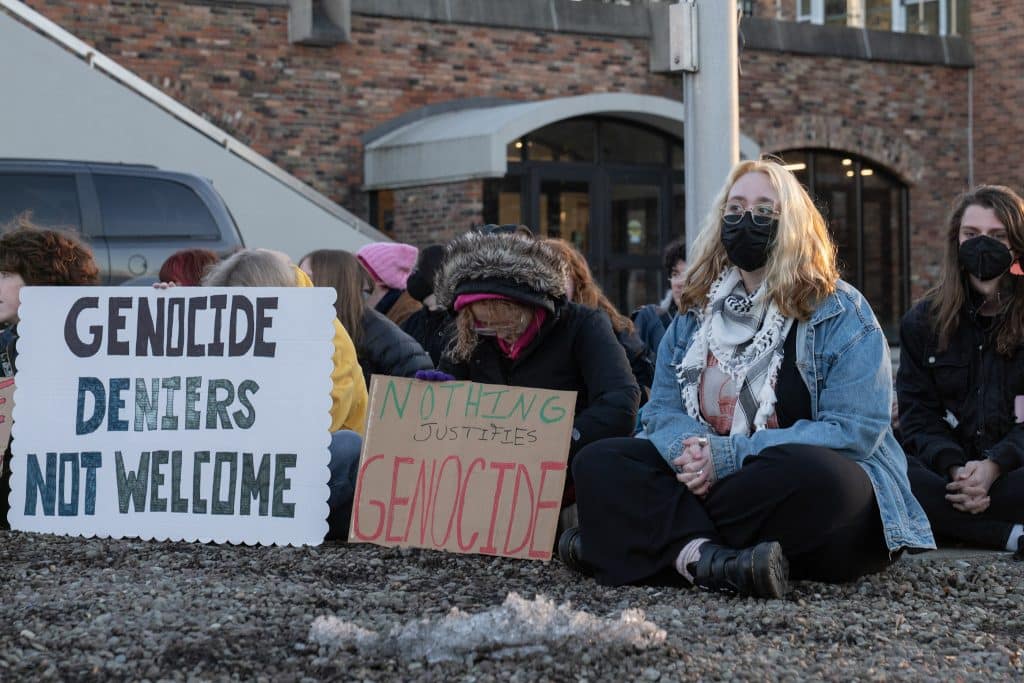
Since October 2023, Quincey Fireside has been busy as the president of the pro-Palestine organization Ithaca College Students for a Free Palestine (ICSFP). Fireside, who uses they/them pronouns, has organized many protests, held several educational events, and sent demands of Israeli divestment to the Ithaca College administration. So far, the administration has not responded. Fireside’s latest action was protesting an Ithaca College “Policy Breakfast” with congressman Josh Riley. Riley had recently taken an all-expenses-paid trip to Israel sponsored by the American Israel Public Affairs Committee (AIPAC) affiliated group, a move Fireside found morally reprehensible given the ongoing Israeli destruction of Gaza. They quickly organized a protest, posting online graphics on Instagram depicting Riley and others attending the event next to splatters of blood. Due to the pressure and “safety concerns” Riley canceled the event. Fireside held a vigil for the Palestinians killed in Gaza instead.
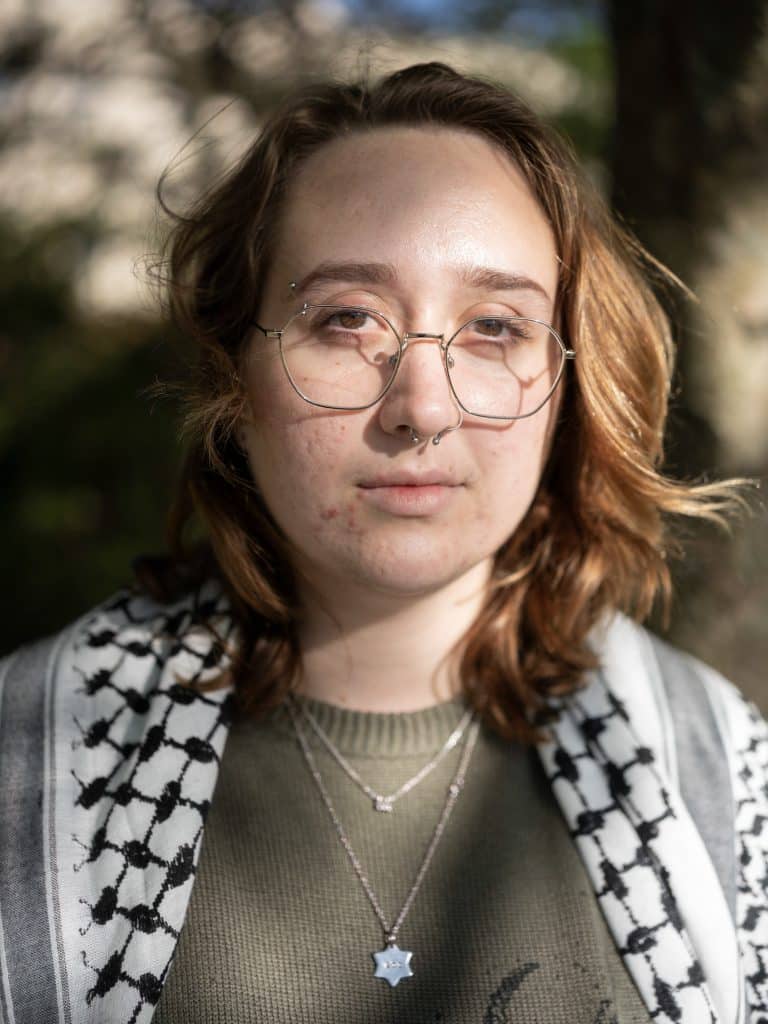
Nine people showed up for the vigil, Fireside said, while Ithaca College sent “around twenty” campus police officers to observe the event. “They treat us like we’re a terrorist organization,” said Fireside, elaborating that ICSFP has never advocated for violence. Despite this, the college often has heavy police presence at events organized by the group. “I wish I was as influential as they thought,” Fireside remarked. The Ithaca College administration recently gave Fireside a student conduct violation for the event, citing a noise complaint. Fireside finds this reasoning unlikely given the sparse crowd.
Being the president of ICSFP and its main organizer has caused some personal conflict for Fireside. “There is a perception I’m a self-hating Jew and I want everyone to die,” they told me. This has led to conflict with some Zionist Jews on campus. In late 2023, Fireside was called into a meeting with a representative of Ithaca College Hillel. The representative told Fireside that they could not be both Jewish and anti-Zionist. “You have to pick one,” Fireside recalled them saying. They have also experienced conflict with members of Ithacans for Israel (IFI), who Fireside says have harassed them. “It’s all the stuff you can’t prove,” they said. Shoulder checks in the hallways, unknown callers, and plenty of anonymous complaints to the college can all likely be traced back to students from IFI, Fireside suspects. And recently, when Fireside tabled for ICSFP at a club fair in September, they were repeatedly called a “kyke” by several students, who Fireside believes were Jewish Zionists. All this “comes with the territory,” says Fireside.
Yet, Fireside has no plans of slowing down. “I’m firm in my beliefs,” they said, “I know genocide is bad, and I know this is genocide.” In fact, they have grown more religious since they began their activism, and plan to get B-mitzvahed in the Spring, preparing with help from Michael Margolin. “The genocide,” Fireside said, can push one “further or closer to [their] faith,” and they chose the latter. For Fireside, activism is important and necessary while their religion “is a form of self care.”
The future of American Judaism
The rise in anti-Zionism among Jews in Ithaca mirrors a situation playing out across the nation. American Jews represent a small fraction, around 2%, of the nation’s populace, making it difficult to identify broad trends among the diverse population spread out across a vast country. However, the available data suggests that American Jews’ skepticism towards Israel is growing, but its most vocal critics are certainly not in the majority. According to a 2025 survey by the Jewish Federation of North America (JFNA), 15% of American Jews identify as anti-Zionist or non-Zionist, compared to the 37% who identify as Zionist, with 48% identifying as “not sure” or “none of these.” But the same JFNA survey also shows that 88% believe Israel has the “right to exist as a Jewish, democratic state,” showing Zionism’s flexible definition in the current political environment. But negative views among American Jews towards Israel’s military actions have never been higher. A 2025 survey from the Washington Post states that 61% of American Jews believe Israel has committed war crimes in Gaza, and 39% believe it has committed genocide.
Israel, a nation created in the shadow of one of the most infamous genocides in history, a nation created with the motto of “never again,” has come to a breaking point. How can a state built to prevent future genocides from occurring be perpetrating one itself? For some American Jews, the contradiction is too much. They believe the project of Israel, of Zionism, has failed and want it out of their religion.
The future remains murky for Judaism in America. Will anti-Zionist and non-Zionist synagogues, yeshivas, and non-profits begin to form around the country, causing a religious schism along political lines? Will this recent burst in anti-Zionism fizzle out as the years go by, or will opposition to Israel become a majority position?
For Michael Margolin, the answer is clear. He believes that when future generations of Jews look back on this part of history, they will be appalled. “We are living in empire Judaism,” Margolin tells me. For Michael, the only solution is the complete end of Zionism. “Zionism needs to die, and we must be a part of its death.”
Comments
No comments yet. Be the first.
Sign in to leave a comment.