Netanyahu’s unfinished wars: How Europe can stop the next round
The article is sourced from ECFR, a European establishment think tank, and frames the ceasefires as desirable while portraying Netanyahu's objectives as dishonest or exaggerated ('grand promises, bitter disappointment'). Word choices like 'diktat,' 'wrought costly wars,' and characterizations of Netanyahu as motivated by poll numbers reveal negative framing. The piece centers European strategic interests and Arab partnership while depicting Israeli security concerns skeptically, and it omits Palestinian casualties from the initial framing of the conflict.
Primary voices: think tank or policy institute, elected official, media outlet
- This article does not address the scale of October 7th attacks or Hamas military capabilities that prompted the initial Israeli response.
- This article does not present Israeli or Netanyahu's stated security rationale for the military campaigns beyond dismissing them as exaggerated.
- This article does not address how regional actors other than Iran and Hezbollah view the ceasefires or whether they align with European interests.
Framing may shift as ceasefire durability becomes clearer and as the Israeli election cycle unfolds, potentially validating or undermining claims about Netanyahu's political motivations.
Think-tank-citedEstablishment framingCharged language
Israeli prime minister Benjamin Netanyahu assured Israelis that if they endured weeks in bomb shelters and obeyed Home Front Command, they would be rewarded with “a new Middle East”. Instead, US president Donald Trump forced him to accept ceasefires in Iran and Lebanon, leaving the job “unfinished”.
Israelis have been disappointed to discover that the Iranian regime remains intact, with hardliners emboldened and the IRGC more entrenched, still in possession of enriched uranium and its ballistic missile programme. Worse still, the Islamic Republic has restored its deterrence, having shown a willingness to fight and to exploit its control over global shipping.
In Lebanon, Hezbollah is bruised but not beaten. The group continues to threaten IDF forces occupying the south as well as Israeli border communities, who are now furious. Regional council heads from former Likud strongholds took to social media to express their sense of betrayal. One council member posted a middle finger emoji aimed at the government.
For many in Israel, Netanyahu now appears impotent, subject to American “diktat”. It is no secret that the prime minister would prefer the wars to continue, hoping renewed conflict revives his ailing poll numbers ahead of the election. Most Israelis agree: only a third support the ceasefire with Iran, dropping to 20% among Jewish-Israelis, while 69–80% want Israel to keep fighting Hezbollah. However, Netanyahu is unable to publicly defy Trump.
Trump’s apparent desire for a deal, along with his ability to constrain Netanyahu, creates an opportunity for Europeans. Over the past months, they have often found themselves marginalised even as the US and Israel wrought costly wars that undermined regional stability and damaged European interests. Now, Europeans should work with Arab partners to convince Trump to preserve the ceasefires, contain Israel and stabilise Lebanon.
Grand promises, bitter disappointment
For decades, Netanyahu has worked tirelessly to convince Israelis that the Iranian regime and its allies pose an existential threat—and one that only he could protect Israel from. After Hamas’ October 7th 2023 attacks, these existential fears gained new salience.
Two weeks into the war with Iran, Netanyahu laid out his goals: preventing the regime from developing nuclear weapons and ballistic missiles and “creat[ing] conditions that will allow the Iranian people to remove the cruel, tyrannical regime.”
Those goals soon shifted—at least publicly—mirroring Trump’s erratic announcements and as events on the ground failed to unfold as hoped. Almost seven weeks in, Netanyahu quietly excluded the missile programme and incorporated a new problem, the Iranian blockade of Hormuz: “Ours and the United States’ goals are identical,” he claimed. “To see the enriched material removed from Iran, to see an end to enrichment capability in Iran, and to see the strait opened.”
Buoyed by Netanyahu’s grand promises, Israelis were willing to buckle up, with overwhelming public support for the war. For almost six weeks, life in Israel was turned upside down. Iran launched 640 missiles and 765 drones at the country, and Hezbollah more than a thousand, sending Israelis to bomb shelters day and night.


As a result of Israel’s air defences, casualties remained relatively low, with 20 Israelis and foreign nationals killed in Israel and four Palestinians in the West Bank. Right-wing commentators decried the public for complaining, branding it a “deluxe war” and pointing to the early warning system and rate of interceptions. In contrast, the picture was far grimmer in Iran and Lebanon, where 1,701 civilians and 1,830 civilians and combatants were killed respectively. Israeli news channels largely provided uncritical coverage of the war, with few dissenting voices, instead airing triumphant footage of exploding military targets and organigrammes of leaders “eliminated”.
So when Trump unilaterally imposed on Israel ceasefires in Iran and Lebanon, many Israelis were left bewildered and deflated—denied the decisive victory Netanyahu had promised.
Netanyahu’s failure
On Iran, Netanyahu hopes Trump drops diplomacy and returns to military action. So far, the US president has signalled that he wants a deal. To Netanyahu’s alarm, Trump has continued to negotiate with Tehran and is contemplating unfreezing billions in regime funds. However, Trump is also threatening force if Tehran refuses American terms—on May 10, he dismissed the Iranian response as “totally unacceptable”. Meanwhile, the US and Iran have continued to exchange fire in the Strait of Hormuz, while Iran has targeted Gulf states with drones.
Above all, Netanyahu and Israeli security officials fear Trump could strike a “bad deal” with Tehran, similar or more favourable to Iran than the JCPOA that would revive Iran’s economy and allow the regime to rebuild its military capabilities and proxies. Israel insists any deal must address not only the nuclear programme but also missiles and drones.[1] Failing that, Israel prefers a no-deal scenario, and what security officials refer to as “strategic patience”: mirroring the old Iranian security doctrine, Israel would utilise economic and legal tools as well as covert and influence operations to weaken the regime while biding its time for the next military operation.[2]
On Lebanon, Israel was forced play along with talks in Washington, but regards the Lebanese government as too weak, and Hezbollah too strong, to deliver any agreement.[3] On the ground, the IDF and Hezbollah are continuing to trade fire in a war of attrition that could escalate at any moment. Israeli forces have expanded their occupation of southern Lebanon to 8-10km north of the Israeli border, which Israel calls a “security buffer zone”, designed to prevent an October 7th-style infiltration and anti-tank fire. This provides a sense of security to residents who now see Israeli—rather than Hezbollah—flags across the border.
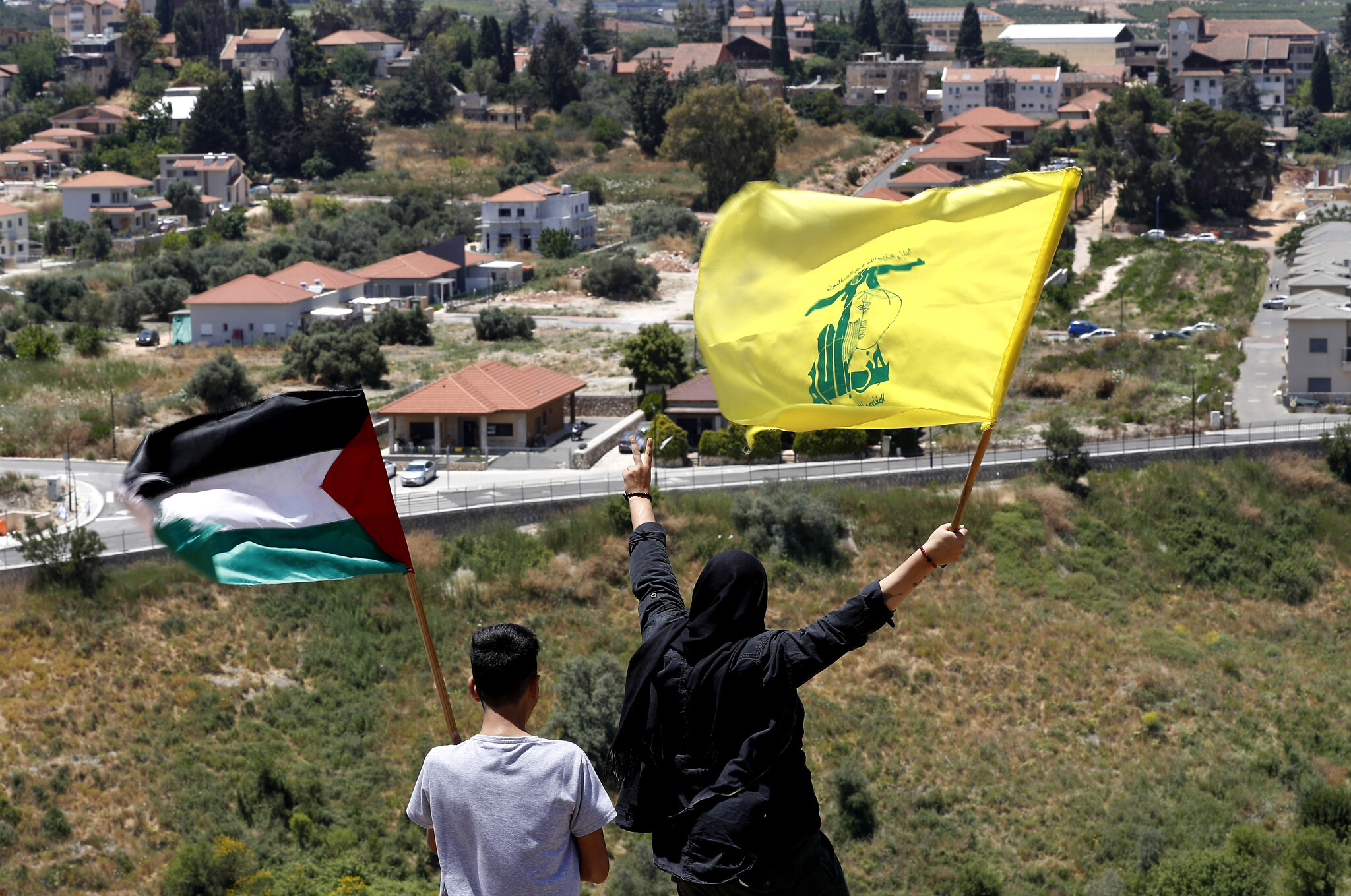
Israeli security analysts describe a “grey zone” created by the ambiguous truce terms, which reportedly restrict the IDF to responding only to immediate threats to its forces in southern Lebanon. In practice, the military has continued to strike Hezbollah fighters and infrastructure in the south. Last week, the IDF struck Beirut for the first time since the ceasefire, killing a Hezbollah commander. Following the Gaza playbook, the army has been bulldozing villages in southern Lebanon amid reports of looting, while keeping 1.2 million displaced. Hezbollah, for its part, has been launching attacks on Israeli forces and northern Israeli communities, killing five soldiers and one civilian since the ceasefire.
The war has not altered Israel’s fundamental dilemma in Lebanon. The Israeli military is entrapped in the south, with no clear exit and under persistent Hezbollah attacks, yet lacks the resources to disarm the group, given its commitments on other fronts. IDF officials have said it would require occupying the whole country, going house-to-house. This would be deeply unpopular in Israel, raising the spectre of Israel’s bloody 18-year occupation of southern Lebanon. At the same time, Israel judges the Lebanese Armed Forces (LAF) to be unable—or unwilling—to disarm Hezbollah.
Former Israeli security officials have said that the government needs to stop lying to the public and acknowledge that there is no quick military solution. The public wants Hezbollah vanquished, but not at the cost of another long-term occupation. Security officials understand the importance of the LAF as the only actor with the legitimacy to disarm Hezbollah, and a possible rare convergence of interests between Israel and this Lebanese government in seeing the group disarmed.[4] They urge a gradual disarmament process led by the LAF, with investment to help it replace Hezbollah’s governance role in the south. But Netanyahu seems unwilling to articulate this dilemma and to manage public expectations.
Europe’s opening
Israel and America’s wars have angered Europeans, who were not consulted yet were expected to shoulder the consequences—and in the case of Iran, to participate. Europeans have frequently appeared helpless, spectating rather than shaping events. After the Middle East itself, Europeans will pay a steep price for regional instability, including energy shortages, rising inflation and the risk of a renewed refugee crisis.
Israel’s heavy bombardment of Lebanon after the Iran ceasefire announcement particularly infuriated European officials, who saw them as an attempt to derail diplomacy efforts with Tehran. The attacks renewed calls for the EU to suspend the Association Agreement with Israel and revisit other measures.
Europeans have little direct influence over Hezbollah, but they do have real economic leverage over Israel. Now, they should exert pressure on Netanyahu not to undermine the fragile ceasefires, and to end the forced displacement of civilians and destruction of civilian infrastructure in southern Lebanon. While they may be marginalised on the Iran file, Europeans need to keep making a strong political and economic case to Washington and Tehran on the need for a deal.
But it may be on Lebanon that Europeans can add real value. Here, they should urgently work with Gulf partners, capitalising on the French success in re-engaging the Saudis, to stabilise Lebanon before the country unravels. This will be a long process, requiring immediate and expanded support to the Lebanese government and army. Europeans should also use their troop contributions to shape the composition, mandate and rules of engagement of any new peacekeeping force along the Lebanese-Israeli border that could succeed UNIFIL, whose mandate will expire at the end of 2026.
Europeans and Arabs will need to persuade Trump that stabilising Lebanon is crucial to advance his vision of “world peace”, even if that means indulging in some diplomatic theatre. Together, they will need to counterbalance Trump’s coercive style of diplomacy, which risks reigniting civil war in Lebanon. They should focus on containing Israeli attacks and strengthening the Lebanese state and army.
Netanyahu will continue to push to expand operations against Hezbollah, stretching the ceasefire’s terms and seeking to delink the front from negotiations with Tehran. On Iran, he hopes that Trump tires of diplomacy and greenlights a return to war, and will do all he can to push the US in this direction.
But both wars have exposed the limits of Netanyahu’s strategy: Israel cannot bludgeon its way to security. Despite the damage done to Iran and Hezbollah, Iran remains defiant, and Israel now risks becoming trapped in another occupation in Lebanon. Europeans must urgently work to contain Israel, making clear its actions will incur costs. They have a fleeting opportunity to prevent a return to war, while beginning the long process of stabilising Lebanon.
[1] Discussion with former Israeli security officials, March 2026.
[2] Discussion with former Israeli security officials, March 2026.
[3] Discussion with Israeli security analyst, May 2026.
Comments
No comments yet. Be the first.
Sign in to leave a comment.