The EU has finally agreed to sanction violent Israeli settlers, but critics say the measures do not go nearly far enough
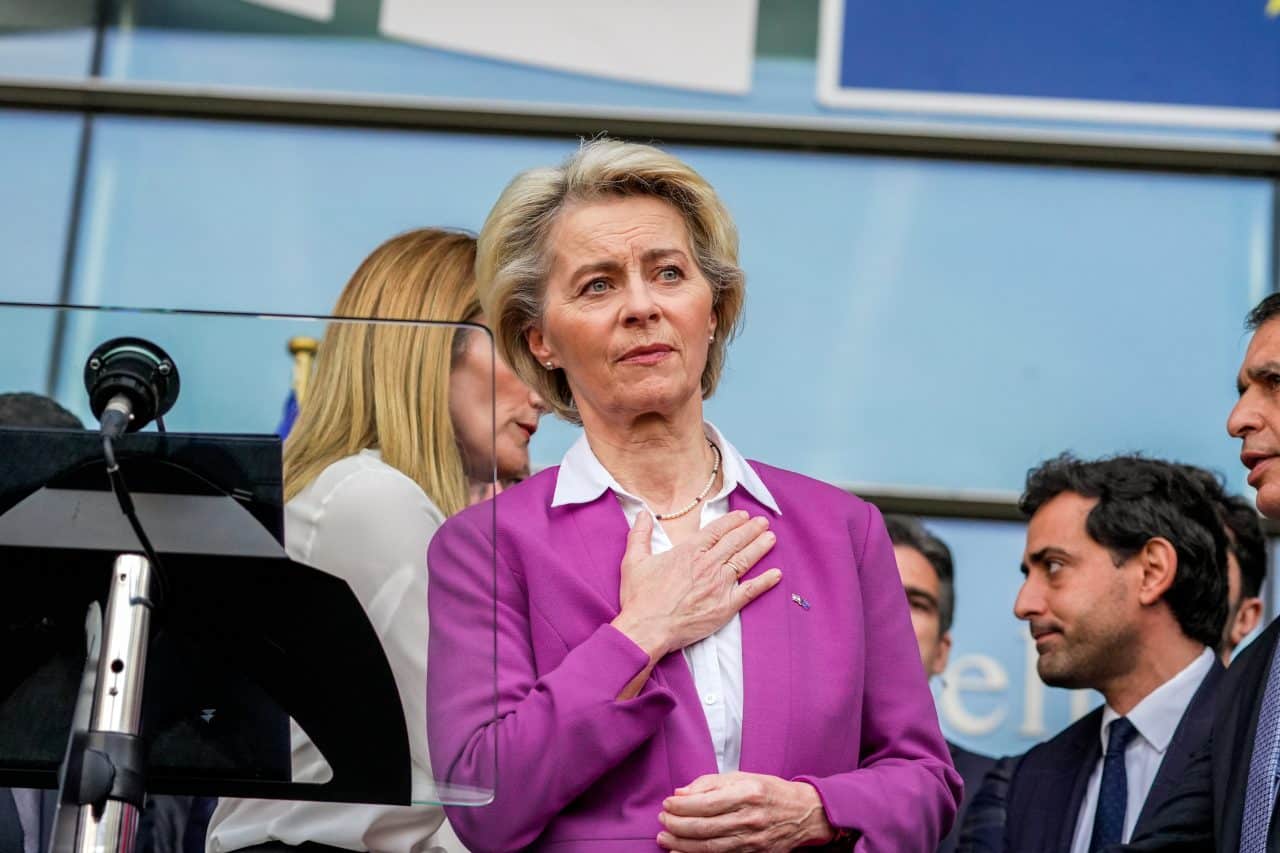
Israeli settler groups committing violence against Palestinians in the West Bank could now be sanctioned by the European Union, after 27 foreign ministers of EU countries greenlit imposing sanctions on violent settlers and settler groups on Monday. The ministers also decided to sanction Hamas leaders. The decision came at a meeting of EU foreign ministers in Brussels, which discussed major Middle East political portfolios.
The decision was announced by the EU foreign policy chief Kaja Kallas, who announced on X that it was “high time for us to move from deadlock to delivery,” adding that “extremisms and violence carry consequences.” French FM Jean Noël Barrot said that the EU decided to sanction groups and leaders of Israeli settlers responsible for “serious and intolerable acts that must cease without delay.”
In Israel, the decision was received with outrage from the entire political establishment. Israel’s Foreign Minister, Gideon Saar, called the decision “arbitrary and political,” denouncing what he described as an “outrageous comparison” between Israeli settlers and Hamas members. Israel’s hardline National Security Minister, Itamar Ben-Gvir, who himself comes from the violent settler movement, called the EU “antisemitic.” Ben-Gvir also called upon the government to approve the bill presented by his own party to ban banks in Israel from implementing the sanctions.
Since October 2023, Israeli settler groups have carried out up to 3,000 attacks against Palestinians in the West Bank, according to the UN. These attacks have expelled at least 28 Palestinian rural communities, including 12,000 Palestinians out of their homes, according to the al-Baidar Organization for the Defense of Bedouin Rights in Palestine.
Legal and technical work is yet to be done for the sanctions themselves to go into effect. The sanctions will include three individual settlers and four settler groups, although the specific names haven’t been yet disclosed. In the meantime, Europe continues to hold partnership agreements with Israel, including in military and academic cooperation.
But why is the EU sanctioning settler groups now? For European Palestine solidarity activists and international law experts, the sanctioning of individual settlers is a way for Israel to avoid more serious sanctions against the state, which is the ultimate enabler of settler violence, which takes place as part of a broader state policy of annexation.
Why now?
The last time European Foreign Ministers came close to agreeing on sanctions against settlers was in July 2024, after the Biden administration and the UK sanctioned four Israelis involved in violence against Palestinians in February of that year.
Other countries followed suit. France imposed sanctions on 28 Israelis involved in settler violence, as well as other non-European countries like Australia, Canada, and Japan. In April 2024, the EU itself imposed sanctions on the four settlers sanctioned by Biden and the UK.
But ever since, the EU has been unable to produce a consensus over sanctioning any part of the Israeli system, which needs the consent of all 27 member states. The former Hungarian far-right government of Viktor Orban, which was allied with Israel, had voted to break the consensus on multiple occasions. That changed last month, when Orban’s Fidesz party lost Hungary’s elections, bringing the country’s longstanding opposition to European sanctions to an end.
But sanctioning settlers is only a part of the political debate in Europe over the relationship with Israel. The bigger story is whether the EU will consider reviewing its longstanding economic relationship with Israel. The EU remains Israel’s most important trade partner, surpassing the U.S. and China, with exchange between both Israel and the EU reaching $42.6 billion in 2024.
These relations date back to the 1995 “association agreement” signed by Israel and the EU, which established a free trade area and granted Israel preferential access to the EU market, entering into force in 2000. During the past two years, multiple voices have demanded that the agreement be reconsidered in light of the Gaza genocide, yet several EU countries have formed a bloc opposing the move, including Germany, Italy, the Czech Republic, Austria, and Hungary. Meanwhile, Spain, Belgium, Slovenia, Ireland, and the Netherlands separately imposed national bans on Israeli imports originating from West Bank settlements.
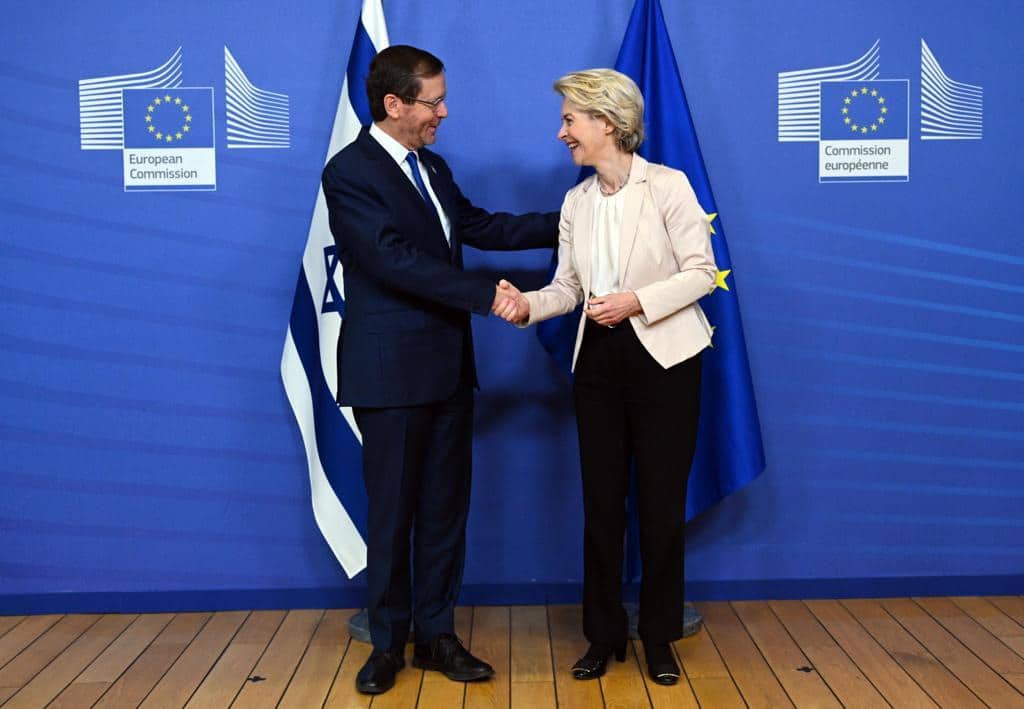
For Brussels-based Palestinian international law attorney Lama Nazeeh, the sanctions announced on Monday are little more than “cosmetic.” In recent years, pressure from human rights groups has demanded more substantial action from the EU, particularly in reviewing the economic agreements between Europe and Israel, Nazeeh told Mondoweiss.
Such a reconsideration of the nature of the economic relationship with Israel, “would constitute a real form of pressure,” she said, whereas “sanctioning three or four individuals will not stop the violent campaign to expel Palestinians in the West Bank, with the support of the Israeli government.”
Nazeeh added that the EU has in the past taken much more decisive action in imposing sanctions on countries that violate international norms, pointing to European sanctions against Russia over its war in Ukraine.
For Nazeeh, the EU “is not experiencing a shift in policy, but rather catching up with reality.” That reality is one in which Israel no longer enjoys unconditional impunity or indifference in the court of public opinion.
According to Mahmooud Nawajaa, coordinator of Palestine’s Boycott National Committee, “the recent sanctions are an attempt by European governments to escape their real responsibility for Israel’s violations.”
Nawajaa told Mondoweiss that “the EU not only continues to provide Israel with special commercial status, and with military, academic, and cultural cover as it continues to displace Palestinians, but it also gives a pass to its Prime Minister, who is wanted by international judicial bodies for war crimes.” For Nawajaa, the announced sanctions “can’t stop settlers’ violence, which is much more structural and systematic,” and won’t be curbed by sanctioning four or five individuals.
However, Nawajaa recognized that the announcement of sanctions comes as “a response to citizen pressure on European governments, which has been mounting in the past two years.” Nawajaa said that while the sanctions don’t reflect a real shift in European politics, “they indicate that grassroots mobilization and organized solidarity with Palestine can force governments to take action.”
For Anne Tuallion, a French Palestine solidarity activist, Monday’s sanctions constituted “the bare minimum of the bare minimum,” and that the sanctioning of individual settlers was “a smokescreen to further delay real action towards the Israeli state as such, while Palestinians continue to have their lands stolen, their lives threatened, and their rights denied.”
Since 2023, settler attacks have practically ended all Palestinian presence in the eastern slopes of the West Bank and much of the Jordan Valley, grabbing most farmland from dozens of Palestinian towns and villages and severely impacting the agricultural sector. Since the beginning of 2026, settler attacks have killed at least 10 Palestinians in the West Bank.
Comments
No comments yet. Be the first.
Sign in to leave a comment.