In Russia, a failed university exam can send you to war
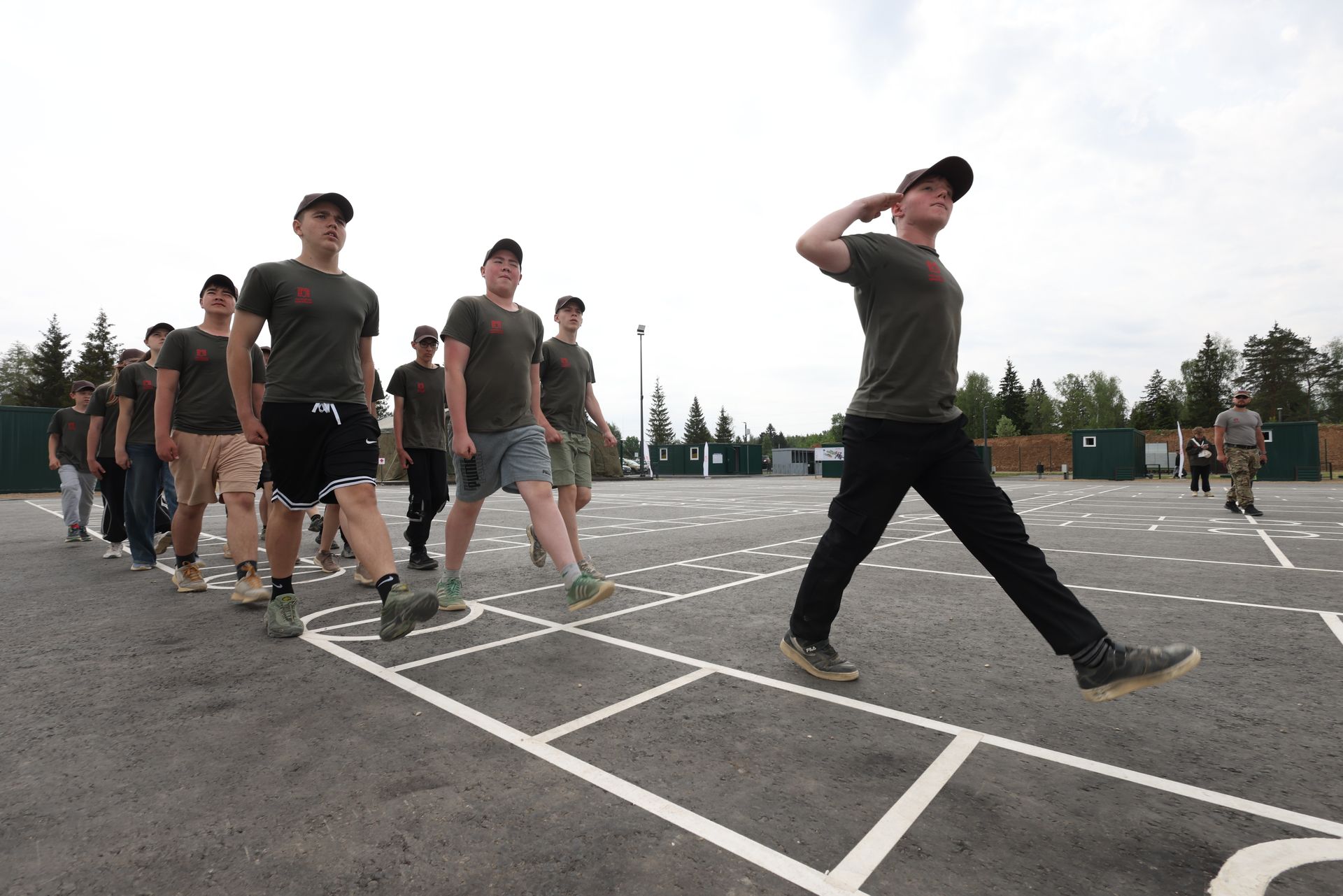
Russian schoolchildren march on the parade ground during drill training at the Zhukov Camp, June 6, 2025, at Alabino military polygon, West of Moscow, Russia. (Contributor / Getty Images)
In a closed Telegram chat for parents of students at Bauman Moscow State Technical University (the Russian analog of MIT), a mother shares her son's story.
The young man failed one exam before the qualification commission and was unable to take an academic leave.
After that, the only thing left for him was the risk of losing his student status and being drafted into the army.
At the military enlistment office on Yablochkov Street in Russia's capital, the medical examination lasted seven hours, and then he was sent to a gathering point. At the dean's office, the mother was told not to worry: "He'll come back a Man."
Another chat participant writes more bluntly. Her neighbor, also a Bauman University student, took an academic leave, went on mandatory military service, and was sent to the border with Ukraine. After a strike on the military unit, some of the conscripts were killed. The mother managed to get her son out, but at what price — she does not specify. "Don't be naive and don't think your children won't be sent to the border," she writes.
These stories come from closed parental communities at the university, which are monitored by Join Ukraine. There are many such stories; we have only touched the tip of the iceberg.
In early 2026, Russia's Minister of Science and Higher Education Valery Falkov tasked university rectors with ensuring that at least 2% of students sign a contract with the Defense Ministry.
According to Faridaily, cited by Meduza, approximately 2.2 million men are enrolled in Russian universities, meaning that 2% is approximately 44,000 people. If colleges are included, the figure could rise to 76,000.
For comparison, according to the Commander-in-Chief of the Ukrainian Armed Forces, Syrskyi, Russia's plan for 2026 is to add 409,000 new military personnel.
Thus, students and colleges could provide the Kremlin with nearly a fifth of its annual recruitment needs.
According to calculations by the student publication Groza, 269 universities and colleges in Russia and in the occupied Ukrainian territories have already been involved in the campaign.
Among them are St. Petersburg State University, where Putin studied, Far Eastern Federal University, Bauman University, the Higher School of Economics, and hundreds of regional institutions.
The scheme is simple. A student has an academic debt — meaning they failed an exam or did not complete a mandatory assignment. Losing student status in Russia means losing the deferment from mandatory military service.
At Moscow universities, the deadlines for completing outstanding coursework have been shortened from 1 to 3 months to less than 2 weeks. Higher School of Economics instruction, a screenshot of which was obtained by Radio Liberty, states directly: the alternative to expulsion is a contract with the Ministry of Defense.
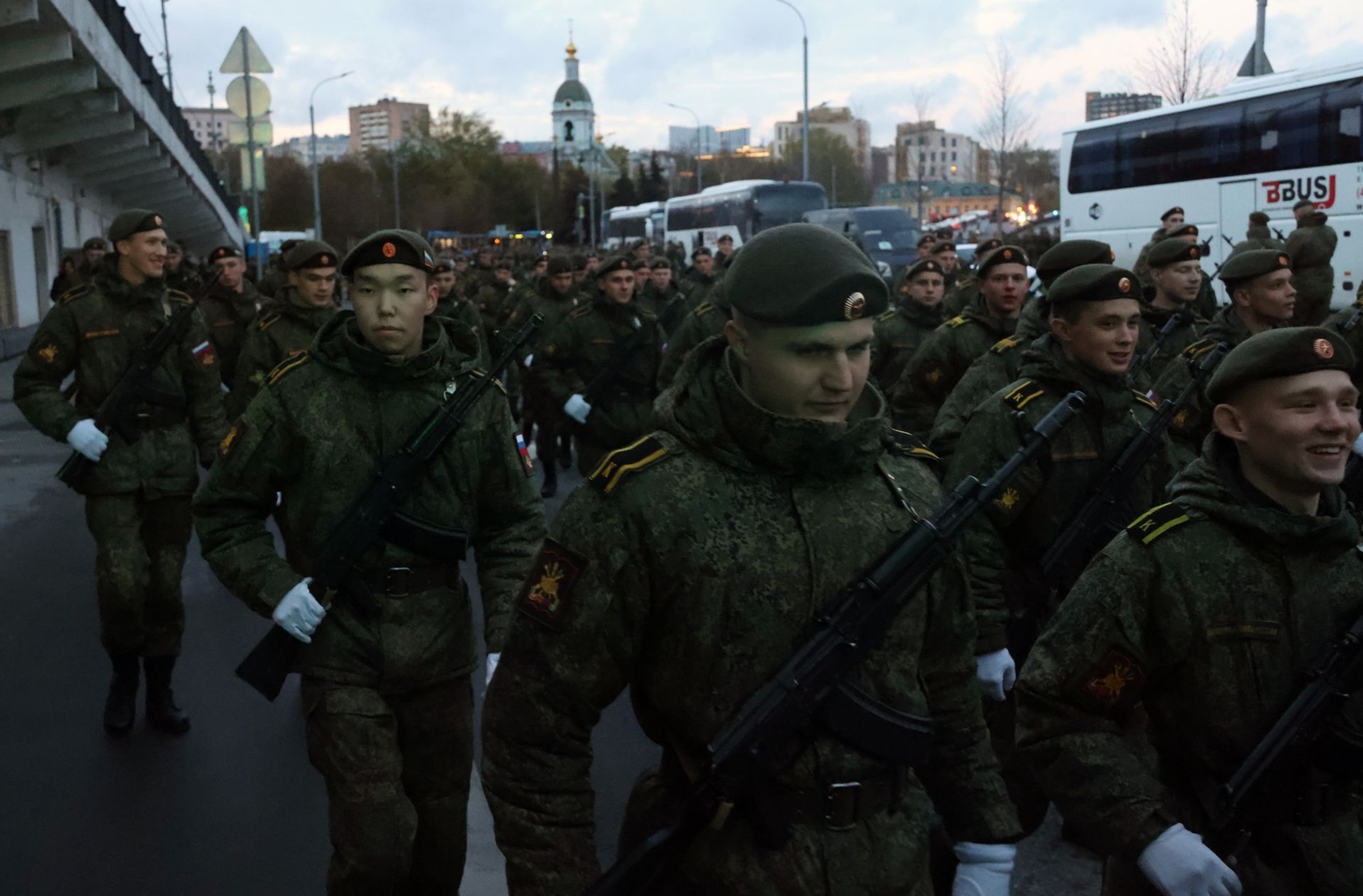
According to testimonies from Bauman University parental chats, one mother called approximately 50 universities over two weeks, trying to transfer her son, but all refused.
It states that military contracts are extended until the end of the mobilization period, which, according to military lawyers, means no addendum to a contract overrides the presidential decree. After signing, a student becomes an ordinary contract soldier, and the Defense Ministry decides where they will serve.
There is another trap. Professional selection for Unmanned Aerial Vehicle operator positions is conducted after the contract has already been signed. If the candidate fails, the contract does not disappear — the person can be transferred to another branch of the military, including the infantry.
The advertising lures with technology, but legally, it is simply another entry into the Russian army with no clear way out.
Universities are part of a broader system of covert mobilization. In Ryazan Oblast, the governor required businesses to "select candidates" for military contracts: 2 to 5 people per company. Regional administrations compile lists of "volunteers" sourced from utility debtors. Migrants from Central Asia are told the contract is a path to citizenship or a way to avoid deportation. Russia plans to recruit at least 18,500 foreign nationals in 2026.
Prisons have been put on a conveyor belt, too: 5,000 inmates are recruited in a single month. In occupied Donetsk and Luhansk, student deferments are being revoked wholesale — contradicting even Russia's own rules.
The Kremlin avoids open mobilization because it remembers the fall of 2022: lines at the borders, panic, and hundreds of thousands of men who left the country.
This is precisely why the Bauman University stories matter. They reveal the Kremlin's weakness. Russia tries to appear as a state that can wage war indefinitely, but a system that hunts students with uncleared exams, debtors, migrants, and inmates does not look invincible.
It is still dangerous and has significant resources, but the sheer scale of coercion indicates that volunteers are in short supply, and the war is eating ever deeper into Russian society.
Comments
No comments yet. Be the first.
Sign in to leave a comment.