Americans aren't feeling so neighborly anymore
The article frames neighborhood decline as a social cohesion problem without interrogating structural causes (housing affordability, work patterns, geographic mobility, gentrification). By centering AEI (a center-right think tank) data and emphasizing digital isolation as a driver of polarization, the piece adopts an establishment perspective that attributes social fragmentation to individual behavioral choices rather than systemic factors.
Primary voices: think-tank, media outlet
- This article does not address economic factors (rising housing costs, long work commutes) that reduce time for neighbor interaction
- This article does not examine the role of suburban sprawl, car-dependent infrastructure, or zoning policies in reducing informal public gathering spaces
- This article does not discuss how gentrification and neighborhood turnover affect social bonds
Framing may shift if subsequent reporting investigates policy remedies (zoning reform, public space investment) versus individualizing solutions (digital detox campaigns).
Think-tank-citedEstablishment framingNeutral language
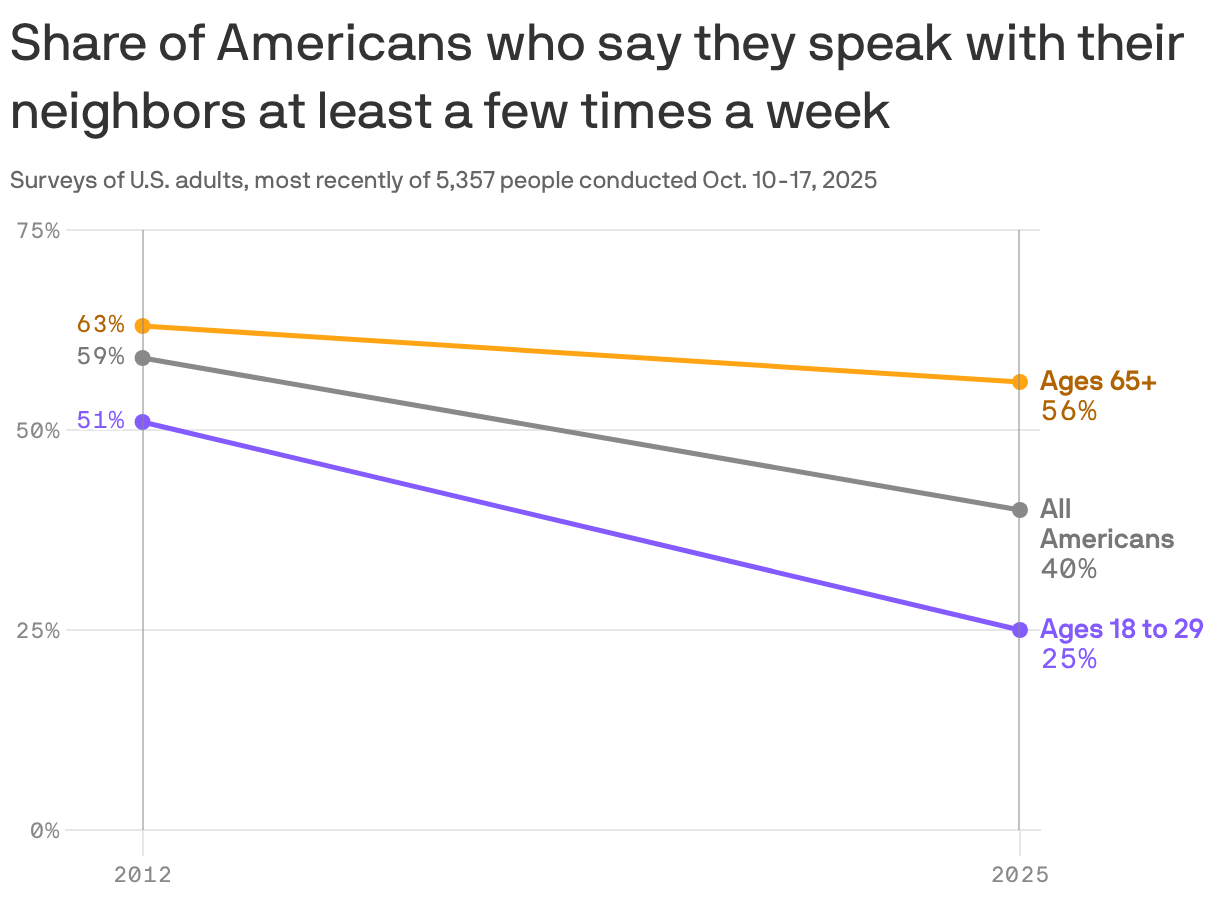
Reproducted from AEI; Chart: Axios Visuals Americans are spending more time at home, yet many have become strangers to their neighbors — especially young Americans, who are increasingly unlikely to socialize with those living feet away. Why it matters: Without casual conversations with neighbors — who are often from other races, or have different religions and political ideologies — people risk becoming more isolated and more dependent on superficial, algorithm-driven digital communities. By th
Full article not available — click below to read at the source.
Comments
No comments yet. Be the first.
Sign in to leave a comment.