Ted Turner Represented The Best And Worst Of America
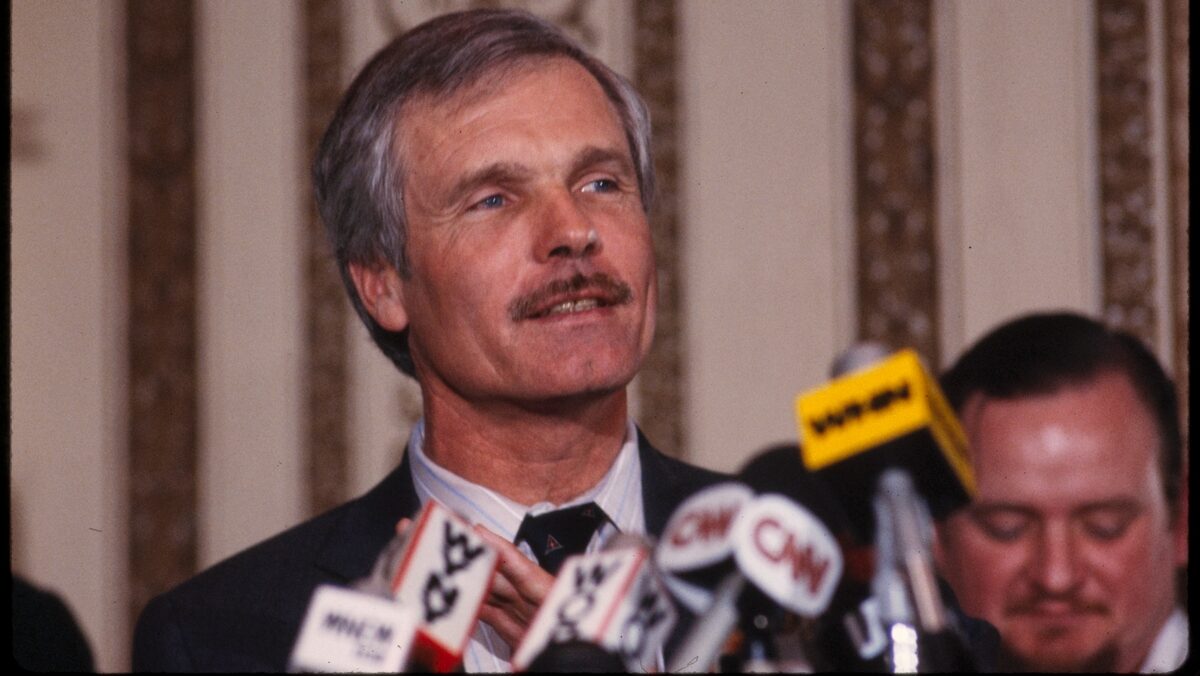
The article uses a celebratory, hagiographic tone typical of conservative media coverage of successful capitalists, framing Turner as embodying 'the best and worst of America' without substantive critique. The comparison to Trump in the opening functions as implicit endorsement of Turner's business acumen and cultural influence. Sourcing relies on Turner's own narrative and biographical facts rather than critical perspectives, labor voices, or environmental/journalistic impact analysis, centering entrepreneurial achievement over systemic effects.
Primary voices: media outlet, corporate or institutional spokesperson
- This article does not address CNN's documented editorial biases or criticisms of its news judgment during formative periods
- This article does not address Turner's environmental advocacy or conflicts between his conservation efforts and corporate media operations
- This article does not address labor relations, workplace practices, or union dynamics at Turner's companies
- This article does not address the consolidation of media ownership under Turner Broadcasting or antitrust concerns
As a commemorative obituary essay, framing is largely fixed, though historical reassessment of Turner's legacy (particularly CNN's role in media fragmentation) may shift public perception over time.
Establishment framingOpinion/analysisCharged language
He ran multiple successful businesses, only to hemorrhage many millions of dollars when other ventures seemed to spell financial doom. He won the girl, the belle of the ball, not once, but multiple times. He was beloved and despised, celebrated for his foresight and brilliant ability to read the times, and condemned for being a boorish bully. No, I’m not talking about President Donald Trump, but media and entertainment mogul Ted Turner, who died last week at the age of 87.
Love him or hate him, you have to admit, Turner seemed like a corporate “King Midas”: (almost) everything he touched turned to gold. From baseball to cable news to restaurants to political advocacy, his legacy in various ways represents the very best and worst of America.
A Hard-Scrabble Southern Childhood
Though Robert Edward Turner III was born in Ohio, he was Southern through and through: raised mostly in Savannah, Georgia, his father’s family were Mississippi sharecroppers deprived of their farm during the Great Depression. His father, Ed, ran a successful Georgia billboard business. He was also a cruel and physically abusive drunk who may have had bipolar disorder. Adding to the younger Turner’s misery, he also lost a beloved younger sister to lupus and encephalitis while in high school.
Sent to a military school in Chattanooga, Tennessee, Ted eventually became a top student and competitive boxer and was accepted to Brown University. When he decided to major in Greek, his father responded: “I think you are rapidly becoming a jackass.” After college (and brief service in the U.S. Coast Guard), Ted joined his father’s business, and assumed control after the elder Turner committed suicide following a mental breakdown provoked by financial struggles. He not only prevented the sale of much of the company, but crafted a bold growth plan.
Within a few years, Turner had purchased struggling Atlanta-based station WTCG for $2.5 million. He acquired the rights to show the Atlanta Braves, Hawks, and Flames. By 1973, the station was turning a profit. Three years later, he purchased the often cellar-dwelling Braves for $10 million. Ever the showman, he staged promotional events at Fulton County Stadium, such as motorized bathtub and ostrich races. In time, Turner Broadcasting System, or TBS, would make the Braves a nationally respected franchise that, amazingly, won 14 consecutive division titles, five National League pennants, and a 1995 World Series title.
Achieving and Re-Imagining the American Dream
Yet Turner’s ambitions lay far beyond Atlanta. Calling the “Big Three” networks of ABC, NBC, and CBS “thieves” that were “polluting the minds of the American people,” he secured a victory from the Federal Communications Commission in 1976 to allow TBS to operate nationally without hindrance. He then began plans for a 24-hour news channel, CNN, originally budgeted $30 million and housed in a former Atlanta country club. Single-handedly revolutionizing the news industry (for better or worse), Turner and other CNN executives built relationships and infrastructure to forge a truly international enterprise. During the Persian Gulf War, CNN alone sent its journalists to report from within Iraq. For this, the network won a major award, and Turner was named Time Magazine’s man of the year. All 24-hour news channels today follow in the footsteps of Turner.
He still wasn’t done. He purchased the MGM film library, securing the rights to Gone With the Wind, The Wizard of Oz, Casablanca, The Maltese Falcon, and even Looney Tunes cartoons. Next was the animation studio Hanna-Barbera Productions, New Line Cinema Corp., and Castle Rock Entertainment. He expanded from TBS and CNN to Turner Network Television (TNT), Turner Classic Movies, and Cartoon Network. Channel surfing television in the 1990s, it was practically impossible to avoid seeing something touched by Turner.
Beyond this, Turner was an accomplished sailor, serving as skipper of the yacht Courageous, which in 1977 secured the prestigious America’s Cup. For a time, he was the largest private landowner in the United States (at the time of his death, he was the fourth-largest landowner in the country, including Avalon, his 25,000-acre estate outside Jacksonville, Florida). He then used his ranches to popularize bison meat, sold at his popular chain, Ted’s Montana Grill.
And, of course, Turner developed a reputation as a ladies’ man. His marriages to Julia “Judy” Nye and former flight attendant Jane Smith ended in divorce. He then courted actress and activist Jane Fonda, daughter of acclaimed actor Henry Fonda. For both, it was their third marriage, and ended in 2001 because of Turner’s infidelities and childishness, said Fonda.
But the American Dream Has Always Been More Than Things
There are few people who enjoyed as much financial success and celebrity status in the post-war era as Turner, nicknamed “The Mouth of the South” and “Captain Outrageous.” And yet, was it enough? In perhaps one of the most telling events of his life, at an event in 1984 speaking to students at Georgetown University, Turner held up a copy of Success magazine that featured him on the cover. As biographer Porter Bibb relates, Turner’s eyes seemed to search above the attendees. “Is this enough?” Turner asked. “Is this enough for you, Dad?”
Originally a Republican, he is perhaps best described as a southern “Blue Dog” Democrat who tended towards the outrageous and profane. “Christianity is a religion for losers,” he declared. The pro-life movement was full of “idiots” and “bozos.” He warned of global overpopulation — suggesting America adopt China’s one-child policy — and became a global-warming alarmist.
One certainly sees these kinds of ideological positions playing out on CNN today, which is a cancer to the republic (much as is a broader media industry that is not only liberal, but alarmist and provocatory in ways that have done irreparable harm to our body politic). In various ways that will likely be felt for many years to come, the America we inhabit is indelibly marked by the influence of Ted Turner. It’s a remarkable (if very checkered) legacy, defined by an impressive resilience and ability to overcome the odds and everyone’s expectations. Despite his faults, there’s no denying Turner’s as an authentic story of American achievement.
Casey Chalk is a senior contributor at The Federalist and an editor and columnist at The New Oxford Review. He is a regular contributor at many publications and the author of three books, including the upcoming "Wisdom From the Cross: How Jesus’ Seven Last Words Teach Us How to Live (and Die)" (Sophia Institute Press, 2026).
Comments
No comments yet. Be the first.
Sign in to leave a comment.