The unraveling of Andriy Yermak
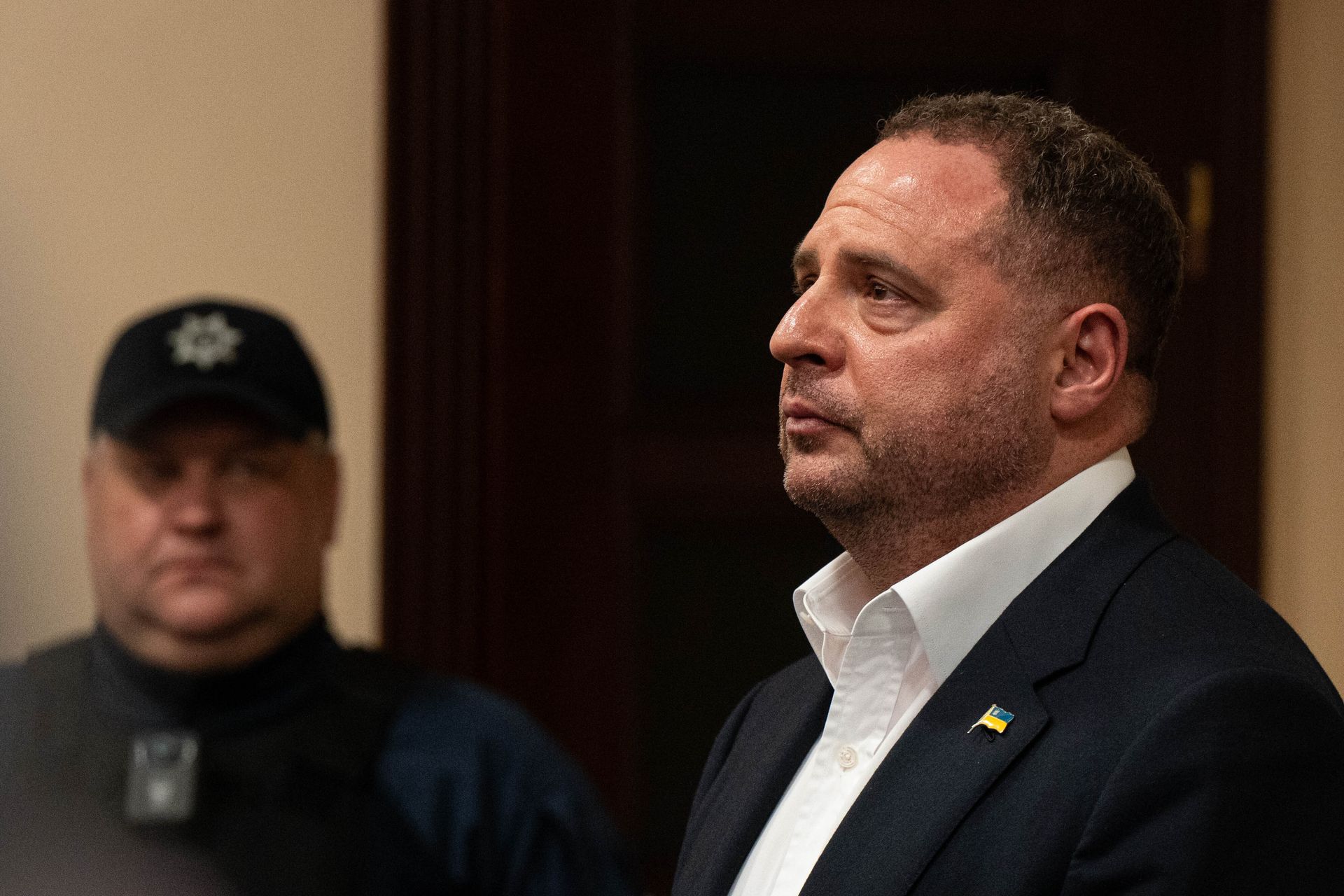
Andriy Yermak, former head of the Office of the President's Office, is seen attending a court hearing at the High Anti-Corruption Court regarding his possible involvement in a corruption scheme in Kyiv, Ukraine, on May 12, 2026. (Danylo Antoniuk/Anadolu via Getty Images)
Ukrainian president's former right-hand man, Andriy Yermak, has descended from power to the courtroom, being implicated in a major corruption case.
After a three-day-long hearing, on May 14, the High Anti-Corruption Court placed Yermak in custody for two months and set bail at Hr 140 million ($3.1 million).
At least for the time being, Yermak will spend his time behind bars.
"I don't have that kind of money for bail. Right now, my lawyer will be working with friends and acquaintances. I deny any accusations. I have nothing to hide, and I will file an appeal," Yermak told journalists.
Investigators allege that more than Hr 460 million, or $8.9 million, were laundered between 2021 and 2025 through the construction of an elite cottage complex in the village of Kozyn, a wealthy enclave south of the capital.
According to the prosecution, the funds for the lavish construction project were generated via the multi-million dollar corruption scheme centered around the state nuclear monopoly Energoatom. The National Anti-Corruption Bureau (NABU) alleges that 10-15% kickbacks were collected by high-ranking officials from Energoatom's contractors in exchange for keeping their status as suppliers and for not blocking their products and services.
One of the four houses financed through the corruption scheme was allegedly meant for Yermak. He was charged on May 11 with money laundering tied to the construction. If convicted, Yermak could face up to 12 years in jail. Six more people were charged in the same case.
Prosecutor Valentyna Hrebeniuk said Yermak was identified in some chats by the codenames "R2," "A.B.," and "LL." She added that an Excel spreadsheet found on an architect's phone listed meetings related to the construction. Next to "R2," investigators found the initials "A.B.," which they said referred to "Andriy Borysovych," Yermak's name and patronymic.
Yermak and his lawyer, Ihor Fomin, denied wrongdoing, calling the charges "unfounded" and "95% assumptions." They said anti-corruption agencies had been subjected to "public pressure" to bring charges against Yermak.
"We heard many different names and nicknames from the respected representatives of the prosecution," Yermak said. "I want to say that I have only one name — Andriy Yermak," he added, alleging that the said codenames are unconnected to him.
Olexiy Haran, politics professor at the Kyiv Mohyla Academy and research advisor at the Democratic Initiatives Foundation, says the charges against Yermak came as no surprise, as such a scenario had been widely discussed in recent months.
"The National Anti-Corruption Bureau and the Specialized Anti-Corruption Prosecutor's Office (SAPO) were doing their work and collecting evidence, so this development appears to be a natural outcome," Haran told the Kyiv Independent.
"What is striking is not the corruption itself — we at least suspected it existed at the top — but the cynicism."
Yermak's fall from grace began in July with the attack against the anti-corruption institutions investigating theft in high cabinets. The move sparked mass protests and was later reversed under pressure from the streets and calls from Brussels.
Reports suggested that Yermak orchestrated that effort. "This is a lie," Yermak told journalists in court.
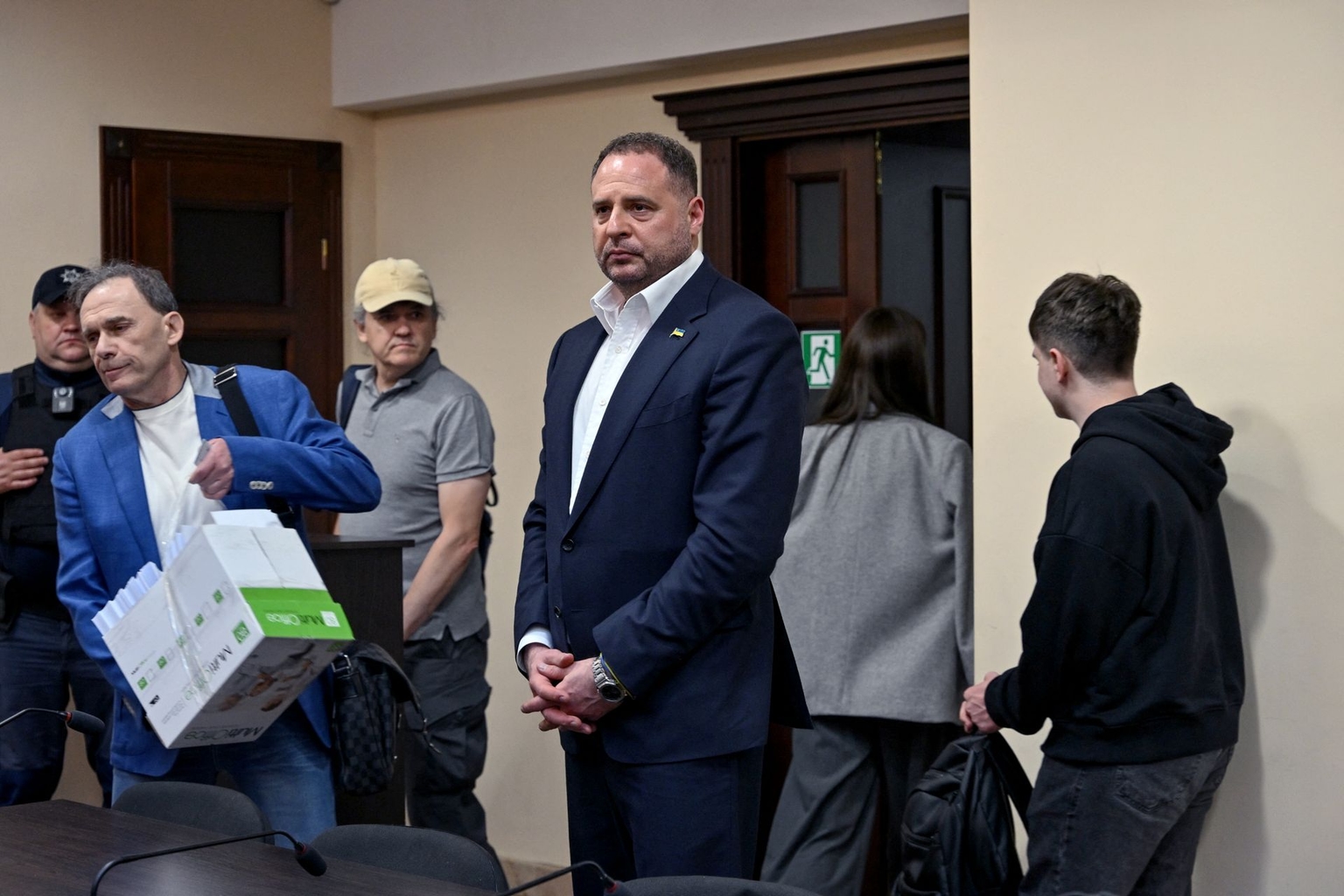
Though considered one of the best-connected powerbrokers, Yermak was alone in court. No allies stepped forward to defend him.
Over the years, reports alleged that Yermak wielded influence across all branches of government and played a key role in major appointments. Lawmakers who spoke to the Kyiv Independent described him as a "boogeyman," saying his departure made "it easier to breathe."
On the second day of the hearing, controversial activist Irma Krat came as the sole supporter of Yermak, bringing an icon depicting Jesus. Yermak quietly took it and placed it beside him.
The prosecution portrayed Yermak as someone who took an interest in the supernatural.
Prosecutor Hrebeniuk alleged Yermak corresponded with a contact named "Veronika Feng Shui Office," about government appointments, sending her candidates' birth dates.
According to SAPO, since at least 2020, Yermak had consulted "Veronika Feng Shui" on appointments, including those of Deputy President's Office Head Oleh Tatarov, Health Minister Viktor Liashko, and former Prosecutor General Iryna Venediktova, now ambassador to Liechtenstein and Switzerland.
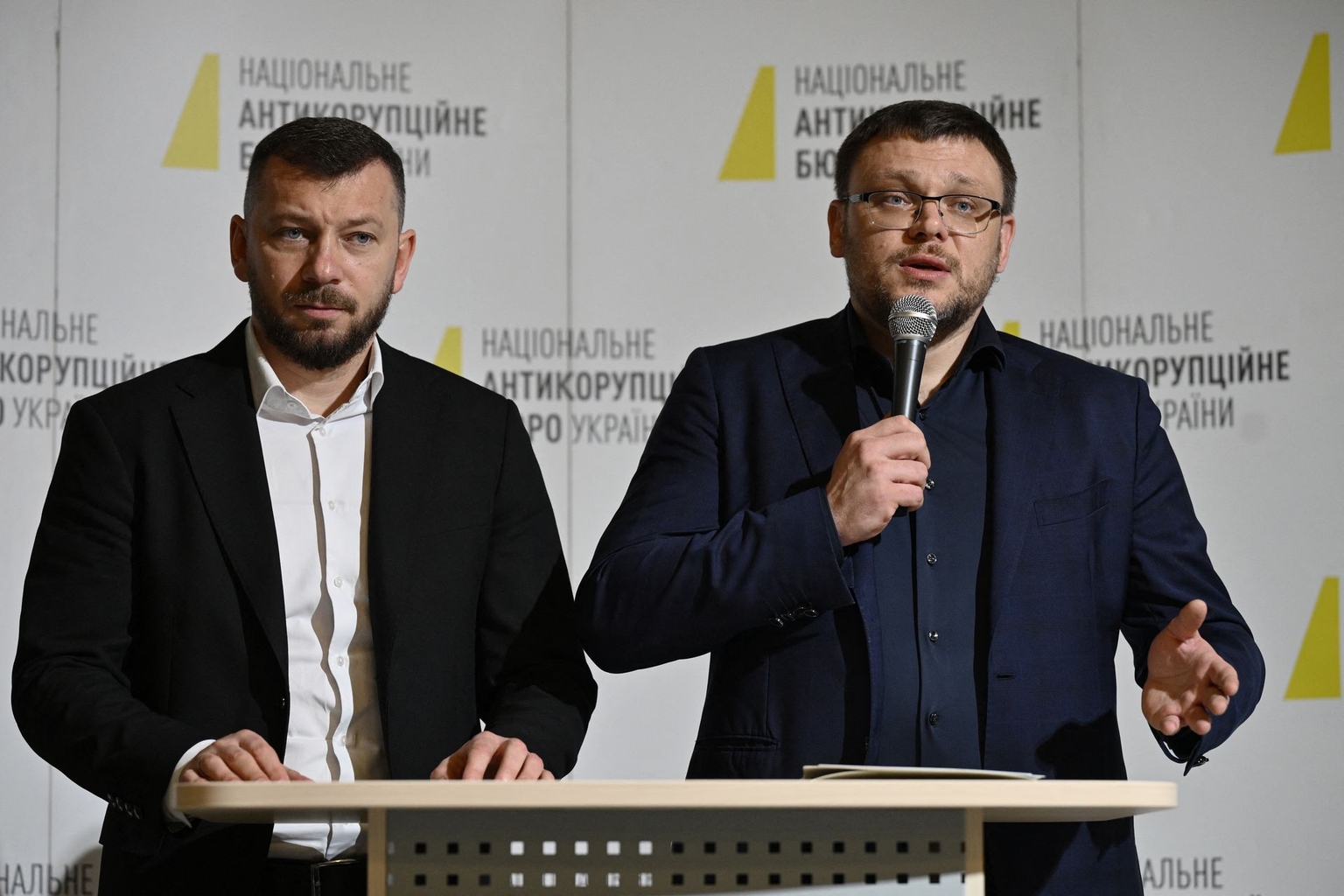
In late 2025, during a search in a car of Yermak's driver, Viacheslav Abramov, investigators found three documents titled "SBU Ukraine maximum program." According to the prosecutor, the papers outlined planned appointments within the Security Service of Ukraine (SBU), some of which are still in place.
"I have never worn a crown. If I called someone or spoke to them, I always did so directly. I always addressed matters of state interest, not private issues. If someone is impersonating me, report it immediately to law enforcement," Yermak said.
"I know a few Veronikas. I have a lot of acquaintances," he added. "I definitely did not communicate with fortune tellers, just as I've never had voodoo dolls."
As the scandal continues to unfold, President Volodymyr Zelensky has remained silent on both the allegations against Yermak and the investigation itself.
Dmytro Lytvyn, president’s adviser, told journalists that "esotericism, numerology, feng shui are not practiced in the President's Office."
While fortune tellers and psychic readings were the most entertaining bits of the court hearings for those present in court, the most important one was the preventive measure that would be set for a man, once second only to the president himself.
The prosecutor said Yermak holds four diplomatic passports, including one that remains valid through 2030. Prosecutor Hrebeniuk argued there was a risk he could flee, tamper with evidence, or influence witnesses.
"I'm staying in Ukraine and will keep working as a lawyer. I plan to visit soldiers at the front," Yermak said in his defense.
Despite earlier claims that he planned to "go to the front" after his dismissal, Yermak never joined the military. Instead, he headed a committee he established under the Ukrainian National Bar Association focused on "protecting victims of Russian aggression." Critics were quick to point out that the lawyer association is led by Lidiia Izovitova, labeled as a former associate of pro-Kremlin businessman Viktor Medvedchuk.
During the court hearings, Yermak consistently framed himself as a man helping the Armed Forces of Ukraine.
Yermak's social media posts often feature meetings with military units as well as aid provided to soldiers, including legal support. In April, he announced the creation of a "Justice for Ukraine" non-governmental organization.
"What (Yermak) is doing is a fairly obvious campaign. He's not a stupid person," a lawmaker from President Zelensky's Servant of the People party told the Kyiv Independent a while back. "It's a plan for a comeback, with at least a partial rehabilitation of his image."
"What matters to me is not just the charges themselves," they continued. "There have been plenty of cases where anti-corruption agencies announced charges, and then it all fizzled out. If that happens here, he'll come out politically rehabilitated."
Comments
No comments yet. Be the first.
Sign in to leave a comment.