Ukraine turns to Europe for possible 'airport ceasefire' with Russia, Sybiha says
The article centers official Ukrainian and European government statements while presenting Russian positions through indirect reporting and characterization. Language is largely neutral and factual, but framing privileges the Ukrainian/European narrative of seeking peace through limited measures while emphasizing Russian violations of past agreements and the vulnerability of Russian infrastructure. The article avoids charged rhetoric but selectively omits substantive context about U.S. withdrawal or Russian preconditions.
Primary voices: elected official, state or recognized government, international body, media outlet
- This article does not address the stated Russian conditions or red lines for any ceasefire negotiations
- This article does not explain why U.S. 'war against Iran' caused peace talks to stall or provide context for that military action
- This article does not detail what violations Ukraine alleges occurred during the March 2025 maritime and energy truce
- This article does not address why Putin proposed Gerhard Schroeder as liaison or what Brussels objections entailed
Framing may shift significantly if the proposed 'airport ceasefire' advances or collapses, or if violations occur, as the article's credibility framework depends on whether limited truces hold.
Government-sourcedBoth-sides framingEstablishment framing
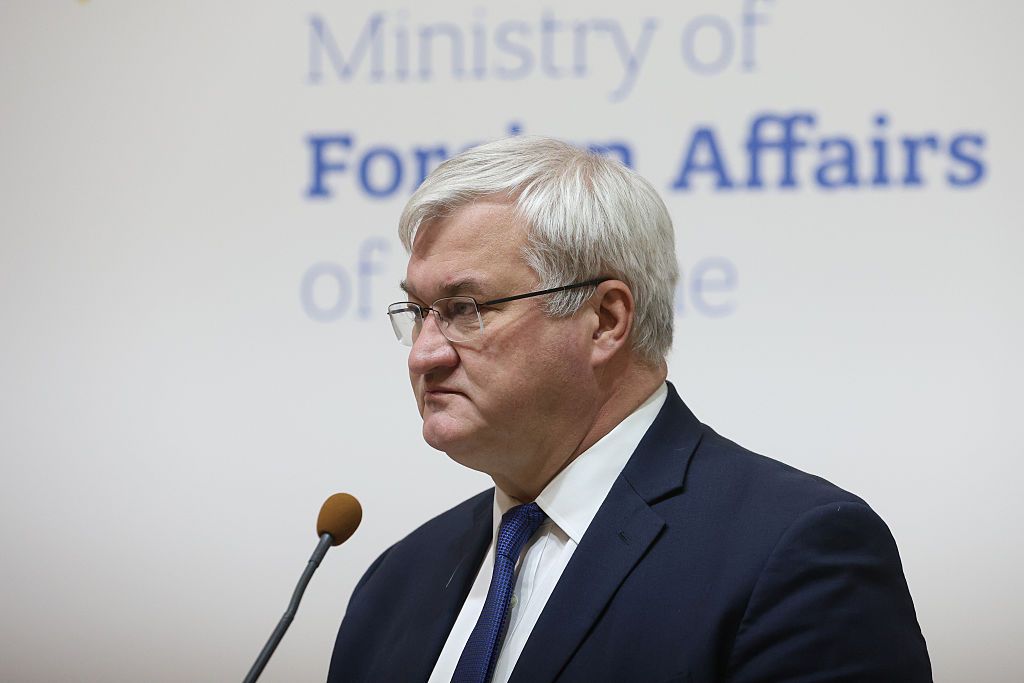
Europe could step up its role in the Russia-Ukraine peace process by helping to broker a narrow "airport ceasefire" in which both sides agree to halt strikes on each other's airfields, Foreign Minister Andrii Sybiha told Politico on May 11.
The minister's comments come as U.S.-brokered peace talks have stalled since the U.S. launched its war against Iran, and European officials are looking to join direct negotiations with Moscow.
"We probably need a new role of Europe in our peace efforts," Sybiha told Politico on the sidelines of the foreign ministers summit in Brussels. "Maybe we would try to resolve or to achieve a so-called 'airport ceasefire.'"
Sybiha privately broached the idea of an airport ceasefire with EU foreign ministers, one EU official told Politico.
President Volodymyr Zelensky has also already discussed the proposal with some European leaders, Sybiha said.
The agreement would be a limited truce protecting airports from attack, according to Sybiha. Russia's airports have grown increasingly vulnerable to Ukrainian long-range drone attacks over the past year, with strikes regularly disrupting civilian aviation operations and targeting military airfields.
"Maybe our European allies, by establishing a platform, or maybe an ad hoc group, we could discuss (an airport ceasefire)," Sybiha told Politico.
Ukraine and Russia have previously observed narrowly defined ceasefires for temporary periods, such as the maritime and energy truce brokered by the U.S. in March 2025.
That agreement saw minimal success, with Ukraine alleging repeated violations by Russian forces.
Zelensky on May 10 also proposed a continuing ceasefire on deep strikes, as a three-day ceasefire for Victory Day weekend drew to a close.
"As for our long-range sanctions, yesterday and today, Ukraine refrained from long-range actions in response to the absence of massive Russian attacks. Going forward, we will respond in kind," Zelensky said.
U.S. President Donald Trump on May 8 announced a temporary truce between Kyiv and Moscow from May 9-11, after two ceasefires declared by each sides failed to take hold. His declaration came as a surprise, especially as Washington had stepped back from peace negotiations amid the war in Iran.
Meanwhile, European Council President Antonio Costa said on May 7 that Europe is interested in pursuing its own negotiation track with Moscow. Russian President Vladimir Putin even said on May 9 that he was willing to negotiate with Europe — though his preferred liaison, former German Chancellor Gerhard Schroeder, has been ruled out by Brussels.
Sybiha told Politico that European negotiators would not be supplanting U.S.-led peace initiatives.
Comments
No comments yet. Be the first.
Sign in to leave a comment.