CDC says currently no US cases of hantavirus
The Centers for Disease Control and Prevention confirmed that there are no cases of hantavirus in the country as of Thursday, following a global outbreak linked to a trans-Atlantic cruise ship.
CDC officials told reporters that public health officials are currently monitoring 41 people for the virus, but no cases have been confirmed in the United States.
The outbreak of the Andean strain of hantavirus, which can spread from person to person through close, prolonged contact, is linked to exposure aboard the MV Hondius, which set sail from Argentina to Western Africa in April.
Earlier this week, all 18 U.S. passengers who were aboard the ship were under federal quarantine as doctors from the CDC figured out when they could return to their homes. Sixteen patients are isolated in Omaha, Nebraska, and two others are in a hospital in Atlanta.
CDC officials told reporters on May 14 that another seven passengers who left the ship and returned home before the outbreak was identified are also being monitored, along with 16 people who may have been exposed during flights on which a symptomatic case was present.
David Fitter, incident manager for CDC’s hantavirus response, told reporters that the agency is “not using federal quarantining authority” to forcefully sequester patients.
“Our approach is based on risk and evidence,” Fitter said. “We are working closely with passengers and public health partners to ensure monitoring and rapid access to care if symptoms develop.”
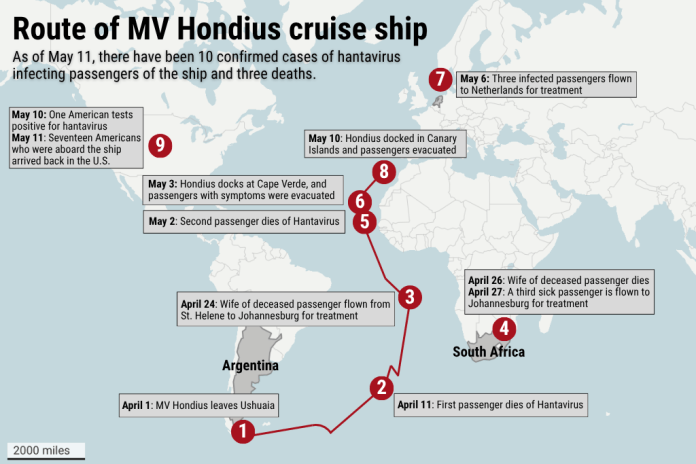
The World Health Organization has reported 11 cases linked to the hantavirus outbreak on the MV Hondius, including three deaths.
The spread of the virus has sparked public concern about a possible global health crisis similar to the COVID-19 pandemic, but health officials worldwide have said the risk to the general public remains low.
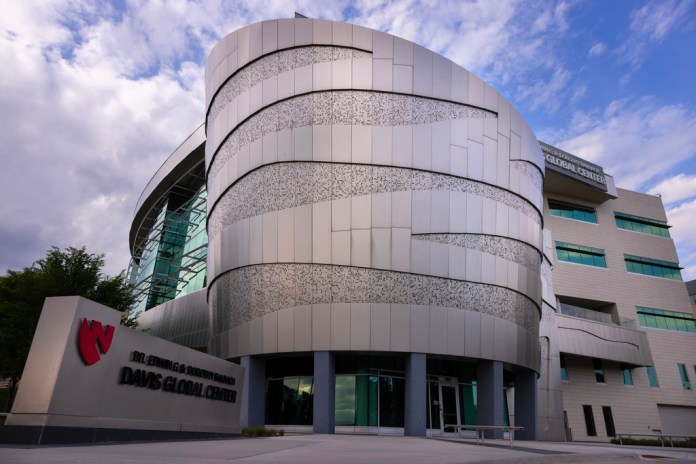
On Wednesday night, Health and Human Services Secretary Robert F. Kennedy Jr. posted a message on X praising Gov. Jim Pillen (R-NE) and leadership at the University of Nebraska Medical Center for monitoring patients and taking the lead on developing testing for the virus.
UNMC has a level-3 biocontainment lab, the second-highest level of biosecurity standards, and played a vital role in managing the Ebola outbreak concerns in 2014.
Kennedy said UNMC’s capabilities “continue to set the gold standard for infectious disease response.”
“The nation is grateful for your service and partnership in protecting the health and safety of the American people,” Kennedy said. “If you need anything from HHS, we will deliver.”
Acting CDC Director Jay Bhattacharya, who is also the Director of the National Institutes of Health, during a CBS News interview on Wednesday, attempted to quell concerns about the virus affecting the World Cup, which begins next month.
Bhattacharya said there is “always the possibility of various outbreaks or whatnot” when large numbers of people are traveling internationally, but he said that “the risk is not any different than it is in other World Cups.”
As of May 5, the WHO director said U.S. officials are sharing information openly with the international body despite President Donald Trump removing the U.S. from the WHO earlier this year.
Comments
No comments yet. Be the first.
Sign in to leave a comment.