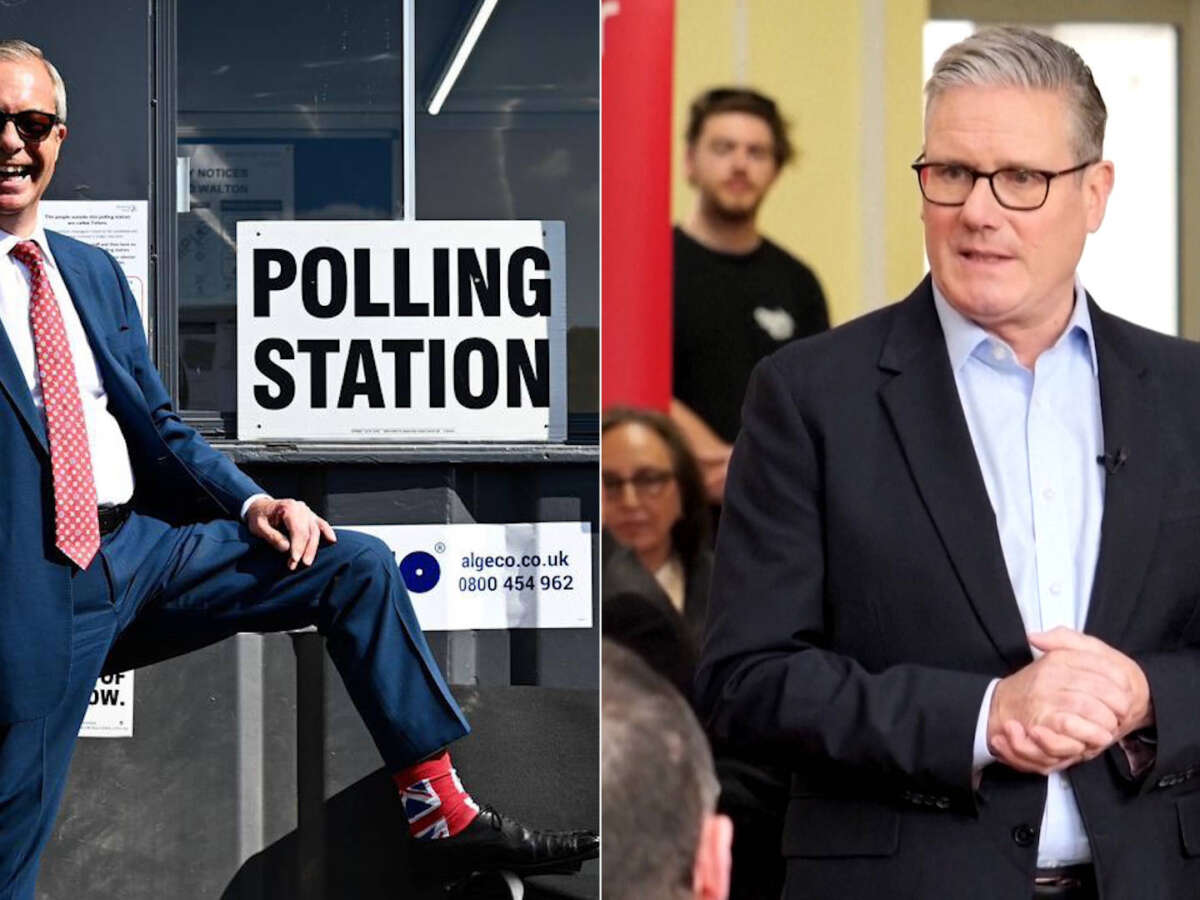
This year’s local election results from the United Kingdom are in. The far-right, anti-immigrant Reform UK party made substantial gains, while the ruling Labour Party suffered heavy losses, signaling what London-based journalist Daniel Trilling calls a “wider fragmenting of politics” and a generational shift away from the two-party political system. We get an overview of major developments to the U.K. political scene from Trilling, including how Donald Trump’s transformation of the U.S. right-wing movement has inspired Nigel Farage’s Reform UK party, and how the Labour Party’s crackdown on pro-Palestine activism led to rising support for the left-wing Green Party. Trilling also discusses how populist sentiment continues to influence other countries in Europe after Hungary’s extremist leader Viktor Orbán suffered a major election defeat last month.
TRANSCRIPT
AMY GOODMAN: We begin today’s show looking at what’s been described as a political earthquake in Britain. In local elections last week, the far-right Reform UK party surged in popularity, while the Labour Party suffered heavy losses. The Reform UK party is led by Nigel Farage, who was the chief architect of Brexit, close ally of President Donald Trump. Farage celebrated his party’s success.
NIGEL FARAGE: But I think, overall, what’s happened is a truly historic shift in British politics. We’ve been so used to thinking about politics in terms of left and right, and yet what Reform are able to do is to win in areas that have always been Conservative, but, equally, we’re proving in a big way we can win in areas that Labour have dominated, frankly, since the end of World War I.
AMY GOODMAN: Calls are growing for British Prime Minister Keir Starmer to resign, after his Labour Party suffered historic losses. This is Starmer speaking Friday.
PRIME MINISTER KEIR STARMER: Let me be clear: These are really tough results. I’m not going to sugarcoat it. And we have lost brilliant Labour representatives, people who’ve put so much into their communities, so much into our party and our movement. And the voters have sent a message about the pace of change, how they want their lives improved. Labour was elected to meet those challenges, and I’m not going to walk away from those challenges and plunge the country into chaos. … Well, they’ve sent a message that the change that we promised isn’t being delivered in a way they can feel, and also, frankly, they’re fed up with years of the status quo. But we were elected to deal with those challenges, and I’m not going to walk away from that and to plunge the country into chaos.
AMY GOODMAN: In a sign of the splintering of the British political system, the Conservative Party also suffered significant losses, while the Green Party won hundreds of council seats.
We go now to London, where we’re joined by the journalist and author Daniel Trilling. His new book is titled If We Tolerate This: How the British Establishment Made the Far Right Respectable.
Daniel, thanks so much for being with us. Why don’t you start off by responding to these historic losses of the Labour Party?
DANIEL TRILLING: Yeah. Thanks, Amy. So, absolutely right, this has been a real disaster for the Labour Party. It wasn’t quite as disastrous as had been predicted a few weeks ago, but they’ve sunk to new lows electorally around Britain. So, as well as losing hundreds of councilors in England, they lost very badly in the elections for the Welsh Parliament which were happening at the same time. Labour has dominated Welsh politics for over a century, and they’re now trailing behind the Welsh nationalist party, Plaid Cymru, and Reform, who’ve come in second.
But it was interesting to hear Nigel Farage’s spin on what happened in that clip you played of him earlier, because, yeah, this is historic. Reform have made this huge advance, you know, adding to their tally of council seats that they began to rack up last year in similar elections. But, actually, in terms of vote share, they underperformed expectations a bit. So, Reform got around 26, 27% of the vote overall. But they really benefited from this wider fragmenting of politics. You know, we now have kind of four, five or even six party politics in the U.K., depending on exactly where you live. Reform have benefited from that because they’ve kind of managed to concentrate that vote in areas where they were able to win lots of seats. But, actually, this suggestion that Reform have completely kind of erased the distinction between left and right, I don’t — I don’t think is true. And I think Farage is putting that spin on things because Reform were really trying in this election to make bigger inroads into areas that the center-right Conservative Party had traditionally been strong in, and they didn’t really do as well as expected there. Where they did do well were in areas that voted to leave the EU in the Brexit referendum a decade ago and where they’ve always had the attention of a certain chunk of voters. So I think it’s the overall fragmentation that is the real story here.
AMY GOODMAN: So, talk about, well, the title of your book, If We Tolerate This: How the British Establishment Made the Far Right Respectable. If you can talk about who Farage is and what he represents?
DANIEL TRILLING: Yeah, so, one of the big changes in British politics in recent years has been this very alarming and rapid rise of ideas and rhetoric associated with the far right, so, you know, very strong anti-immigration rhetoric, attacks on supposed elites running the country and so on, you know, things that will be very familiar to your viewers in the U.S. from Donald Trump and his works. And that’s really — you know, the pressure there has really come from two sources. One of them is a lot of far-right activity outside the electoral system. You know, we’ve had kind of big street protests and rallies and mob violence, in some cases, attacking hotels that are being used to accommodate asylum seekers. And then we’ve had a lot of pressure from Farage’s political party, Reform UK, who have been, you know, trying to shape some of these resentments and some of this anger into a right-wing populist political project of the kind that we’re seeing in lots of different liberal democracies around the world at the moment.
You know, for Farage, this is just the latest stage in a kind of long political career, where he’s come from outside the mainstream right and has tried to make his brand of right-wing populist politics the leading force in Britain. You know, so, he was previously leader of the UK Independence Party, and via his leadership of UKIP, he played an instrumental role in winning the Brexit referendum for the Leave campaign. He then formed another party called the Brexit Party after that to kind of push for the hardest exit from the EU possible. And Reform UK, the latest vehicle, in fact, it’s a renamed Brexit Party, but what he’s doing here is actually trying to build a political platform that will allow him and his party to win power in Westminster nationally.
And the key themes that that’s built on, you know, it’s heavily anti-immigration, and they make a real point of trying to kind of flex their muscles and show how ostentatiously cruel they’re going to be to what they call illegal immigrants, which is a wide range of people who are living in the U.K., some of whom have lived here for quite a long time. Earlier this year, one of Reform’s big pre-local election announcements was that it wanted to create a British ICE. So, that kind of tells you where they are on that. You know, they made that —
NIGEL FARAGE: I’m in Essex today, and this is the Bell Hotel in Epping. Now, you might remember these scenes being on national news last year. Anyone that comes illegally into Britain on a boat or in the back of a lorry will be detained and deported. But that’s going to mean having to detain quite a lot of people who were here already. They should not be free to walk the streets. The policy is very simple. You vote for a Reform MP, you will not have a detention facility in your constituency. But if you vote Green or those that support open borders in the world, that’s where the detention centers are going to be. Equally, I can say the same of Labour and the Conservatives, because they’ve done nothing to stop it.
DANIEL TRILLING: Yeah, I mean, that kind of sums up what Reform are about. So, like I was saying before, you know, it’s kind of making a virtue of how punitive and cruel they’re going to be to certain groups of immigrants, but also kind of directing that at their political enemies, as well. You know, so, this announcement, which Farage made a couple of weeks ago, was all about kind of stigmatizing his opposition. So, the Green Party, who have also kind of broke through from outside the mainstream by taking a kind of strong left-wing position, you know, he’s trying to class as open borders fanatics.
And, I mean, what are they saying there? They’re kind of threatening to use the power of the state, if they ever get hold of it, to intimidate their political opponents. You know, placing detention centers in areas that vote for parties that Farage doesn’t like, you know, it’s kind of punishing people for voting the wrong way, and perhaps even trying to scare voters into not opposing him.
AMY GOODMAN: If you can also talk about — we see parallels here in the United States leading up to President Biden’s defeat around Israel and Palestine, one of his top advisers, Wendy Sherman, now calling what’s happened in Gaza a genocide. In Britain, you have Keir Starmer crackdown on Palestine Action, which they’ve called a terrorist organization. If you can talk about their positions here?
DANIEL TRILLING: Yeah, I mean, first of all, I’d say kind of, you know, from having written about the far right for years and studied the history and so on, I think one thing that governments of the center should really avoid doing is kind of giving them the tools to play with. You know, so, it’s a real problem if governments of the center start kind of passing their own draconian authoritarian policies. And I think that’s exactly what you’ve seen with the Starmer government in relation to the Palestine protests.
You know, so, this protest group that uses direct action, Palestine Action, was classed as a terrorist organization and banned, which, as a result, means that, you know, hundreds, if not thousands, of peaceful protesters who have expressed their support for Palestine Action since the ban have also been arrested and are potentially facing criminal conviction just for expressing rhetorical support for that group. And, you know, much like in the U.S., I think, these actions by the government have been in response to a huge amount of public anger, obviously Israel’s war on Gaza, but what they also see as Britain’s complicity in that war.
So, you know, the U.K. is a strong military ally of Israel. When the Labour government came to power in 2024, they suspended a lot of arms sales to Israel on the grounds that there was a risk they could be used for human rights abuses, but actually carried on supplying certain key items, like parts that could be used in Israel’s F-35 fighter jet program.
And so, the government have really tried to just kind of contain dissent in a way that has alienated huge amounts of their core support. I mean, really, I think, in these recent elections, much more pressing issues like the cost of living and rising fuel prices and so on were on voters’ minds. But a lot of that support, that would have gone to Labour previously, which has gone to the Green Party and to some of the other smaller parties, is also to do with anger over Israel and Gaza and the way that our government has responded to that.
AMY GOODMAN: I also want to ask you about rising support for the Green Party. This is the Green Leader Zack Polanski.
ZACK POLANSKI: This is a historic victory. This is the first time the Green Party have ever won a directly elected mayor. And two-party politics is not just dying; it is dead, and it is buried. And actually, whether it’s here that Labour have been rejected, or whether we’re seeing around the country, it’s very clear that the new politics is the Green Party versus Reform. …
My message to Keir Starmer is that he needs to go. But I don’t think that’s my message; I think that’s the country’s message. We’ve seen for a long time now his popularity has been going, and he’s lost the trust of the country. And to see a Labour minister today saying that they don’t just respond to the mood of the country, they stick to the plan, I feel, feels very misjudged. But it doesn’t feel like a coincidence. That feels like the entitlement and the privilege that this Labour government have acted with every single day that they’ve been in office.
DANIEL TRILLING: Yeah, so, obviously, Zack Polanski and the success of the Greens is the other big development in — certainly in English politics, because, obviously, Scotland and Wales had elections, but there’s a slightly different political setup in both those countries. The Greens, you know, they’ve been around for a long time in Britain, but Polanski was elected as their leader last year with a mandate to shift the party, you know, quite markedly to the left, to pursue what he calls ecopopulism, so kind of attacking the center of politics, but from the left this time, as opposed to Reform, who obviously come at it from the right. You know, the Greens have got strong positions on social and environmental justice. They also now take a very strong rhetorical stance in support of workers’ rights.
And, you know, they’ve now got this unprecedented opportunity to put some of their principles into action. They’ve won control of several local councils in London and other parts of the country. The big question, I think, is, really: Can they now follow through on this? You know, the Greens at the moment are untested. They’ve got a lot of goodwill from people who’ve lent them their votes. But I suppose the one question is: Can they deliver what they promise?
The other question is — you know, Britain national elections has this first-past-the-post electoral system that does not really very fairly reflect the spread of votes in the country. That becomes even more complicated when you move, as we’re doing now, from a two-party system to a multiparty system. So, when we get to our next national election, the question is going to be: Will there be an electoral force on the progressive wing strong enough to keep Reform out? And if there isn’t a single force like that, how are these different parties — the Greens, Labour, Scottish nationalists, Welsh nationalists, who sometimes seem to hate each other more than they hate their opponents on the right — going to come together and collaborate in a way that will stop Britain going down what I think could be a very dark path?
AMY GOODMAN: I wanted to ask you, before we go, about another country, about Hungary. Over the weekend, Péter Magyar was sworn in Saturday to become Hungary’s new prime minister, Magyar ending 16 years of Viktor Orbán’s authoritarian rule. You’ve been writing about Hungary. Talk about the significance of this and the damage to the institutions of Hungary during this past 16 years, Daniel.
DANIEL TRILLING: Yeah, I mean, I make a kind of self-interested point, first of all, as someone from Britain. I think it’s a real lesson in why it’s so important to prevent far-right populists from winning in the first place, because, as we’ve seen over the past decade or more in the case of Hungary, they can be very hard to dislodge from power once they’re there. They can end up being pretty popular with the electorate that they try to appeal to. But in pretty much every case where a far-right populist has won power around the world, they have undermined institutions that are vital checks and balances on the democratic system. You know, if you think how often free speech is the kind of the watchword of far-right populists, I think in every single country where a government has been formed by far-right populists, free speech hasn’t got any more free. In fact, it’s got significantly harder to express dissenting opinions.
And Magyar’s victory shows kind of what’s required, I think, to push back, which is like, you know, if you get to that stage, a broad coalition of people opposed to the far-right populist government. You know, Magyar is a right-wing conservative. Some of his positions won’t be that different to some of Viktor Orbán’s. But he has taken this very strong stand against corruption, against the undermining of the liberal democratic system. And so, lots of people who don’t necessarily share his politics on many of the issues that he stands for have got behind that in a huge effort, which is why, when I was talking about Britain before, I was stressing this need to kind of talk and think about coalitions that can be formed to keep the right-wing populists out of power.
AMY GOODMAN: Daniel Trilling, I want to thank you so much for being with us, journalist and author, speaking to us from London. His new book is titled If We Tolerate This: How the British Establishment Made the Far Right Respectable.
Coming up, we go to Washington, D.C., to speak with a Marine veteran who spent five days atop the Frederick Douglass Bridge to protest the U.S. and Israeli war on Iran. Stay with us.
Comments
No comments yet. Be the first.
Sign in to leave a comment.