America first, not America alone
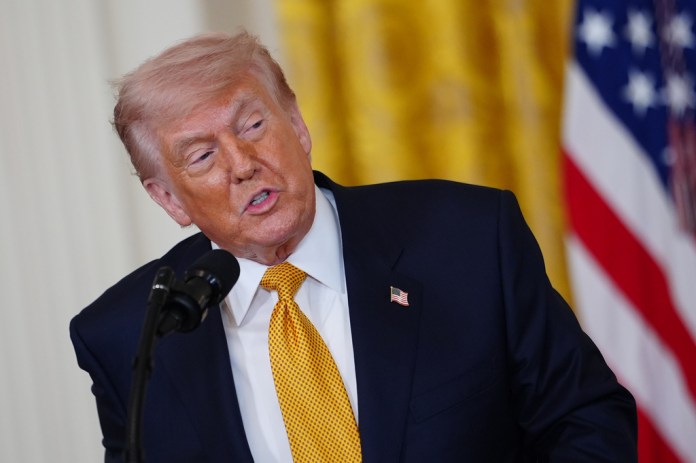
President Donald Trump’s abiding foreign policy is aptly named “America First.” It asserts that the post-World War II, American-led “rules-based order” had been accomplished. It was time to stop enriching “allies” and former enemies that had been rebuilt and were now competitors, and could, at the very least, help pay for their own defense. Bluntly, Americans were done “taking one for the team.”
But the Trump administration was not heralding a return of isolationism or the end of the Pax Americana. It declared the people’s interests would be paramount in U.S. international relations. If other nations’ interests were accorded with clearly defined and articulated American interests — be it economically or militarily — a mutually advantageous arrangement could ensue.
After all, every other nation conducts its foreign policy by putting its own citizens’ interests first. The novelty, then, was not the Trump administration putting America first, but how past administrations relegated our citizens to a second-class status in international arrangements.
Yes, putting American interests first in foreign affairs has discombobulated our allies. Accustomed to the United States beneficently subordinating our interests to theirs, they have decried America First. This is most notable among signatory nations to ossifying defense and economic arrangements.
Over the decades, member countries of NATO or the European Union, as well as in America, such arrangements have created entrenched and enriched elites, who cling to the past to preserve their power, profits, and perks at the expense of Americans and, in fact, often their own people. These are precisely the globalist elites America First opposes to promote and protect the interests of Americans.
Yet, in opposing these antiquated elitists, it is critical for the Trump administration to heed the counsel of former British Prime Minister Lord Palmerston: “Therefore I say that it is a narrow policy to suppose that this country or that is to be marked out as the eternal ally or the perpetual enemy of England. We have no eternal allies, and we have no perpetual enemies. Our interests are eternal and perpetual, and those interests it is our duty to follow.”
Unlike the immediate postwar period of enduring, static alliances with “permanent” friends and “perpetual” enemies, the America First policy must navigate the treacherous shoals and incessantly swirling eddies of international relations in this fraught, postmodern period of alliance impermanence. In international relations, today’s ally can become tomorrow’s enemy almost as quickly as it takes to friend and unfriend on Facebook.
As ever, other nations will determine whether and when their own interests align with ours. It is crucial for the U.S. to facilitate a favorable decision by another nation to align with our interests, and not to place unnecessary obstacles to their cooperation. If any U.S. administration erects such barriers, it will induce some otherwise amenable nations to perceive their interest rests in seeing America get its comeuppance on the world stage. Such determinations by possible allies are precisely the self-inflicted wounds that turn America First into “America Alone.”
What is needed to avoid this is not belligerence nor appeasement. It is prudence and patience, implemented with nimbleness and insight. A country’s interest may not align with ours today, but it may well be in lockstep later. Therefore, the proper America First strategic paradigm for this period of alliance impermanence is not NATO. It is Operation Desert Storm.
When he was named America’s United Nations Ambassador in 1971, George H.W. Bush visited every other ambassador. When asked why, his reasoning was simple: Every nation has a sense of dignity, and it should be respected. This perspective served him well when, as president in 1991, he crafted the coalition of over 35 nations to assist — many of them militarily — evicting the Iraqi army from its illegal occupation of Kuwait.
This alliance of nations was not permanent nor stated to be against a permanent enemy. Further, it was executed for a clear objective, one which these nations believed to be in their own strategic interest. There was no nation-building or “forever war.” And it was an abject American-led triumph.
Trump’s America First policy is most successful when it communicates that it’s a concise strategic goal and how it protects and promotes the interests of Americans, which builds necessary popular support for it. But the America First policy proves unhelpful when it resorts to bolstering domestic support by castigating other nations for not supporting the strategic goal.
Burning bridges with traditional and prospective allies over a singular difference of opinion regarding how they perceive their own strategic interests is a recipe for alienation — one risking America First becoming America Alone and hastening the ominous prospect of the Pax Americana becoming the Pox Americana.
Hon. Thaddeus G. McCotter (M.C., Ret.) served Michigan in Congress, including two terms in leadership as chairman of the Republican House Policy Committee. Not a lobbyist, he contributes to American Greatness and Chronicles, co-hosts the John Batchelor Show, and moderates and speaks at public policy seminars.
Comments
No comments yet. Be the first.
Sign in to leave a comment.