Election Integrity Group Challenges Illinois’ ‘Unconstitutional’ Racial Gerrymandering Law
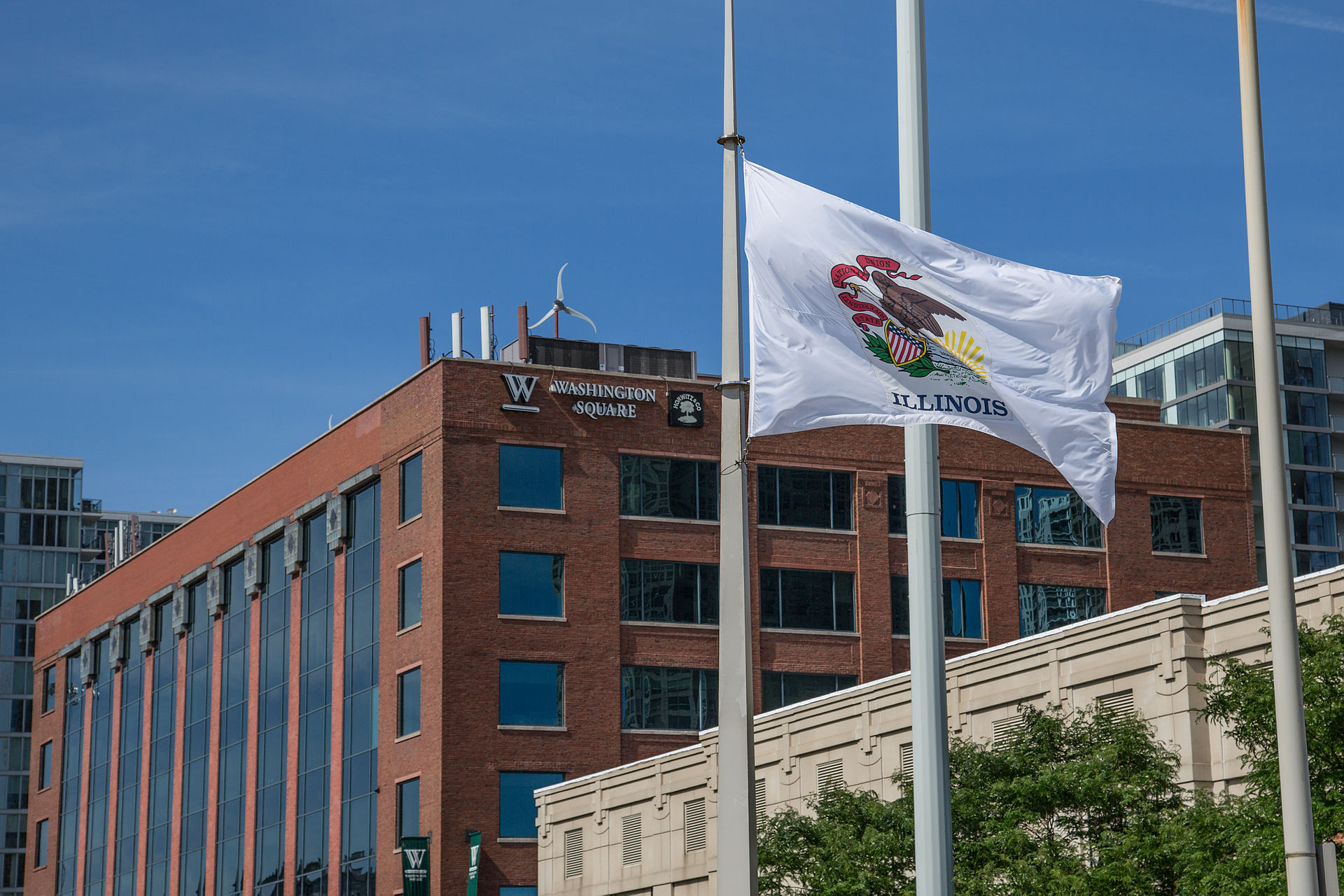
The article centers the PILF's legal challenge and framing without substantive counterargument from defendants or supporting voices. Language like 'unlawfully,' 'unconstitutional,' and 'brazen impermissible racial purpose' mirrors plaintiff advocacy rather than neutral reporting. The piece quotes extensively from the lawsuit and PILF leadership while omitting Illinois' legal defense, the ILVRA's statutory history/rationale, or voting rights scholars' perspective on minority representation protections.
Primary voices: NGO or civil society, elected official, state or recognized government
- This article does not address the Illinois Attorney General's or state defendants' legal defense or response to the allegations
- This article does not include perspective from voting rights scholars or civil rights organizations supporting minority representation protections
- This article does not explain the legislative history or intent behind the Illinois Voting Rights Act of 2011
- This article does not contextualize how the ILVRA differs from or relates to the Voting Rights Act Section 2 requirements it cites
Framing may shift once Illinois provides a filed response or if courts issue preliminary rulings, potentially adding legal counterarguments and judicial analysis currently absent.
Think-tank-citedEstablishment framingCharged language
A key Illinois election law unlawfully requires the prioritization of race in drawing legislative districts, a new lawsuit alleges. The suit was brought in light of the U.S. Supreme Court’s recent Louisiana v. Callais decision stripping states’ ability to use race in the redistricting process.
“States may not use race to allocate power,” said Public Interest Legal Foundation (PILF) President and General Counsel J. Christian Adams, whose group spearheaded the legal challenge.
Announced on Monday, the lawsuit brought by PILF on behalf of Illinois resident Jeanne Ives contests that the state “has districting criteria that violates the United States Constitution explicitly by elevating race as a primary purpose in legislative line drawing.” Ives more specifically takes to task the Illinois Voting Rights Act (ILVRA), which she argues “mandates the creation of racial districts in violation of [her] civil rights protected by the Fifteenth Amendments to the United States Constitution and Section 2(a) of the Voting Rights Act of 1965 (‘Voting Rights Act’).”
“The Voting Rights Act forbids enforcing election procedures enacted with a racial intent or that results in a denial, or abridgment, of the right of any citizen of the United States to vote on account of race,” the lawsuit reads. “The Illinois Voting Rights Act requires drawing district lines to preserve deliberate racial percentages, racial majorities, and the deliberate preservation of racial influence districts. This violates the Constitution and the Voting Rights Act.”
The suit was brought in the U.S. District Court for the Central District of Illinois against Democrat Gov. J.B. Pritzker, the Illinois State Board of Elections, and its executive director, Bernadette Matthews.
The ILVRA specifically requires that “any redistricting plan pursuant to Article IV, Section 3 of the Illinois Constitution [Illinois Const., Art. IV, § 3], Legislative Districts and Representative Districts shall be drawn, subject to subsection (d) of this Section, to create crossover districts, coalition districts, or influence districts.” The statute defines “crossover districts” as those in which a “racial minority or language minority constitutes less than a majority of the voting-age population but where this minority, at least potentially, is large enough to elect the candidate of its choice with help from voters who are members of the majority and who cross over to support the minority’s preferred candidate.”
Meanwhile, a “coalition district” is defined by the ILVRA as “a district where more than one group of racial minorities or language minorities may form a coalition to elect the candidate of the coalition’s choice.” Much like its namesake, an “influence district” is one in which “a racial minority or language minority can influence the outcome of an election even if its preferred candidate cannot be elected.”
Ives argues that these districts, as required under the ILVRA, violate the 15th Amendment because they mandate the “explicit consideration of race” and/or hold a “brazen impermissible racial purpose.” Put another way, she says, “These statutory requirements make racial considerations a core purpose of all legislative line drawing in Illinois.”
The plaintiff goes on to argue that Illinois’ General Assembly Redistricting Act of 2021 — which redistricted “the legislative districts and representative districts for the state” — “incorporated racial criteria it used to redistrict.” To bolster her claims, she references comments by Pritzker, who said at the time, “These legislative maps align with the landmark Voting Rights Act and will help ensure Illinois’ diversity is reflected in the halls of government.”
“Defendant Pritzker’s press release plowed further into unconstitutionality. It confirmed that ‘the Illinois Voting Rights Act of 2011 ensures redistricting plans are crafted in a way that preserves clusters of minority voters if they are of size or cohesion to exert collective electoral power. The maps signed into law today meet those requirements to adequately preserve minority representation and reflect the diversity of our state,'” the lawsuit reads. “The press release explicitly adopted racial purposes behind redistricting guidelines, namely sorting and allocating political power on the basis of race.”
Ives’ suit references the Supreme Court’s recent Callais decision, in which the 6-3 majority deemed Louisiana’s creation of a second majority-minority district to be an “unconstitutional racial gerrymander.” Justice Samuel Alito notably wrote how “Section 2 of the Voting Rights Act of 1965 … was designed to enforce the Constitution — not collide with it,” and that “Compliance with §2 thus could not justify the State’s use of race-based redistricting here.”
Ives and PILF have asked the district court to issue a decision “[d]eclaring that the Illinois Voting Rights Act of 2011 violates the prohibitions on discriminatory purpose contained in the Fifteenth Amendments to the United States Constitution and Section 2(a) of the Voting Rights Act.” In doing so, they further requested that Illinois be enjoined from “acting pursuant to” the ILVRA.
Shawn Fleetwood is a staff writer for The Federalist and a graduate of the University of Mary Washington. He is a co-recipient of the 2025 Dao Prize for Excellence in Investigative Journalism. His work has been featured in numerous outlets, including RealClearPolitics and RealClearHealth. Follow him on Twitter @ShawnFleetwood
Comments
No comments yet. Be the first.
Sign in to leave a comment.