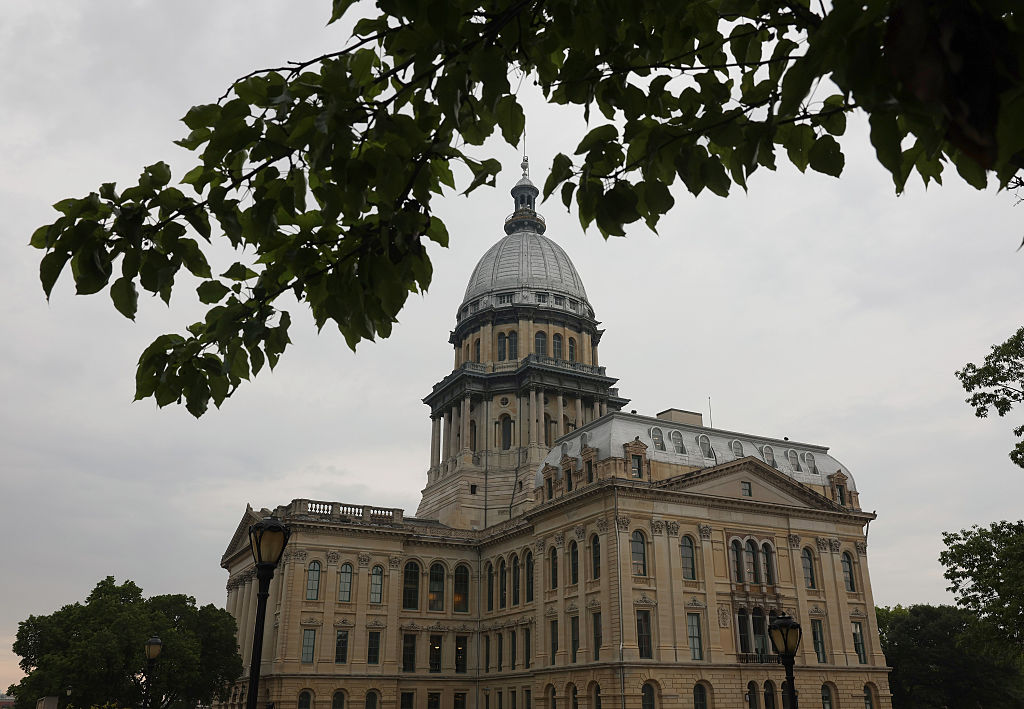
Since 2014, U.S. lawmakers have introduced over 200 bills targeting the Boycott, Divestment and Sanctions (BDS) movement. The vast majority of these efforts have failed to pass, but more than 30 states have adopted anti-BDS laws.
The first state-based measure to take specific action against Israel boycotts was passed in Illinois in 2015; 49-0 in the Senate and 102-0 in the House. “This historic legislation is an important first step in the fight against boycotts of Israel and I hope other states move quickly to follow our lead,” declared then-Governor Bruce Rauner after signing it into law.
Rauner’s hope was quickly realized, as the right-wing American Legislative Exchange Council (ALEC) adopted the Illinois law as a model for pushing anti-BDS laws in other states. According to Palestine Legal, 38 states have enacted laws or executive orders designed to designed to penalize the boycott movement.
Many of these measures have had a significant economic impact. In 2021, the Illinois board overseeing state employee pensions voted to bar funds to the company Unilever over Ben & Jerry’s’s decision to limit sales of its ice cream in Israel. A a result of the ruling, the state was forced to sell between $150–200 million in pension holdings and activating nearly $1 billion in coordinated state divestments nationwide.
Now, Illinois officials and activists are pushing the Illinois Human Rights Advocacy Protection Act, or HB 2723. The bill would repeal the state’s anti-BDS law and potentially serve as a model for legislatures across the country. The effort currently has 22 cosponsors in Illinois House and 12 in state’s Senate.
“This law uses the retirement security of teachers, university workers, state employees and judges to punish peaceful protest,” said Rashid. It coerces American companies — including Illinois companies — into changing their lawful behavior to satisfy a foreign government. And it does all of this with no fiduciary duty, no published rules, no formal appeal, and no audit.
“Boycotts are foundational to who we are as Americans, are an instrumental tool in achieving democratic change, and are as American as baseball and apple pie,” declared Chicago attorney Richard Goldwasser. “Penalizing the politically motivated boycott..is of a piece with the growing fascism in our country.”
HB 2723 is opposed by a number of pro-Israel groups, including the Anti-Defamation League (ADL). During the hearing Rebecca Weininger, the Senior Regional Director ADL Midwest, claimed that “anti-Israel sentiment was powering the rise of anti-Jewish violence.”
Andrew Herrera, a lobbyist for the Illinois Coalition for Human Rights told Mondoweiss that he expects the bill to succeed if state leadership has the political will to consider it.
“This is narrative fight,” he continued. “It has become impossible to publicly support genocide, ethnic cleansing, and needless war in Iran. It’s about shifting the national conversation and and showing people that this messaging works with voters.”
According to Pew Research poll from last month, 60% of U.S. adults have a negative view of Israel, up from 53% last year. The same survey found that a majority of Democrats and Republicans under the age of 50 now view the country negatively.
Rebekah Levin, a local activist and Jewish Voice for Peace member who has been organizing around the repeal for years, also cited public opinion while speaking with Mondowiess, and said it had undeniably shifted the position of lawmakers.
“When we first started doing this work in the legislature our job was to educate people who voted for it,” she explained. “Over the past 2 years with the genocide in Gaza, the war in Iran and gas prices going up so high legislators finally saw this as something they could take action on and I would guess they see what’s happening nationwide, not just within the Democratic party at this point, but within the Republican party as well.”
Levin says that, if the anti-BDS law is repealed, it could serve as a model for other activists hoping to overturn such legislation in their states.
“People in other states have reached out to us,” she said. “They want to know what we did and how we did it. “If we overturn this it would be a boost to other states. It’s a powerful message. This is why pro-Israel groups are afraid of this passing. It’s about more than just Illinois.”
“Thats what makes the stakes so high,” said Rashid. “I believe this will have a domino effect, we are already talking to states about how to run a campaign. I’m hoping these conversations begin in earnest in other states as they find ways to repeal their laws.
“It is a challenge as it would be many in other states, but I’m hopeful we will set a positive precedent of repealing this shameful law,” he added.
Illinois’s legislative sessions runs until May 31, and proponents of the bill are hoping it gets a hearing before then.
Media that fights fascism
Truthout is funded almost entirely by readers — that’s why we can speak truth to power and cut against the mainstream narrative. But independent journalists at Truthout face mounting political repression under Trump.
Comments
No comments yet. Be the first.
Sign in to leave a comment.