Hegseth rethinking Army reforms, cuts to aviation
The article centers government officials (Hegseth, DeLauro, Driscoll) and Lockheed Martin/Sikorsky corporate messaging, presenting budget debates through institutional perspectives rather than independent analysis. Language is neutral and factual, but the framing implicitly validates industry concerns about production-line sustainability and the legitimacy of rethinking cost-cutting measures, without examining whether reduced spending actually harms defense capability or is strategically justified.
Primary voices: elected official, state or recognized government, corporate or institutional spokesperson
- This article does not address independent defense analyst or think-tank assessments of whether the Cheyenne II can actually replace Apache and Black Hawk capabilities as planned
- This article does not examine the fiscal impact or strategic trade-offs of sustaining dual production lines versus accelerating new platform deployment
- This article does not present viewpoints from military personnel or operations experts on how aviation cuts affect readiness or tactical effectiveness
Framing may shift as the Pentagon completes its review of ATI reforms and releases revised budget allocations; Congressional pressure from representatives with defense contractor constituents could in
Government-sourcedCorporate-sourcedStatus-quo framing
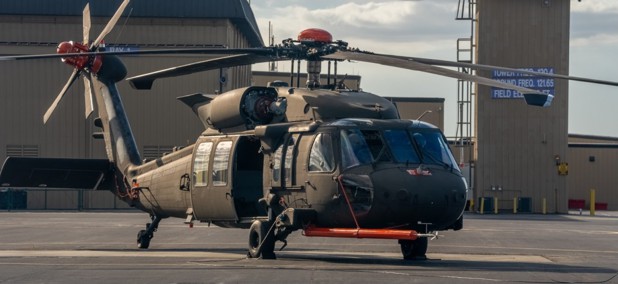
Jan. 25, 2025, saw the successful first light-off and ground run of the T901 Improved Turbine Engine on the UH-60M in West Palm Beach, Florida. Sikorsky, a Lockheed Martin company
A year ago, Pete Hegseth handed the Army a to-do list that has reshaped the service’s capabilities and how it acquires new ones. But now he’s rethinking some of those changes.
That includes the makeup of the Army’s aviation assets, the defense secretary suggested Tuesday during a House Armed Services Committee defense panel hearing into the Trump administration’s $1.5 trillion defense-budget request.
“I actually think it's something we're taking another look at,” he said in response to questioning from Rep. Rosa DeLauro, D-Conn., whose district includes the Sikorsky factory that makes UH-60 Black Hawk helicopters.
The Army’s portion of the Pentagon proposal would slash aircraft procurement, in line with efforts to phase out AH-64D Apaches and cut back on Black Hawk procurement as the service prepares to bring the MV-75 Cheyenne II online.
“Your department's budget request cuts over $5 billion from the industrial base in the aviation sector alone, effectively shutting down all current Army aviation platforms,” DeLauro said. “How did the department arrive at the conclusion that reducing procurement for these Army aviation platforms strengthens rather than weakens the aviation industrial base?”
While the Army requested less money for helicopters this year, leaders have said consistently that the Black Hawk will be in service for decades. So, too, will Apaches, though the Army wants to focus on the E variant.
“There are some very good things in the Army Transformation Initiative, and there are some things that we needed to get another look at,” Hegseth said. “And so I think you'll see a review of some of those things, and we’ll get back to you.”
Reduced funding means slowed production lines, though, at a time when Hegseth has been pushing to get the Defense Department on a “wartime footing,” including major investments in the defense industrial base.
The Army, for its part, believes that foreign military sales will sustain production lines while the service finds the right mix of aircraft, Army Secretary Dan Driscoll said on Tuesday.
“What we are trying to do is get out in advance of the number that we will have at total, as we start to bring on things like [Cheyenne II]—what does that ideal balance look like?” Driscoll told the Senate Armed Services Committee during a hearing. “And so that's what you see reflected in the current budget.”
The Army appears to be reconsidering some of ATI’s other mandates as well. The service had planned to stop buying Humvees and transfer its remaining ones to the reserve component, but Driscoll suggested the vehicle may get new life.
“The Humvee has been an incredible asset for the U.S. Army for decades, and what we are not trying to say is that it will no longer have a role.”
“Humvee is going to be able to help us on the border. It's going to be able to help us with natural disasters. It's going to be able to help us in a lot of theaters, where it may still have a lot of relevance, even if it's not the one-stop solution anymore,” he said.
Comments
No comments yet. Be the first.
Sign in to leave a comment.