High Hopes in Beijing About Trump-Xi Summit
The article is authored by a Stimson Center analyst and centers Chinese government perspectives and internal deliberations extensively, presenting them with analytical sympathy while maintaining surface-level balance. Language is measured but subtly privileges Chinese strategic logic ('music to Chinese ears,' 'crystal clear that Beijing is eagerly looking'), and the framing accepts Chinese premises (e.g., 'strategic stability' as a meaningful concept in negotiations) without interrogating them. The article treats U.S.
Primary voices: think tank or research institution, academic or expert, international body (implied Iranian Foreign Minister visit)
- This article does not address Taiwan's own stated preferences or public opinion on unification or independence.
- This article does not examine the domestic U.S. political constraints or congressional positions on Taiwan policy shifts.
- This article does not discuss how U.S. allies in the region (Japan, South Korea, Australia) might view major policy concessions on Taiwan.
- This article does not present U.S. strategic rationales for maintaining current Taiwan policy beyond 'repeatedly emphasized' statements.
Framing may shift significantly depending on actual summit outcomes and whether new U.S.
Think-tank-citedAcademic-sourcedEstablishment framing
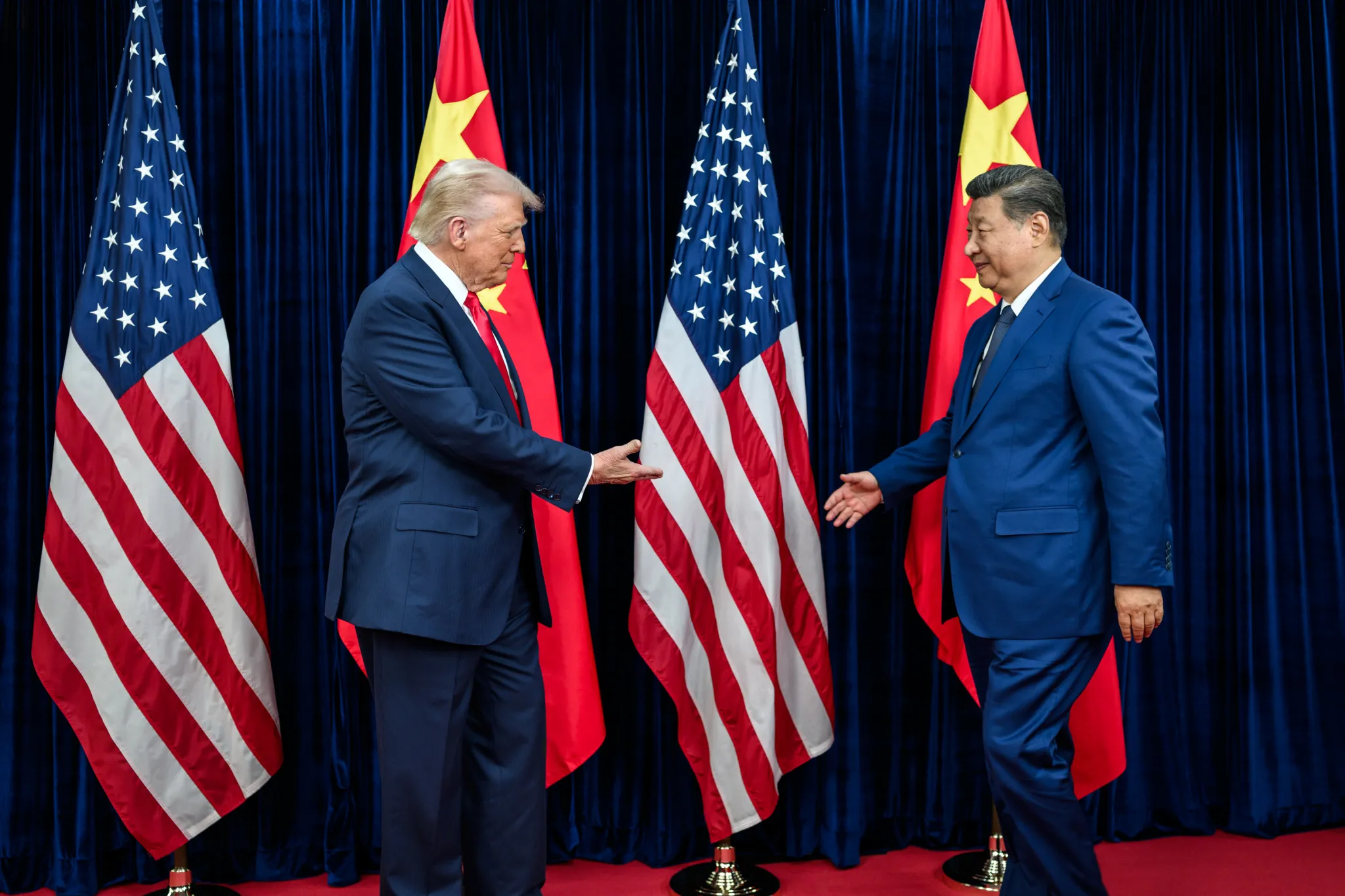
With President Trump touching down in Beijing soon, the Chinese are expecting a trip that is grand, high-profile, and sends a positive message about bilateral relations to each other and the rest of the world. Beijing hopes the trip will reaffirm the stabilization of Sino-US relations after eight years of great-power competition and China being portrayed as America’s most consequential national security challenge. But in that broad context, there are specific goals China wants to achieve.
Strategic Stability
Sixteen months into the second Trump Administration, the Chinese are now convinced that the bilateral relationship has stabilized, at least on the tactical level. The two rounds of clashes over tariffs and rare earth minerals in 2025 have ushered the relationship into a new era that some Chinese analysts have termed “mutually assured disruption.” Washington’s calls for mutual respect, peaceful coexistence, and a deterrence-oriented approach to the balance of power in the Western Pacific are music to Chinese ears.
The message from Washington since last July about U.S. hopes for strategic stability in bilateral relations has clearly been received in China. And by now, the Chinese have come to the understanding that the “strategic stability” Washington is talking about is different from the conventional definition of “strategic stability” focused on nuclear stability. However, in the context of Trump’s trip to China, elevating the bilateral relationship to “strategic stability” in Beijing’s playbook means something strategically significant will have to be delivered in the upcoming leaders’ summit. Otherwise, the bilateral relationship does not merit the term. Simply put, if there is nothing new and nothing major in the outcomes, how would the new relationship differ from the past one that lacked “strategic stability”?
Something New and Major: Taiwan
At least on the ground in China, the desired candidate for “something new and major” is the U.S. position on Taiwan as stated by the U.S. president. The push is omnipresent. In the ascending order of desirability, the three positions that the Chinese desire for the U.S. to take are:
- “The U.S. does not support Taiwan independence,” a position the U.S. removed from the State Department’s website in February 2025;
- “The U.S. opposes Taiwan independence”; and
- “The U.S. supports the peaceful unification of Taiwan.”
China’s focus on Taiwan is not new, but the level of perseverance and tenacity about the “new framing” is striking, especially after having been rejected by Washington repeatedly. It appears that China wants to capitalize on the opportunity of one-on-one interaction between the two presidents to negotiate the words out of President Trump — and hopes are high that President Trump might play ball.
Ironically, the mentality of transaction is quite prevalent on this issue, which negates the vehement previous Chinese denial that China would ever bargain with the U.S. over Taiwan, because the issue is nonnegotiable. It is crystal clear that Beijing is eagerly looking for some type of trade to negotiate the words out of President Trump, even if it does not equate to a change of U.S. policy toward Taiwan, a position Washington has repeatedly emphasized.
The Iran Conflict
Another issue that will feature prominently in the upcoming leadership summit is the Iran conflict. The general perception in China is that the U.S. is stuck in the Iran conflict and there are things China could do to assist on Iran that the U.S. would desire. It is no coincidence that the Iranian Foreign Minister visited Beijing one week before President Trump’s visit. The Chinese are obviously positioning themselves to convey messages, facilitate communications, and potentially play the role of go-between between Iran and the United States. In private conversations, Chinese experts and officials made it clear that China does not support Iran’s claim on the Strait of Hormuz, or its proclaimed rights to collect tolls for ship transits.
While there is some room for China to maneuver between the U.S. and Iran, the actual deliverables are unlikely to be what the U.S. would expect. China does not have the ability to force Iran to accept terms that are detrimental to Tehran’s national interest. But China can, and most likely will, deliver support to deconflict and de-escalate, at least verbally, to meet President Trump’s expectation. China can significantly reduce its current oil imports from Iran. It also can cut supplies of dual-use technologies and parts exported to Iran. However, the Chinese have made it clear that these deliverables are unlikely to be offered for free.
Across the board, the Chinese have demonstrated a keen desire to negotiate. Beijing is eager to explore what the U.S. would like to achieve from the trip and appears fully confident in its ability to address American concerns to Washington’s satisfaction. But China demands a quid pro quo. It is very direct about the need for the U.S. to put reciprocity on the table, and open about China’s willingness to deliver in relation to what the U.S. is willing to offer. This will be the case on Taiwan, trade, Iran, and other issues that will emerge from the trip.
Comments
No comments yet. Be the first.
Sign in to leave a comment.