Two trends, seemingly separate, have been accelerating over the past few years. First, Wall Street has been plowing billions of dollars into financing data centers. Second, the U.S. military has been ramping up its use of artificial intelligence (AI).
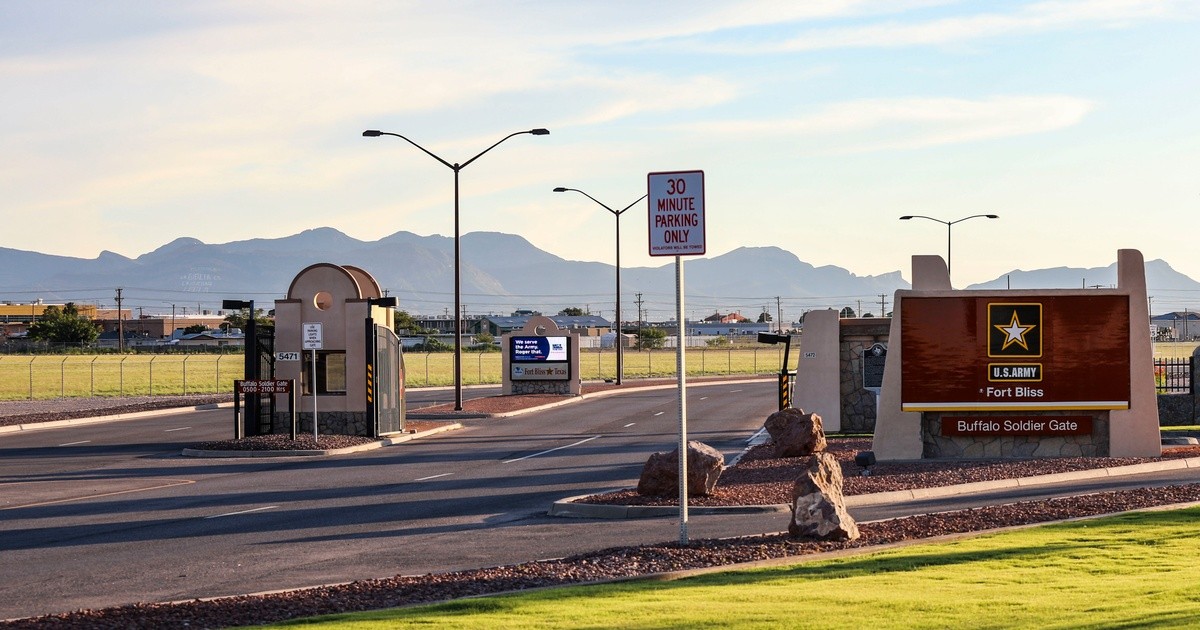
Now, these two trends are directly merging. In late March 2026, the U.S. Army announced its selection of companies to build and operate two hyperscaled data centers on two different military installations. Both data centers — one at Fort Bliss, Texas, the other at Dugway Proving Ground, Utah — will be backed by some of the world’s top Wall Street firms.
An Army spokesperson told Truthout that the Army has entered into “an exclusive negotiation period” with the companies to negotiate “specific lease economics” on what will be “long term, 50-year” leases.
The spokesperson also said that “[i]nstead of receiving cash for the lease, the Army will be compensated through ‘in-kind consideration,’” meaning that “the Army accepts services or improvements of equal or greater value in lieu of cash rent — specifically, a key portion of the dedicated data computation capabilities to directly support our warfighting needs.”
The data centers will be “100 percent privately financed, built, and operated by the developers,” said the Army spokesperson, and confirmed that they “are indeed commercial data centers” that will be allowed to sell off excess computing capacity commercially.
All this comes as the U.S. military accelerates the use of AI in its operations. One top Army official has said the data centers will be used “to meet rising demands for computational power required for AI applications, including drone swarms, advanced simulations, and real-time operational analysis.”
As one industry website put it, “data centers are war infrastructure now.”
But local residents and some experts are expressing alarm over the data centers due to their environmental impacts and their potential burden on water and electric grids, as well as what these deals represent for military and corporate accountability.
“We’ve seen examples of the kinds of things AI can be used for, and some of them are horrifying in terms of the speed with which they can enable killing or the extent to which they can expand surveillance networks,” Roberto J. González, an expert on U.S. militarism at San José State University, told Truthout.
Army Data Center Deals
The two planned Army data center complexes will be massive projects. The Fort Bliss data center will be located on 1,384 acres of military land and is scheduled to become operational in 2027. It will be built and operated by the Carlyle Group, one of the world’s top private equity firms, and a major investor in data centers more broadly.
According to local news outlet El Paso Matters, the three-gigawatt data center complex “would consume more electricity than all of El Paso Electric’s 460,000 customers combined.”
The Dugway Proving Ground data center project will be built on approximately 1,201 acres and is scheduled to become operational in 2029. It will be constructed by data center builder CyrusOne, which is jointly owned by KKR, also a top private equity firm and huge investor in data centers, and Global Infrastructure Partners, the private infrastructure investment arm of BlackRock, the world’s largest asset manager.
The Army spokesperson told Truthout that the 50-year leases for the data centers will be “Enhanced Use Leases authorized by Title 10 of the U.S. Code, Section 2667” — a federal statute permitting the defense secretary to lease out underutilized military land to “promote the national defense or to be in the public interest” — and that “[t]he developer assumes 100 percent of the financial risk to build the infrastructure.”
The deals come after a 2025 executive order from Donald Trump, titled “Accelerating Federal Permitting of Data Center Infrastructure,” which includes a specific statute allowing the Pentagon to “identify suitable sites on military installations” for data center infrastructure and to “competitively lease available lands” for qualifying projects.
While the deals haven’t been finalized, and key details on the terms of the contracts haven’t been announced, the billionaire-led firms developing the data centers will be allowed to sell excess computing power from the facilities on commercial markets.
These two planned facilities are likely just the beginning of the Army’s data center deals. The military news site Task & Purpose reports Army contract requests for two more data centers at Fort Hood, Texas, and Fort Bragg, North Carolina, with the latter including “several potential spots … within one mile of civilian areas and one-half mile of civilian housing.”
Task & Purpose also notes that the Air Force released a request for lease proposals for data centers last year at several bases.
The Army deal breaks new ground for the military. “This will be the first hyper-scale data center that the Pentagon has ever done,” Army Secretary Dan Driscoll told the Wall Street Journal in March.
“Military AI Dominance”
The planned facilities come as the U.S. military accelerates the integration of AI into its operations and, aided by new Trump administration policies, bolsters its access to data centers, which generate the computing capacity that powers AI.
In January, Defense Secretary Pete Hegseth published a memorandum ordering the acceleration of “America’s Military AI Dominance” by “becoming an ‘AI-first’ warfighting force across all components.” The order follows Trump’s January 2025 executive order on “removing barriers to American leadership in artificial intelligence.”
Notably, Hegseth’s memo emphasizes corporate America’s driving role in this initiative, emphasizing that the military’s AI makeover will be “fueled by the accelerating pace of commercial AI innovation coming out of America’s private sector.”
On April 3, a few months after Hegseth’s memo, the Army launched its Army Data Operations Center (ADOC) which, according to a press release, “will serve as the operational engine for the Army’s transformation into a data-centric force.” Labeled a “911 for data,” ADOC will integrate “fragmented” data across the Army’s operations globally to help to “operationalize data” for goals like “shortening the sensor-to-shooter timeline,” and ultimately “securing the Army’s advantage now and in the future,” according to the press release.
González, who’s written about Big Tech’s transformation of the military-industry complex, told Truthout that the Trump administration’s military AI push is focused on developing “autonomous unmanned drones in battlefield situations” that “will rely heavily on AI for everything from navigation, to target selection, to pattern recognition for identifying different potential targets.”
González also said the growing use of AI in the military will bolster “AI decision support systems” that “stitch together different kinds of unstructured and structured data” — which could include things like “metadata about phone conversations, cell phone locations, and internet use patterns” — to “create a list of targets.”
González cites Israel’s genocidal siege against Palestinians as an example. “This is precisely what the Israel Defense Forces were using in [Israel’s] war in Gaza to create lists of suspected enemies who were then targeted for assassination, essentially,” he said.
González warns that growing autonomous, AI-driven military systems will intensify surveillance and weaken the ability to hold individuals to account. “These systems often fail, and they also diffuse accountability when a machine, rather than a person in the loop, is making the decision over life or death,” he said.
For example, reporting by the Military Times suggests that the Pentagon’s Maven AI system, which was developed by Palantir and “classifies targets, recommends weapons systems and generates strike packages in near real time,” was involved in the bombing of the Shajareh Tayyebeh primary school in Minab, Iran, which killed 155 people, most of them young schoolchildren.
The Military Times noted that Maven “generated hundreds of strike coordinates in the first 24 hours of the Iran campaign” and that it was unclear if any human verified the coordinates that targeted the school, which were based on “outdated intelligence.”
In March, U.S. Deputy Secretary of Defense Steve Feinberg declared that Maven would become, as a Reuters headline put it, a “core US military system.”
“Sweetheart Deal”
The proposed data center at Fort Bliss — which would be the third major data center in the El Paso area — has sparked concerns among locals over the potential strain on water and energy resources.
While many specific terms of the deals remain to be seen, Tyson Slocum, director of Public Citizen’s Energy Program, worries that private interests that covet land to build data centers could get a “sweetheart deal” from the Army well below the pricey market rates for data center square footage.
“My primary concern is that it’s a huge public subsidy to these private data center developers,” said Slocum.
The Army spokesperson told Truthout “[t]he return on investment for the American taxpayer” in these deals “is realized through massive cost avoidance.”
“By having private companies fund and build these data centers on underutilized Army land, the developers take on the financial risk, and the Army receives essential data processing capacity without direct cash outlays,” the spokesperson said.
Slocum also noted that data centers could stress the local grids near the military bases — concerns shared by El Paso residents. “Most military bases in the United States are not isolated islands,” he said. “They’re interconnected with the grid, and they’ll need to draw upon additional power resources from the grid.”
Slocum expressed alarm that placing data centers on military land could support the Trump administration’s efforts to protect fossil fuel-generated power production — which often powers data centers — by connecting it to “national security.”
“Military bases are in all 50 states and every corner of the power grid,” said Slocum. “Any power plant connected to that grid can now conceivably be needed for national security to supply a base.”
The Army spokesperson told Truthout that “[m]inimizing community impact was a primary selection criterion for these projects,” and that “[t]he chosen proposals were selected specifically because they feature innovative solutions designed so as not to burden local communities or utilities.”
The Army spokesperson also said that “before any final lease is signed, a detailed environmental review under the National Environmental Policy Act (NEPA) must be completed.”
“A Larger Tech Ecosystem”
Pentagon deals around tech weaponry with big financial investors are nothing new. González has written about Silicon Valley venture capitalist financiers’ role in transforming the U.S. military-industrial complex, with firms like Palantir and Anduril ascending.
“There’s a shifting of the center of gravity from the traditional, established defense firms like the Lockheed Martins and Boeings to these new groups that we more often associate either with commercial tech products rather than military interests,” said González.
The new Army data centers deals, struck with some of the biggest global diversified Wall Street firms, represent a further strengthening of the nexus between finance and tech for military uses.
The military also seems intent on striking similar deals in other areas. “Beyond data centers, the Army is looking at doing similar leasing arrangements for critical mineral processing and other types of manufacturing,” reported the Wall Street Journal.
Private equity’s new data center partnerships with the U.S. Army come as this powerful sector is intensifying its investments along the entire AI supply chain. As Truthout previously reported, private equity has been channeling hundreds of billions of dollars into financing data centers and other AI infrastructure — from the data center buildings themselves to the fossil fuel power generation that supports their operations.
The Carlyle Group building the Fort Bliss data center oversees $475 billion in assets. The firm was co-founded by billionaire David Rubenstein, who remains Carlyle’s co-executive chairman. Rubenstein is an influential philanthropic donor, and Joe Biden spent numerous Thanksgivings at Rubenstein’s $34 million Nantucket complex during his presidency.
BlackRock subsidiary Global Infrastructure Partners (GIP) and KKR own CyrusOne, the firm building the Dugway data center. KKR was co-founded by mega-billionaire Henry Kravis, who remains KKR’s co-chair. The firm oversees $744 billion in assets and is a major data center investor globally.
BlackRock, led by billionaire Larry Fink, is the world’s largest asset manager, overseeing $14 trillion in assets. BlackRock has aggressively moved into private investment in infrastructure in recent years, including data centers.
In March 2025, amid Trump’s threats to “take back” the Panama Canal, BlackRock coordinated with the Trump administration to acquire a massive portfolio of global ports that included two Panama Canal ports.
BlackRock has also been acquiring utilities and power generation companies that have been tied to providing energy to proposed data centers. BlackRock also co-owns Aligned Data Centers, one of the world’s largest data center companies.
Pushing Back
While the data center boom is often portrayed as an unstoppable force, communities across the U.S. have been resisting their construction, sometimes successfully.
“There’s a lot that individual communities can do to push back against these trends,” González emphasized, including supporting the “small but important number of elected officials” who oppose the data center frenzy.
Moreover, the grassroots movement against reckless data center construction is accumulating lessons and growing nearly everywhere.
Media that fights fascism
Truthout is funded almost entirely by readers — that’s why we can speak truth to power and cut against the mainstream narrative. But independent journalists at Truthout face mounting political repression under Trump.
Comments
No comments yet. Be the first.
Sign in to leave a comment.