RFK Jr.’s War on Science Is Really a War on Scientists
The Bulwark frames RFK Jr.'s regulatory approach as fundamentally anti-scientific and anti-elite rather than as a policy disagreement. Word choices like 'war on science,' 'ritual humiliations,' 'crusader,' and 'animus' carry strong negative valence. The article centers Trump administration insiders and unnamed advisers while characterizing Kennedy's followers as 'livid' and viewing his concessions as betrayals, constructing a narrative of internal chaos rather than exploring substantive policy positions.
Primary voices: elected official, state or recognized government, media outlet, anonymous source
- This article does not address specific scientific evidence regarding vaccine safety, glyphosate safety, or the merits of contested regulatory positions
- This article does not present Kennedy's or his supporters' rationale for their positions beyond dismissing them as anti-science
- This article does not examine Trump's stated rationale for his appointments or policy decisions independent of framing them as compromises
Framing may shift if Kennedy is removed from HHS or if specific regulatory actions face legal/scientific challenge, which could either validate the 'chaos' narrative or force recalibration of the 'ant
Establishment framingCharged languageOpinion/analysis
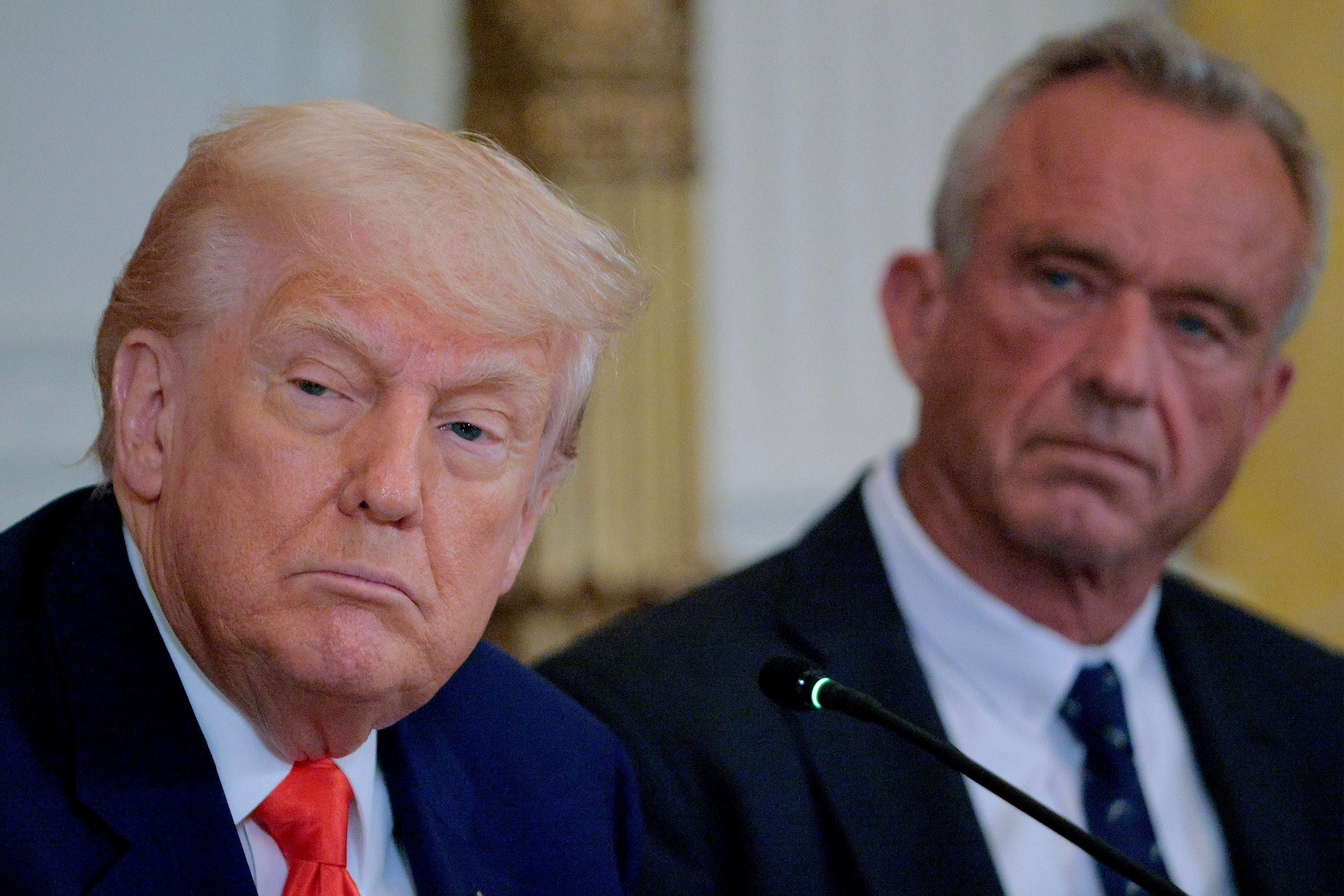
ROBERT F. KENNEDY JR. HAS TAKEN A SERIES of very public political blows in the last few weeks, the kind that might have humbled a less determined figure.
The anti-vaccine crusader had to fall in line last month when Donald Trump appointed a conventionally qualified, vaccine-supporting candidate to lead the CDC. Then Kennedy had to do it all over again a few weeks later when Trump withdrew the nomination of Casey Means, a fellow MAHA warrior, whom the administration had put forward to serve as surgeon general.
As if losing that potential ally wasn’t bad enough, Kennedy had to watch Trump choose a replacement who generally supports vaccination—and who on at least two occasions publicly criticized Kennedy for his efforts to roll back vaccine requirements for children. Kennedy praised the choice anyway, saying he “looked forward to partnering with her.”
And that’s on top of some other embarrassing setbacks, like Trump’s executive order supporting the production of glyphosate, a controversial herbicide Kennedy had spent years attacking as an alleged carcinogen. It was one of several recent Trump decisions that left Kennedy’s MAHA followers absolutely livid. But Kennedy offered his fans no support, instead issuing a statement describing Trump’s order as a necessary—if unfortunate—concession to farmers who rely on glyphosate to protect their crops.
The backstory here is no great secret. Ever since last fall, Trump advisers have been warning privately—and sometimes publicly, via published polling memos—that Kennedy’s vaccine rhetoric was alienating voters. They have called on him to stop talking about vaccines and stick to his message on healthier eating, which is a lot more popular.
They have also taken firmer control over what’s happening at the Department of Health and Human Services, by elevating a now-trusted deputy, Chris Klomp, to become the department’s chief counselor. His arrival has coincided with the exodus of outspoken vaccine skeptics like the Louisiana doctor who had been serving as deputy director at the CDC, and who had described the United States potentially losing measles elimination status as the “cost of doing business.”
The latest RFK-damaging departure happened on Tuesday, when embattled FDA Commissioner Marty Makary resigned. Makary had become the fulcrum for several ongoing and overlapping controversies, but on issues of common interest he is—er, was—a Kennedy ally.
In Washington—especially Trump’s Washington—these sorts of ritual humiliations are frequently the prelude to leaving an administration, voluntarily or otherwise. And who knows, maybe Kennedy will soon join Pam Bondi, Lori Chavez-DeRemer, and Kristi Noem among the ranks of former Trump cabinet members.
But Kennedy is still at HHS, pursuing an agenda that hints at why his partnership with Trump might yet endure: However much their political imperatives may be clashing, the two men still hold some of the same fundamental grievances.
Two recent developments highlight how Trump and Kennedy’s anti-scientist and anti-elite animus binds them to one another, and to the MAGA/MAHA movement that thrust them into power.
Comments
No comments yet. Be the first.
Sign in to leave a comment.