Judge Blocks Trump Sanctions on Francesca Albanese
The U.N. special rapporteur on Occupied Palestine says the interim decision gives her respite, but that the “battle is not over.”
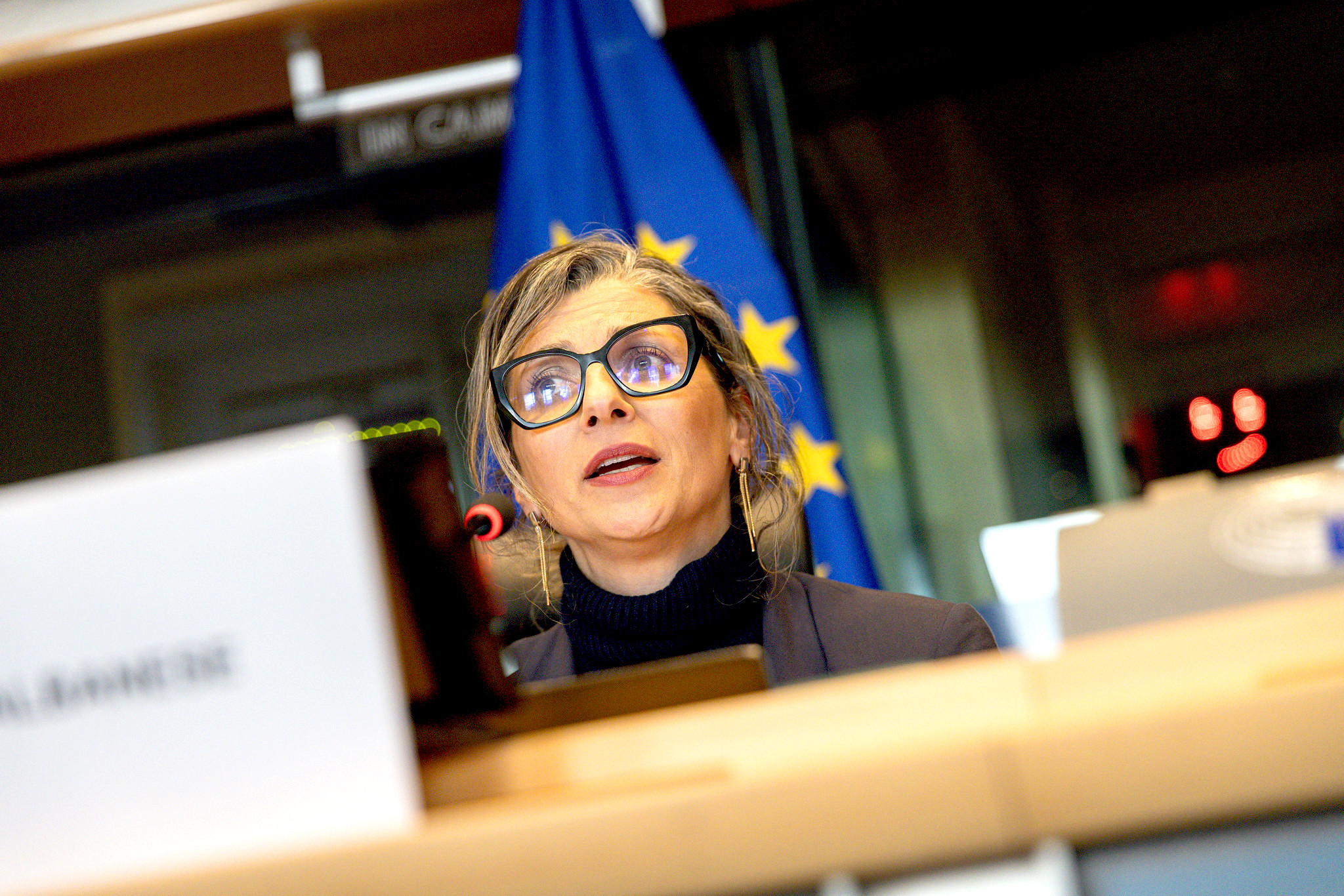
Francesca Albanese, U.N. special rapporteur on Palestine, April 10, 2024, during an EU Parliament public hearing on Gaza in Brussels. (The Left, Flickr, CC BY-NC-SA 2.0)
A federal judge in Washington, D.C., temporarily blocked Trump administration sanctions targeting United Nations Palestine expert Francesca Albanese, ruling that the punitive measures violated her First Amendment rights.
“Albanese has done nothing more than speak!” wrote U.S. District Judge Richard Leon, a George W. Bush appointee, in his 26-page decision granting a preliminary injunction against the sanctions, which U.S, Secretary of State Marco Rubio announced last summer.
Rubio said the sanctions, which barred the U.N. expert from entering the U.S. and banking in the country, were justified because
“Albanese has directly engaged with the International Criminal Court (ICC) in efforts to investigate, arrest, detain, or prosecute nationals of the United States or Israel, without the consent of those two countries.”
But Leon wrote in his ruling on Wednesday that “it is undisputed that her recommendations have no binding effect on the ICC’s actions — they are nothing more than her opinion.”
[The ruling holds until the outcome of the case, which will proceed to trial, Global Sanctions reports.]
Judge Richard Leon in 2015. (United States District Court – New York Times /Wikimedia Commons /Public Domain)
The decision came in response to a lawsuit filed in February by Albanese’s husband and her daughter, who is a U.S. citizen.
They argued the U.S. sanctions against Albanese were “effectively debanking her and making it nearly impossible to meet the needs of her daily life.”
Albanese is an Italian national who currently lives with family in Tunisia. Leon wrote in his ruling that
“while the speech at issue occurred outside the United States, defendants have responded by taking action against Albanese’s extensive connections to the United States — including Albanese’s property within the United States and her ability to maintain professional and personal connections within the United States — because of her speech.”
“Accordingly, Albanese (or plaintiffs standing in her shoes) may claim the protection of the First Amendment to challenge defendants’ actions,” the judge continued.
Albanese, who has vocally condemned Israel’s genocide in Gaza and the countries and private corporations that have been complicit, welcomed Leon’s ruling, writing in a social media post that “the interim decision by the U.S. judge gives me respite.”
“But the battle is not over,” she added. “ICC judges and Palestinian NGOs remain sanctioned with no recourse to justice. The stakes are incredibly high.”
Dylan Williams, vice president for government affairs at the U.S.-based Center for International Policy, called Leon’s ruling “the right decision” and said Albanese “was wrongly sanctioned for constitutionally protected speech.”
“War criminals should be held accountable for their crimes,” Williams wrote on social media. “Making it a crime to say that is what is illegal. We must not sacrifice our rights or the rule of law for Israel.”
Jake Johnson is a senior editor and staff writer for Common Dreams.
Comments
No comments yet. Be the first.
Sign in to leave a comment.