Newsom’s legacy on the line when he unveils revised budget proposal
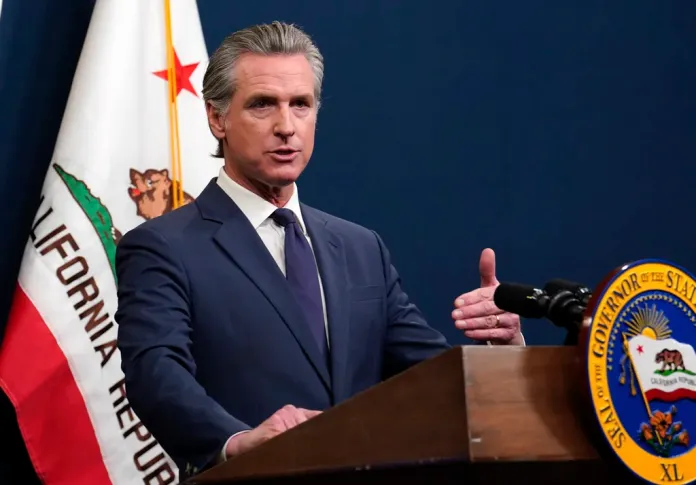
Gov. Gavin Newsom (D-CA) is entering what could be the defining fiscal test of his governorship: whether he can stabilize California‘s finances before leaving office and hand his successor a clean budget.
After years of surpluses driven by a booming stock market and surging tax revenues, California now faces a far more uncertain outlook marked by volatile revenue swings, rising spending pressures, and growing concerns about long-term deficits, all against a backdrop of strained relations with the federal government. Newsom’s revised budget proposal, set to be unveiled Thursday, could represent his final opportunity to demonstrate fiscal control before he is termed out of office in 2027.
Republicans have increasingly argued that Newsom, widely viewed as a potential 2028 presidential contender, has relied too much on temporary revenue spikes while expanding costly programs that would saddle future governors with issues if economic conditions weaken.
At the center of the debate is California’s unique dependence on high-income taxpayers, particularly capital gains tied to Wall Street performance. Because the state collects such a large share of its revenue from the wealthiest 1% of residents, sudden market downturns could quickly create budget holes. That vulnerability became clear over the last year as stock market turbulence and economic uncertainty triggered warnings of multibillion-dollar deficits by his office.
Now, unexpectedly strong income tax collections have given Newsom some breathing room to avoid deeper cuts and potentially erase much of the projected deficit heading into the next fiscal year. But critics claim a temporary rebound does little to solve California’s larger structural challenges.
When pressed to comment on the upcoming budget reveal, Newsom touted that California’s economy is “remarkable, resilient, dominant.”
“No economy in the United States of America, no state has outperformed the state of California,” he said last week.
The broader political question facing Newsom is whether voters will view his final budget as responsible stewardship during tumultuous economic times or as a short-term balancing act that merely delays difficult decisions for the next administration.
Since taking office in 2019, Newsom has broadened access to publicly funded healthcare for qualifying illegal immigrants, expanded subsidized childcare programs, and pushed through free school meals, among other major Democratic priorities. Those programs strengthened Newsom’s standing with progressives and helped many Californians cope with the state’s soaring cost of living. They have also given him a list of accomplishments to point to should he mount a national bid.
But state budget analysts warn California’s long-term finances are becoming increasingly strained by those commitments. According to a recent analysis from the state’s nonpartisan Legislative Analyst’s Office, California’s spending growth has consistently outpaced revenue growth since before the pandemic, creating a structural deficit that lawmakers have repeatedly patched with temporary solutions.
State spending from California’s main operating fund has climbed by roughly $100 billion since Newsom’s first full budget year in 2019-20. Much of that stems from the rising cost of maintaining existing programs and services. Rather than imposing broad spending cuts or pursuing politically risky tax hikes, Democratic leaders have increasingly relied on reserve funds and internal borrowing to close budget gaps, something that could come back to bite them.
The governor’s office has remained tight-lipped about the details ahead of the release in Sacramento, but the Los Angeles Times reported that he is expected to propose creating a new $100 million fund to help wildfire victims secure loans to rebuild homes destroyed in recent fires.
“We have been on the ground in L.A. since Day One of recovery from these fires, and we aren’t turning our backs now,” Newsom said in a statement. “This community deserves continued support to help them get back on their feet, and rebuild their homes and their lives.”
Newsom is also expected to propose a $300 million infusion to stabilize California’s health insurance exchange after federal lawmakers cut funding earlier this year, according to administration officials.
The additional money would be used to shore up subsidies within Covered California, the state’s Obamacare marketplace. It would also help eliminate monthly premiums for the lowest-income enrollees and reduce out-of-pocket costs for middle-income families purchasing coverage through the exchange.
Newsom’s May 14 revision reveal is a mandatory part of the state’s three-step budget process, which began at the beginning of the year and ends in a final budget passed by the legislature next month.
In January, Newsom’s administration projected a $2.9 billion budget deficit for fiscal 2027, far smaller than the roughly $18 billion shortfall forecast by the Legislative Analyst’s Office late in 2025 but still significant enough to slow or scale back several ambitious policy initiatives.
At the time, Department of Finance officials unveiled Newsom’s proposed $348 billion spending plan for fiscal 2027, which begins July 1, 2026. The proposal included roughly $248 billion in general fund spending, approximately $11 billion more than the current year’s budget. Administration officials attributed the stronger fiscal outlook to rebounding state revenues, elevated stock market performance, and improving economic conditions, something they are expected to echo on Thursday.
Comments
No comments yet. Be the first.
Sign in to leave a comment.