North Africa Regional Outlook: May 13, 2026
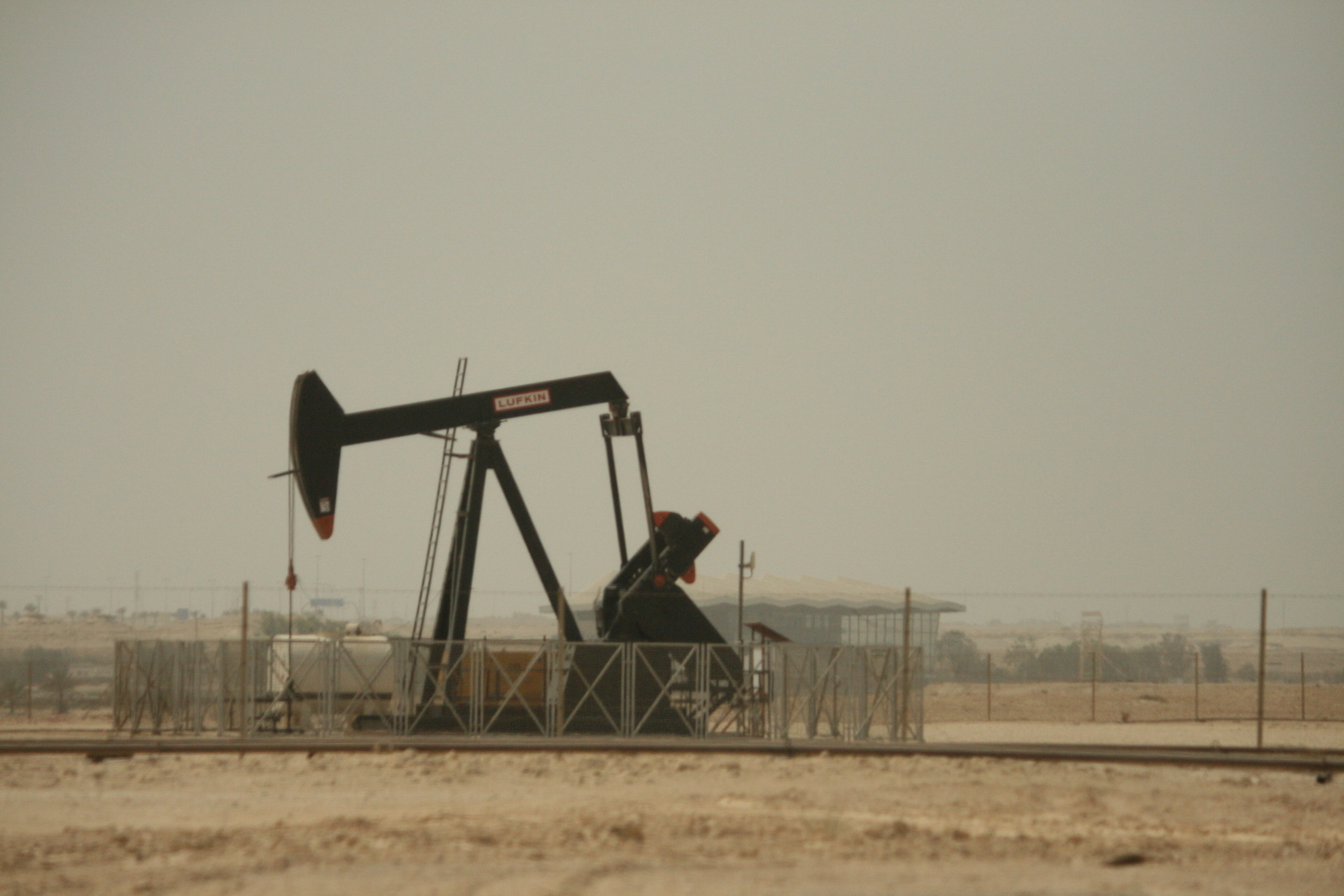
From escalating attacks in Mali exposing deepening instability across the Sahel to the Iran war continuing to disrupt global markets and supply chains, as well as Europe intensifying efforts to secure Mediterranean energy partnerships with Libya, Algeria, and Egypt—explore the latest developments shaping North Africa, the Mediterranean, and the Sahel.
Read the North Africa Weekly on LinkedIn or join the conversation on X: @StimsonNAfrica
From the Stimson Center
A Conversation with the Ambassadors of Burkina Faso, Mali, and Niger: The Sahel at a Crossroads
Burkina Faso, Mali, and Niger are reshaping the Sahel’s political and security landscape. Join the Stimson Center on May 21st for a rare joint conversation with the ambassadors of all three Alliance of Sahel States members on regional realignment, security, and future international engagement.
Balancing Export-Led Growth and Labor Protections in Morocco
Paul Dyer, Managing Director at Legacy Social Advisory, writes on how Morocco’s export-led growth model faces rising inequality and unemployment, underscoring the need to rebalance labor protections and job creation.
Mali Attacks: Aggravating the Sahel Security Crisis
Stimson Non-Resident Fellow Salem A. Salem explores how coordinated Mali attacks expose state vulnerabilities, insurgent adaptation, and shifting regional alliances across the Sahel
Algeria as a Geopolitical Actor: Strategic Dynamics and Regional Implications
A Conversation with Ms. Amina Benkhadra: Morocco’s Energy Future and Strategic Resources
Morocco is advancing its energy and minerals sectors to strengthen security and drive the green transition. Watch Amina Benkhadra, Director General of the National Office of Hydrocarbons and Mines (ONHYM), explore strategy and partnerships at the Stimson Center.
On Our Radar
The headlines shaping politics, security, and economics across North Africa and the Sahel.
Reuters
After expulsions from Mali, Burkina Faso and Niger, France pivots its Africa strategy at a Nairobi summit focused on East and Southern Africa, trade partnerships, and development financing.
Reuters
OPEC’s collective output hits a multi-year low in April as the Hormuz closure prevents Gulf member states from exporting at full capacity, pushing global oil prices higher and benefiting Libya and Algeria as alternative suppliers.
Al Jazeera
Feature examining the worst-case humanitarian and economic scenarios for Sudan after Hemedti vowed to fight “until 2040” and Burhan promised war through 2033; cites UNDP modelling projecting an extra 34 million Sudanese pushed into extreme poverty.
Al Jazeera
Africanews
Niger’s government announces that the 15,000-strong AES joint force carried out intense air campaigns in Malian territory in response to the April 25 attacks; Niger cancels nationwide May 1 parades for security reasons.
Africanews
Vatican News
Pope Leo XIV meets the Board of the John Paul II Foundation for the Sahel, expressing deep concern over violence in Chad and Mali and reaffirming the Foundation’s Pontifical status.
France 24
Paul Melly of Chatham House tells François Picard that today’s Malian crisis is far more complex than 2012 and is unlikely to be resolved by external military intervention.
Morocco World News
North Africa Post
DGSN-DGST chief Abdellatif Hammouchi presents Morocco’s counter-terrorism approach at the 23rd regional meeting of intelligence and security service heads in Vienna.
North Africa Post
Reuters
Armed clashes near the Zawiya refinery, one of Libya’s main fuel supply facilities, force a temporary shutdown, disrupting domestic fuel supply and raising fears of renewed fighting near critical western infrastructure.
Reuters
Italian and Libyan officials hold talks on expanding the Greenstream pipeline capacity and advancing new offshore gas cooperation agreements as Rome seeks to diversify away from Hormuz-exposed supply chains.
Reuters
Chevron announces new exploration activities off Malta’s coast as part of a broader Mediterranean push to capture upstream opportunities opened by the Hormuz crisis and European demand for non-Gulf energy.
North Africa Post
North Africa Post
North Africa Post
Maghrebi.org
AL24 News
Financial Afrik
Senegal’s president gives a wide-ranging interview pledging continued IMF talks, warning against the outrageous personalization of Pastef, and calling for a coordinated Sahel response to terrorism.
Reuters
Reuters
UN humanitarian officials report a sharp increase in civilian casualties from drone strikes across Khartoum, Kordofan and Darfur, warning the tactic is becoming the defining feature of the conflict’s fourth year.
Reuters
Chadian forces report one of the deadliest attacks on their personnel in years in the Lake Chad basin, raising alarm about Boko Haram’s renewed operational capacity in the Sahel’s eastern theater.
AFRICOM (U.S. Africa Command)
U.S. Army
Alhurra
Committee to Protect Journalists (CPJ)
CPJ calls on the RSF to release the journalist kidnapped on April 5 in Kutum, North Darfur, noting at least eight Sudanese journalists remain unaccounted for.
Bloomberg
RFI
The North Africa Post
Coverage of ICG’s Seven Peace and Security Priorities for Africa in 2026 briefing, which lists the Sahel insurgency and Sudan civil war among the most urgent.
North Africa Post
Morocco’s National Hydrocarbons Office (ONHYM) Director General Amina Benkhadra takes the Nigeria-Morocco Gas Pipeline project to Washington, pitching it to U.S. energy and finance officials as a transformative infrastructure corridor linking West Africa to Europe.
Business Insider Africa
The Dangote Refinery in Nigeria reports a record jet-fuel export milestone, reinforcing its role as a continental energy hub with significant implications for North African and Sahel aviation fuel supply chains.
Al Jazeera
Data-driven feature mapping Mali’s gold deposits, mining concessions, and natural resource base, examining how control over these assets is driving both the ongoing conflict and foreign interest from Russia, China, and Western mining companies.
Bloomberg
Egypt’s annual urban inflation eased more than expected in April 2026 despite the Hormuz closure driving up energy and food import costs, attributed to base effects and the CBE’s aggressive rate-cut cycle begun in February.
The Africa Report
Analysis documenting the hollowing out of the State Department’s Africa bureau and the challenges facing the Trump administration’s new Africa policy leadership in engaging with Sudan, the Sahel, and North Africa.
Carnegie Endowment for International Peace
Carnegie Africa Program relaunches the AfTech 2.0 tracker documenting African states’ technology policy environments, digital infrastructure investment, and regulatory frameworks across North and Sub-Saharan Africa.
Financial Times
Aliko Dangote, Africa’s wealthiest industrialist, is eyeing Kenya as the site of a huge 650,000-barrel-a-day oil refinery he intends to build in east Africa, he told the FT, after questions over a previous push to build it in Tanzania.
Al-Monitor
Al-Monitor analysis of Egypt’s accelerated upstream oil and gas investment program as the government seeks to reduce import dependence, with coverage of new licensing rounds, BP-ADNOC joint ventures, and ENI’s offshore discoveries.
Reuters
Sudan’s military presents evidence it says ties UAE-supplied drones launched from Ethiopian territory to the strike on Khartoum International Airport, prompting Khartoum to recall its ambassador from Addis Ababa.
Reuters
Reuters reporting on the JNIM strikes in Mopti region’s Korikori and Gomossogou villages that killed more than 50 people, part of the group’s continued offensive campaign following the April 25 Bamako attacks.
Reuters
France deploys the Charles de Gaulle carrier group toward the Red Sea as European discussions intensify around a potential multinational naval mission to protect shipping and reopen the Strait of Hormuz.
Reports & Analysis on the Region
COMMENTARY
Stimson Center Program Director Hafed Al Ghwell argues that South Sudan is entering a far more dangerous phase of instability driven by economic collapse, regional militarization, fragmented militia power, and failing state institutions, with planned 2026 elections likely to trigger wider conflict rather than forge a path to stability.
COMMENTARY
MEI analysis of the implications of the UAE’s announced suspension of its OPEC+ commitments amid the Iran war and Hormuz disruption, examining what it means for the cartel’s cohesion, Gulf solidarity, and North African producers Algeria and Libya.
COMMENTARY
Carnegie analysis of how climate-driven water scarcity, agricultural decline, and rural unemployment are combining with historical ethnic and political grievances in Algeria’s Kabylie region to produce a new wave of instability.
COMMENTARY
Brookings analysis drawing on global evidence to argue that targeted social protection systems are more effective than fuel subsidies in cushioning households from energy price shocks, with direct lessons for North African governments including Egypt, Tunisia, and Morocco facing rising energy import costs.
COMMENTARY
Brookings commentary arguing that Europe’s simultaneous pursuit of affordability, security, and sustainability during the Hormuz crisis depends on integrating grid infrastructure, storage and interconnections — with implications for North African renewable energy exporters including Morocco and Algeria as potential EU energy partners.
COMMENTARY
Atlantic Council analysis examining Egypt’s strategy of selling state-owned land — including the Ras el-Hekma deal and new coastal development projects — as a primary mechanism for generating hard currency and reducing external debt, assessing the sustainability and distributional implications of the approach.
PUBLICATION
FES collections entry covering political economy and governance analysis relevant to the Sahel and North Africa, part of the foundation’s ongoing publication series on African security and development.
POLICY ANALYSIS
Detailed analysis by Giuseppe Dentice of OSMED examining Egypt’s paradoxical position: simultaneously a security asset for Gulf partners and a structurally dependent actor exposed through financial flows, remittances, energy prices, and Suez Canal revenues, arguing Cairo is pursuing deliberate adaptive non-alignment rather than rigid alignment with any party.
COMMENTARY
Foreign Affairs analysis arguing that Libya’s current relative calm is a strategic illusion — its rival administrations have divided oil revenues, institutionalized parallel bureaucracies, and entrenched foreign military presences in ways that make genuine reunification increasingly unlikely.
REPORT
Mercy Corps report documenting how the Strait of Hormuz closure is transmitting economic shocks through fertilizer, fuel, shipping, currency, and remittance channels into six already-fragile countries — including Sudan — projecting deepening food insecurity through late 2026 and into 2027 as planting seasons begin with compromised inputs.
COMMENTARY
ISPI analysis marking Egypt’s April 25 Sinai Liberation Day, examining how Cairo’s threat perception has shifted from the domestic Sinai insurgency toward the combined pressures of the Sudan war, Red Sea instability, and the Hormuz crisis affecting Suez Canal revenues.
POLICY ANALYSIS
ECFR policy paper arguing that Europe and Africa — particularly Morocco and South Africa as major shipping corridor states — should coordinate on green shipping corridor infrastructure, carbon pricing mechanisms, and port decarbonization to jointly benefit from the post-Hormuz rerouting of global trade.
COMMENTARY
MEI analysis arguing that the Hormuz-driven fertilizer shortage threatening Sahel food security creates an opening for Morocco — with 70% of known global phosphate reserves — to rapidly scale fertilizer production and exports to West Africa.
COMMENTARY
MEI analysis documenting how Egypt is absorbing the Iran war’s cascading economic shocks — through Suez Canal revenue losses, energy import costs, tourism disruption, and tightening Gulf financial support — while arguing Cairo’s reform program provides a limited buffer.
COMMENTARY
ACLED’s West Africa Senior Analyst comments on the regime’s setbacks, Russian involvement, and the risks of further instability.
COMMENTARY
COMMENTARY
NATO Defense College Foundation commentary examines how Mali’s endorsement of Morocco’s autonomy plan complicates Maghreb geopolitics and strengthens Morocco ahead of the MINURSO mandate review.
REPORT
COMMENTARY
Atlantic Council commentary examines Russia Africa Corps’ role following the April 25 attacks, the Kidal withdrawal, and Moscow’s eroding Sahel security model.
COMMENTARY
Council on Foreign Relations commentary argues the JNIM-FLA coalition has caught the Goïta junta off-guard and that Russia’s military assistance has produced slender gains and much acrimony.
COMMENTARY
Atlantic Council commentary Argues Mali’s junta has made fatal strategic missteps and warns that the country’s collapse would destabilize all West Africa, calling for urgent regional and international engagement.
COMMENTARY
CSIS commentary argues the Trump administration must balance pragmatic engagement with Sahel juntas with insistence on democratic norms.
COMMENTARY
EUISS (European Union Institute for Security Studies) commentary notes that the April 25 communiqué marked the first explicit JNIM acknowledgement of alignment with FLA and lays out the divergent strategic objectives of the two armed actors.
COMMENTARY
Daily Post UK commentary analyses how illicit gold flows through neighboring states sustain both SAF and RSF war economies.
REPORT
World Bank Spring assessment of growth, fiscal, and inflation dynamics across Egypt, Morocco, Algeria and Tunisia under the shadow of the Iran war and Hormuz closure.
COMMENTARY
ODI (Overseas Development Institute) commentary examines whether China’s tariff-free access announcement marks a structural shift in Sino-African trade, with implications for Sahel and North African exporters.
COMMENTARY
World Bank commentary argues that unlocking domestic private investment and reforming agricultural finance could generate billions in productivity gains, particularly relevant for Sahel food security.
COMMENTARY
ISS Africa commentary argues 17 African countries are pioneering global migration management and asks whether others will follow, with implications for Mediterranean and Sahel migration routes.
REPORT
International Crisis Group lists the Sahel insurgency, Sudan war and Cameroon-related tensions among the seven most urgent flashpoints, calling for coordinated AU and member-state diplomacy.
REPORT
OHCHR (UN Human Rights Office) documents more than 6,000 killings in the first three days of the RSF’s October 2025 final offensive on El Fasher, repeatedly cited in Sudan reporting this week.
REPORT
COMMENTARY
Project Syndicate commentary where Former IMF resident representative Gomez Agou argues that Africa’s development-finance system is expanding faster than its analytical infrastructure, identifying three critical gaps: untracked contingent liabilities, purely transactional macro dialogue, and the absence of a pan-African benchmark for pricing new financial instruments — with the African Development Bank best placed to fill the void.
Upcoming Events
Policy Center for the New South
On Think Tanks Annual Conference 2026, Rabat, Morocco (May 19–21, 2026)
ECFR’s annual flagship Africa-Europe convening bringing together senior European and African policymakers, diplomats, civil society and industry representatives for policy exchange on energy transitions, critical minerals, development, migration, and evolving regional security dynamics.
Economic Science Association (ESA)
2026 African Meeting – June 15–17, 2026
Academic conference on economic research relevant to the African continent, including macroeconomic vulnerability and political-economy themes pertinent to Egypt, Morocco, the Sahel, and the post-Hormuz shock environment.
Policy Center for the New South (PCNS) & Geological Sustainable Mining Institute (UM6P)
Critical Raw Materials in Africa: Cross-Cutting Issues and Emerging Perspectives – May 12, 2026
Expert workshop on the geopolitics, governance, and supply-chain dynamics of critical minerals in Africa, directly relevant to EU-Africa relations and resource competition in North Africa and the Sahel.
International Space Summit Africa (ISSA)
ISSA 2026 – August 10–12, 2026
Continental forum for African and global space agencies, governments, and industry covering satellite communication, Earth observation, space policy, and dual-use applications including drone and ISR capabilities relevant to humanitarian response across the Sahel and Sudan.
Tune In
VIRTUAL PANEL
Malcolm H. Kerr Carnegie Middle East Center hosted a panel discussion to explore how climate change is reshaping mobility, governance, and resilience across eight MENA countries including Algeria, Morocco, and Egypt.
Africa Dialogue Series 2026 Unites Policymakers, Civil Society and Youth on Water and Sanitation
ISS Africa convening bringing together African ministers, civil society representatives, and youth advocates to address the water and sanitation crisis across the Sahel and Horn of Africa, framed within climate adaptation and development finance.
VIDEO REPORT
France24 video report with Konrad Adenauer Foundation’s Ulf Laessing argues Russia’s Sahel model is unravelling after the JNIM-FLA offensive exposed the limits of external military guarantees.
PODCAST
International Crisis Group podcast where Richard Atwood interviews ICG’s Sahel Deputy Director Ibrahim Yahaya Ibrahim on the April 25 attacks, the killing of Camara, Kidal’s fall, and where the crisis is headed.
PODCAST
Chatham House podcast where Paul Ejime and Paul Melly discuss ECOWAS-AES dynamics and West African foreign ministers’ call for local security solutions following the Mali attacks.
Job Opportunities
International Rescue Committee Country Director, Burkina Faso The IRC is recruiting a National Country Director for Burkina Faso who combines strategic vision, unifying leadership, integrity, and rigorous risk management to ensure institutional representation and operational management of the country program.
St. Andrew’s Refugee Services Deputy Director, Refugee Legal Aid Program (Cairo, Egypt) Under the supervision of the Director of Refugee Legal Aid Program, the Deputy Director supports management of program services implementation focused on legal advice and representation to urban refugees in matters of refugee status determination, protection, and resettlement.
International Rescue Committee Senior Manager, Emergency Cash and Basic Needs (Sudan) Senior role managing IRC’s emergency cash transfer and basic needs response.
STOOS Consulting Call for Individual Experts, Trainers and Advisory Specialists in TVET, Employment, Entrepreneurship and Economic Empowerment Mobilizing experts who can support STOOS and its partners in designing and delivering market-relevant, inclusive, and practical economic empowerment interventions that improve employability, enterprise development, income generation, and local economic resilience across Libya. Apply by June 1st.
Policy Center for the New South Junior Professional Program (Fellowship/Job) Two-year structured professional development contract in Rabat for early-career analysts working on Morocco, Africa and Global South issues.
Comments
No comments yet. Be the first.
Sign in to leave a comment.