Hossein Kanani Moghaddam: Iran’s Outlook
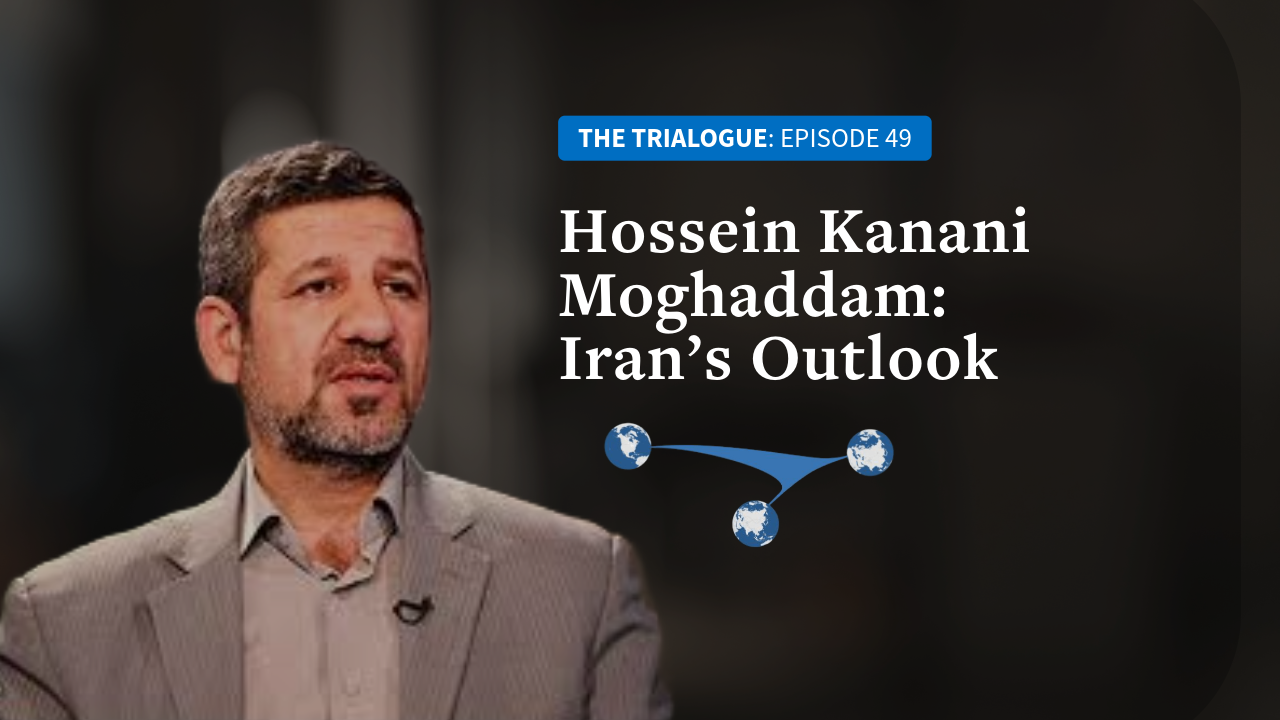
This is an unedited interview transcript with Hossein Kanani Moghaddam, presented by the Stimson Center (a establishment think tank). The framing centers an Iranian IRGC commander's perspective on nuclear proliferation and regional resistance without editorial counterbalance, journalistic scrutiny, or contextual disclaimers about his background. Language choices like 'workaround' for nuclear weapons hosting and the unchallenged assertion about Saudi Arabia possessing nuclear weapons reflect a framing sympathetic to Iran's geopolitical narrative.
Primary voices: elected official, academic or expert
- This article does not address international non-proliferation frameworks or IAEA assessments of Iran's nuclear program
- This article does not include counter-perspectives from U.S., Saudi, Israeli, or other regional security analysts
- This article does not contextualize Kanani Moghaddam's specific role in IRGC operations or his current political standing
- This article does not verify claims about nuclear weapons storage or proliferation arrangements
Framing may shift as Iran's political leadership and nuclear negotiations evolve, particularly if election dynamics or JCPOA-related developments occur.
Government-sourcedEstablishment framingCharged language
Hossein Kanani Moghadam: Saudi Arabia at this time, they have a bomb. They have a nuclear bomb, but keep this nuclear bomb inside Pakistan, not in Saudi Arabia. And maybe we have some bombs kept in North Korea, in China, in Russia —
Peter Slezkine: In North Korea, China. Okay, I understand. That is an interesting workaround. So you are saying that Russia, China, North Korea might sort of host an Iranian bomb on their soil that Iran and the host country control jointly?
Peter Slezkine: Could we begin with a brief biography? Where were you born, and in what year?
Hossein Kanani Moghadam: Thank you very much for this interview. I was born in Iran, the city of Hamedan, in the west of Iran, in 1959. And at this time I am living in Tehran, in Iran. And the position at this time — I’m the leader of the Green Party in Iran. And we had a lot of positions during the war between Iran and Iraq in the IRGC — former commander of the IRGC.
Peter Slezkine: So you were 20 years old during the revolution. What were you doing at the time? What role, if any, did you play?
Hossein Kanani Moghadam: Well, yes. We had a lot of positions. For example, the commander of the operation, and head of the IRGC, all throughout the war. And —
Peter Slezkine: But what about in 1979? What were you doing in 1979? What did you think of the Shah? How did you become involved with the Islamic Republic?
Hossein Kanani Moghadam: At that time I was a student in the university, and we had a lot of activities about the anti-Pahlavi and anti-Shah movement. And I was a member of one group supporting the Islamic Republic of Iran and the Revolution. And I joined the IRGC for the war against the Iraq regime. And we had a lot of trips to Afghanistan, Iraq, Syria, Lebanon, and other places to help the resistance groups, Islamic groups, in this area.
Peter Slezkine: So once you were already part of the IRGC, you had fought in the war with Iraq, and then you also took a tour of the region as part of your IRGC responsibilities. But again, to return to 1979 — you were a student. You opposed the Shah’s regime. Were you driven mostly by religious sentiment, or by a sort of anti-colonial, anti-Western, anti-Zionist framework?
Hossein Kanani Moghadam: Yes, we had a lot of purposes for fighting against the Shah. One of them was for the freedom of the people of Iran, and another was anti-United States, because they tried to keep Iran like a colony of the United States. And we had some activities against Zionism, international Zionism. I am not anti-Jewish, I am anti-Zionist, because there is a difference between the religion of the Jewish and Zionism in this area. And we helped the resistance Islamic groups in Iraq and other places. And we had some responsibility especially in Iraq, and joined the Faylaq Badr. That is the name before the Hashd al-Shaabi. And we had communication and cooperation and helped them — for example, education and training — for fighting against the United States.
Peter Slezkine: What is the Islamic Republic as far as you are concerned now, and what did you envision at the early stages when you were a student and the revolution was unfolding, and then you joined the IRGC?
Hossein Kanani Moghadam: You know, during my studies in the university before the revolution, the SAVAK — a security part of the Shah regime — captured me and I was in jail. And at that time I understood that the Shah regime followed the policy of the United States, and the United States occupied Iran through the Shah. And we tried to free my country and fight against the Shah, and after that, fight against United States policy in Iran.
Peter Slezkine: You are an engineer by training, right?
Hossein Kanani Moghadam: Yes, that’s right. I’m a civil engineer. I studied engineering in Iran and in the UK, in London, nearly five years, in the United Kingdom.
Peter Slezkine: So when were you in the United Kingdom?
Hossein Kanani Moghadam: I think about 30 years ago — 1975. I was in the UK, in London, at the South Bank University in London.
Peter Slezkine: And what did you think of the UK, of London, of the West as you saw it then? Was it part of the kind of occupying West that was overthrown during the revolution, or do you have fond memories of your student days in the UK?
Hossein Kanani Moghadam: You know, United Kingdom policy follows that of the United States in Iran. And for more than 100 years, the United Kingdom tried to occupy Iran, like a colony. And they were a friend of United States policy in the Middle East. And they used some policies — not fighting against Iran directly, but helping NATO and the United States in any treaty against Iran.
Peter Slezkine: Right. Well, Iran was clearly a British zone of interest before the Americans became involved, and the overthrow of Mossadegh was a joint American-British operation. But so you felt no problem going to the UK as a student?
Hossein Kanani Moghadam: Yes. We had two positions at that time. One was Iran’s diplomatic mission — for science diplomacy — and living in London. And during that mission, I studied in the university and continued the civil engineering.
Peter Slezkine: You mentioned being anti-Zionist, not anti-Jewish. In your resume, it says that you have been head of the International Anti-Zionist Association. Is that right? What is that association, and what is its purpose?
Hossein Kanani Moghadam: Yes. Nearly 40 years ago, we established this association for the purpose of saying that Zionism is different from the Jewish religion. Zionism is a party — an international party in the world — and they tried to establish Israel like a proxy country for the United States. And at that time we tried to situate the activities of the Green Party and the Anti-Zionism Association as different from the activities of anti-Jewish — that is a name that is antisemitism. We are not antisemites, you know. Antisemitism was established by Jewish Zionism, not by the Jewish religion. And we tried to say to other Muslims in the Middle East that the Jewish religion is different from Zionism, and we have to fight against — according to the order and idea of the Supreme Leader at that time, Khomeini — Israel is the biggest threat against the Muslims in the future. And we tried to fight against them and surround them by the resistance, the Islamic groups.
Peter Slezkine: So you make a distinction between Jewishness as a religion and an ethnicity, and Zionism as an ideology. Is there a distinction between Zionism and the Israeli state? For Iran, can the Israeli state exist legitimately if it somehow adopts an ideology that is not Zionism?
Hossein Kanani Moghadam: You know, Israel occupied the land of the Muslims in Palestine, in Lebanon, in Syria, and other holy lands of Islam. And the Jewish is different — it is a religion. I believe, if I cannot believe in Moses and the religion of the Jewish, and if I cannot believe in Jesus and the Christian religion, I cannot say I am a Muslim. A condition before believing in Islam is to believe in the Jewish and the Christian. But Zionism, as a party in the world, they keep — they occupied the Jewish ideology for gathering other people from all over the world to establish a country like Israel — like a military group to occupy other lands in this area and the land of the Muslims.
Peter Slezkine: You are also head of the Green Party, as you mentioned. What is the Green Party? When was it founded? What is its political purpose?
Hossein Kanani Moghadam: Yes. Thirty-five years ago, we established this party in Iran — the Green Party — and the main activity is the environment, keeping the environment, and human rights, and fight against any threat against Iran by other countries like the USA or others like Israel and as well like that. And we try to establish a new policy in parliament and in other organizations in Iran to pursue activities for keeping the environment in Iran. And this is the main activity.
Peter Slezkine: How successful has the party been? How many members of the Majlis do you have?
Hossein Kanani Moghadam: If you look and search on Google, you can find the activities of the Green Party. We have many activities during elections — for prime minister, for parliament, for other elections in Iran. And at this time I am a member of the House of Parties in Iran, and we have a high level of responsibility in the parties’ house in Iran.
Peter Slezkine: So the structure of the Iranian state is, I suppose, opaque to many outside of it. How, or what, if anything, has changed since the Israeli-US attack on Iran — the twelve-day war from a year ago — and the war that continues today? Much of the leadership, of course, has been killed during wartime. Power is transferred from one spot to another. So who is in charge now? What are the various centers of power in Tehran as we speak today?
Hossein Kanani Moghadam: You know, after the attack by the United States and Israel on Iran, they had a lot of aims for that. One of them was regime change. They tried to kill the Supreme Leader Ayatollah Khamenei, and then the headquarters of the army and IRGC, and commanders of that, to achieve regime change. But they didn’t do that. And another aim was a coup d’etat inside Iran, and they tried to separate some parts of Iran by fighters from the Kurds or other nations from the neighborhood. And they didn’t do that, and they cannot do that. And another aim was control of the energy in the Strait of Hormuz. And Trump tried to surround it and blockade it, and keep the army and navy inside the Persian Gulf for that. At this time the Strait of Hormuz is under control of the IRGC and Iran, and they cannot do that. And I think they had a big mistake about that — a false calculation. And fourth, I think they tried to gather other countries and alliances — for example, NATO and Arab countries — to surround Iran and share with the United States against Iran. But they didn’t do that. You know, NATO is not following the policy of the United States against Iran, China, and Russia as well. And other Arab countries in the south of the Persian Gulf — they cannot accept going to war against Iran. And fifth, the United States tried to keep the military bases in the Persian Gulf. But during the war, we attacked most of them — nearly twenty-seven bases of the United States destroyed by missiles and drones and attacks from the IRGC and the army. I think all five of those aims were not possible for the United States. And they are now trying to start negotiations and a deal with Iran. And they have some conditions for the nuclear power and the activities of defense, like the missiles and the drones. And they try to pressure Iran through other colleagues to control Iran. But as you look at the news at this time, Iran is staying in the Strait of Hormuz and in control of that. And Israel and the United States — I think they may try to attack Iran again, maybe in the Persian Gulf — attack some ports and islands in a very limited operation, not a very long-term operation against Iran. And the scenario, I think, of the United States is that they try to involve Pakistan to occupy Afghanistan again and Bagram, and stay on land, because they cannot stay in the water — in the Oman Sea and the Indian Ocean and the Persian Gulf. And by staying on land in Pakistan, they try to collapse the Taliban government. And for the future, they would use this land against Iran in the east, on the border of Iran.
Peter Slezkine: So you think Trump’s interest in Bagram and Afghanistan and Pakistan is an attempt to encircle Iran from the east? But let’s get back to the functioning of the Iranian state. You say that the US and Israel sought to destroy the Iranian state. If that was an objective, it obviously has not succeeded. Iran has shown that it can inflict pain on the US and its partners and the global economy. But Trump often says that regime change has succeeded because the old leaders are no longer alive. So of course, Reza Pahlavi’s son is not in Tehran, so regime change in the old American definition has not happened. But Trump has redefined the term. So if there is a new generation of leaders in Tehran, who are they? What role does the IRGC play? Who is in power? Who has a mandate to talk to the United States or anyone else?
Hossein Kanani Moghadam: If you look at the strategy of Trump — according to Brzezinski’s strategy of the madman, the president of the United States must be a madman — he has a lot of fake news. And the regime change, collapsing the government, is not what happened — they did not change the leader. At this time, the son of the last supreme leader Ayatollah Khamenei is younger and he is the supreme leader at this time, according to the law of Iran. And the Iranian people accepted this position for the new supreme leader. This is not regime change, you know. And this supreme leader — I know very well his character and background for managing military activities and policy and the economy as well. And he at this time controls everything and is head of the IRGC. The IRGC is under the control of Seyyed Mustafa Khamenei, who is the new supreme leader. And the parliament and the president, Pejman. And we have in the news today that they had a meeting with the supreme leader, more than two hours. And they say he is very strong, and very capable, and very strong in controlling other organizations that are under the control of the supreme leader. And the other organizations — army, IRGC, and everything — are working in a normal situation after the war, nearly 40 days on. And if you look at the streets and the squares in Tehran and other cities of Iran, the people are staying and demonstrating, supporting the supreme leader and the government for continuing the fight against any threat from the United States and Israel. I think the propaganda of Trump against Iran, and fake news, they exported to Iran for the control of the minds of the population in Iran.
Peter Slezkine: But granted that the regime is still in place, it has of course changed. As you say, there is a new supreme leader who is the son of the old supreme leader. During times of war, the role of the military, of the IRGC, must have changed. So when the people come out to the square, who do they believe is representing them? Do they believe the model has remained unchanged, or that Iran has come out of this war — the state, the Islamic Republic — transformed in some fashion?
Hossein Kanani Moghadam: You know, the model of government for Iran is not like the liberal democracy, the nation-state government and leader. Iran’s model is the Islamic model — that is the Ummat and Imam. Imam is the supreme leader, at this time alive, and they have control of Iran. And Ummat is the people in the street and in the other organizations. I think this model can continue with any attack from the United States or Israel, because the people support this government. You know, good government and good governance — good government is when the people are at the top of the organization of the government. And good governance is the behavior of the government to solve the problems of the people — economy, culture, and other things. And they can defend Iran against any threat. I think at this time everything is in a normal situation. But we have some problems and a sensitive situation. We have a sensitive situation, but we can solve this, and we are staying very strong against any attack and conflict against Iran.
Peter Slezkine: When the people come out into the square to support Iran during a difficult time — during a time of war, missiles are falling — what is the motivating factor for them, if you had to compare the religious impulse, Shia Islam, Iran as the Islamic Republic, or Iran as an ancient civilization, the idea of Persia, that some great state has existed in this part of the world for many, many centuries? Are these ideas combined? In what way are they related? What do people emphasize now?
Hossein Kanani Moghadam: After the revolution — the Islamic Revolution — we combined the ideology of Islam and nationality in Iran. And at this time both of them are combined and joined together and working very well for the continuation of the Islamic Republic of Iran. And I think the United States tried to separate and divide these two. For example, Reza Pahlavi, the son of the Shah, they tried — “Okay, I am the nationality,” and Kourosh Kabir, and like that they sent many sentences to the Iranian people. But the Iranian people did not accept that because they are staying to support Iran and Islamic ideology. This Islamic ideology is Shia — a follower of Imam Hussein — and they fight against Yazid, you know, at that time. And they say we cannot follow the zulm — the heart of Nazir, let us say — the sentences for the Shia, repeated again all the time. I think Iran at this time uses both of them and combines the ideology of Islam and Shia and uses the nation and nationality. And if you look at the resistance groups in this area, we supported Sunni groups — for example, Hamas and other Palestinian groups that are not Shia — but we supported them. And this is not just Shia — we follow Islam, the Holy Prophet Muhammad Rasulullah, and the Holy Quran, the book of Islam. And I think the Ummah is gathering all the Muslims in this area together for standing against the United States and Israel.
Peter Slezkine: So what is your vision of regional stability at some point in the future? Would that require a total transformation or elimination of the Israeli state and the withdrawal, at least militarily, of the United States completely? Or is there some equilibrium that could be found in the near future with America still present and Israel politically still similar to what it is now?
Hossein Kanani Moghadam: We have two problems with Israel. One is that they try to establish a greater Israel and occupy other lands of Palestine, Lebanon, Syria, Saudi Arabia, Iraq, and other places. We are standing against this theory and this plan for occupying other land. And the United States supported them for this policy. And the second problem with Israel is they are a terrorist country. And they have to be collapsed and removed from this area. If they continue to use terrorist activities against other countries like Iran and attack some leaders of Iran, we cannot just stand and look at that. We would attack all the bases — for example, Tel Aviv, Haifa — and destroy all of them. This is a red line for Iran. But the Supreme Leader Ayatollah Khomeini had a plan for a referendum in Israel in the future. This is a democratic plan. They said, “Okay, all the Palestinian, Jewish, Muslim, Arab, and Christian people — all of them — gather and choose one government according to an election.” We accept that — they try to have a new government for all the Palestinian people. We can follow this plan of Ayatollah Khomeini. But I think Israel, the proxy of the United States, uses just guns and aircraft against the Muslims. They have no resolution for solving this problem.
Peter Slezkine: You just said that Israel was a proxy of the United States. Over the last year, who do you think has been the driving force — Israel or the US — in determining when and how to attack Iran? Who is making the decisions? Who is the driving force behind these offensive operations?
Hossein Kanani Moghadam: You know, the one percent of the rich men in the United States — all of the economy of the United States is occupied by one percent, and all of that is the Jewish. They have a lobby inside the United States — that is the AIPAC lobby. And they have control of the parliament, the Senate, the Congress, and the president of the United States, because they paid money for elections inside the United States. And if, for example, Obama didn’t like to follow the policy of this lobby, they removed him from power. I think Netanyahu has a lot of information against Trump — the Epstein file. And they tried to use that to push Trump to follow the policy of Israel and the AIPAC lobby — to push the United States to go to war against Iran. I know about some leadership and some army and some members of the parliament in the United States and Congress — they don’t like to go to war. You know, the big idea for MAGA is that the war is finished and we are going to peace. Trump used this sentence to take more votes from people inside the United States. But the lobby of Zionism in Israel and Netanyahu tried to push Trump — “Okay, no resolution, just fighting against Iran directly.” You know, during the forty-seven years, we have had a lot of sanctions, embargo, blockade, coup d’etat, fighting — indirect and direct — with the United States. The United States supported Iraq during the eight years of war between Iran and Iraq. And they supported royalists and other opposition and sent guns to the Kurdish groups. As you know, they said in interviews, “Yes, I sent many guns to the Kurds, but they sold them to other groups.” And they tried a coup d’etat inside Iran. You know, before we had a coup d’etat — Nour — in Iran, that is a coup d’etat directly supported by the United States, Mossad, and CIA. And during Prime Minister Mossadegh, they conducted a coup d’etat against him by the United Kingdom joined together — that is the operation AWACS against Mossadegh. [FLAG: speaker likely means Operation Ajax] There was one elected by the people who tried to establish a new government, calling it democracy at that time. I think the behavior of the United States is under the control of the policy of Zionism — not just Netanyahu, but the international Zionism.
Peter Slezkine: So you think the Israel lobby in the United States has influenced the US to attack Iran? And you believe this has been done through campaign donations, and even perhaps the threat of blackmail through Epstein connections?
Peter Slezkine: You think that is the case? Well, I suppose that is an argument inside the United States as well. Epstein is a subject of great interest to all. You mentioned that if Israel were to attack the Iranian leadership again, that is a red line, and Iran would respond by sending missiles to Tel Aviv and elsewhere. So Iran has done this now, has responded forcefully, has hit Israel, has hit Gulf countries, has closed the Strait of Hormuz. Do you believe that this demonstration of force creates sufficient deterrence going forward? Or must Iran inflict more pain on Israel, the Gulf countries, the United States, the globe, in order to prevent future attacks? Or is diplomacy ultimately the only resolution? What can prevent — or defend — Iran against future attacks, in your mind?
Hossein Kanani Moghadam: During the war 40 days ago, we had a new experience about how we can destroy Israel — not just the bases of the United States in the south of the Persian Gulf. Because we tried to take hard revenge against Israel because they killed the Supreme Leader Ayatollah Khamenei. And if they try to attack against the new supreme leader, at this time we use all the capability and capacity of the army, IRGC, air force, navy, missiles, and drones against Tel Aviv and Haifa directly, with concentration on those places. And I think Israel knows about that. We have a lot of capability and new range of missiles — the head of each one maybe 2,000 kilograms of explosive — and ten of those is like one tactical atomic bomb. But I think Israel cannot attack Iran alone. They try to have the United States follow them, and the United States attacks directly against Iran. But I think Trump has a new experience — if they want to come, like during the war 40 days ago, this is a trap for the United States. If you look at the operation for the freedom of the Strait of Hormuz by the navy — they tried to maneuver in the Persian Gulf — after two missiles, after the IRGC attacked them, they said, “Okay, cancel this operation now.” Every time they say nonsense, like a policy joke in the operation. I think the Congress and the army of the United States — they don’t like to follow Trump’s policy of attacking Iran. I think Israel would go to a defense posture and try to keep the government if the United States doesn’t want to attack Iran with military forces.
Peter Slezkine: But do you believe that Iran has already shown enough that the US is reticent to attack further and will think twice before launching a third attack? Or is there a danger that Iran has already played all of its cards — to use Trump’s favorite analogy — that you have hit not only Israel but Gulf countries, closed the Strait of Hormuz, and that there is little possibility to go further up the escalatory ladder?
Hossein Kanani Moghadam: I think the United States will try to push more against Iran in international law and from the Security Council in the United Nations. They want to establish a new statement against Iran, and Iran accepted, like the war between Iran and Iraq, and the statement issued by the Security Council in the United Nations about a ceasefire — and both parties, both countries, must stop the war. Maybe this is one of Trump’s plans. They try to use the policy of China and Russia, England, Japan, and other countries to push against Iran by issuing a new statement against Iran. But another choice that Trump may pursue is a limited attack against some ports and islands and saying, “Okay, I am the winner, and I am out of this war.” Because this is a big trap for the navy. My estimate — because we have a lot of experience with military activities in the sea and the Persian Gulf — if they want to attack by marine services and forces and operations on land, at minimum more than 1,000 soldiers and officers would be killed in this attack. And Iran is staying on land, on this motherland, and the United States is on the sea, in the water. This is not possible. They cannot carry out any operation against Iran successfully. And Iran is not Venezuela, Iran is not Libya, Iran is not Iraq, Iran is not Afghanistan. Iran is Iran. And the military forces in Iran are very strong, and we are a powerful country at this time.
Peter Slezkine: So you would almost welcome an American attempt at a land invasion because you believe it is a trap for US forces?
Hossein Kanani Moghadam: We welcome the soldiers of the United States coming to the land of Iran. This is a dig of them, not the land for them.
Peter Slezkine: Well, so let’s say that Trump does not choose that path. He has avoided it so far, but he has threatened to continue bombing — to bomb like bombing has never been conducted before. What do you make of that threat?
Hossein Kanani Moghadam: That is like propaganda. This is the propaganda of Trump. I don’t believe they want to. Maybe like a Hollywood film, they try to stage a demonstration of war against Iran, but they know very well they cannot occupy the land and islands of Iran.
Peter Slezkine: But what about just bombing — because he has threatened to bomb all the bridges and energy infrastructure?
Hossein Kanani Moghadam: Yes, maybe. They could do that — attack any structures, bases, power plants, and like that. But they will not —
Peter Slezkine: But as a civil engineer, what do you think the consequences would be? How quickly could Iran recover and rebuild if Trump were to try to blow up every bridge and energy plant?
Hossein Kanani Moghadam: Yes, but we need a peace situation, and safety, and the budget, and many things for the rebuilding and reconstruction of all the damage. But we can do it. After the war between Iran and Iraq, many of the constructions, bridges, railways, and airports were destroyed by Iraq. But after that, we reconstructed better than before.
Peter Slezkine: Well, I suppose Germany and Japan are demonstrations of how one can build back better — to use a Biden phrase — after being bombed and leveled. Should Iran have a bomb? Is the old fatwa still in effect? Has this attack motivated Iran to get closer to reaching a bomb, or has effective deterrence in other areas made the bomb less of a priority? What is Iran doing right now — enriching uranium? What is the Iranian position?
Hossein Kanani Moghadam: What is your meaning? I don’t know. What is your meaning?
Peter Slezkine: Well, I understand that it was never official Iranian policy to pursue a bomb, but the nuclear program was very important, and the perception by outsiders that Iran was approaching the nuclear threshold was very important, at least rhetorically. In the last years, there were deals signed to avoid Iran going past a certain point in its nuclear program. So what is the Iranian position now? Has it changed in one direction or another as a result of the war?
Hossein Kanani Moghadam: No. We follow the Supreme Leader — Ayatollah Khamenei before, and the son of the Supreme Leader, the new supreme leader — about the policy of the doctrine of defense on the use of the nuclear bomb against other countries. We obey the order of the Supreme Leader, and we don’t want to make and use the nuclear bomb against other countries. And we follow that. If you look at the policy of Iran for nuclear activities — it is about peaceful use, for agriculture, for medicine, for clean water, for power stations, for electricity, and like that. And the enrichment of uranium for peaceful activities — this is a red line for Iran. And the United States all the time tries to say by propaganda that Iran is going for the nuclear bomb. If we wanted to make a nuclear bomb, it would be very easy for us, because we have the science and knowledge about that, and we have the missiles to carry the nuclear warhead, and we have uranium at sixty percent and above. And we have a fuse, and the knowledge of that fuse, to combine the three elements, like a bomb. But the policy and the doctrine of defense is not to use the bomb like that. But we have another program for using an umbrella against any threat of an atomic bomb against Iran. You know, the umbrella — we have to build it for defense against any nuclear threat. For example, Israel has nuclear bombs, and the United States as well. But we can join, for example, China and Russia and other countries to make an umbrella for defense against any nuclear threat. We are following this policy, and at this time we are trying to build a new umbrella for the defense of Iran. But we don’t want to follow the fake news of the United States.
Peter Slezkine: But you are saying that Iran is approaching China and Russia to consider the possibility of one or both of those countries extending its nuclear umbrella to cover Iran?
Hossein Kanani Moghadam: Yes. I think this is the best way. If you don’t want to use the nuclear bomb, you have to, for defense, use the umbrella with other countries and a coalition.
Peter Slezkine: And you think China or Russia might be willing to do this?
Hossein Kanani Moghadam: Yes. I think they accepted that — if Russia, and maybe South Korea as well, they came and made this umbrella —
Hossein Kanani Moghadam: Yes. North Korea is one of them.
Peter Slezkine: Although it is hard to believe that Russia would threaten to use a nuclear bomb to protect Iran when it has its own problems in Ukraine. It is invoking the nuclear threat there. And if Iran and Russia don’t have a conventional mutual security treaty, then it is hard to imagine a nuclear agreement. But in any case — you can answer that question, but also the broader question of Iran’s relations with China and Russia. How close are these partnerships? What role do Russia and China play in Iranian foreign policy, in the Iranian economy, and in Iran’s resistance and defense during this war? How much support are they providing?
Hossein Kanani Moghadam: Yes. You know, we have a true agreement with Russia and China — 20 years and 25 years — during this agreement about defense capability, cooperation, and coalition about security, economy, and many types of activities. And Russia and China at this time during this war supported Iran very well — in the Security Council of the United Nations, supporting Iran against any sanction and embargo against Iran that the United States tried to use. The sanction and blockade against Iran — they did not follow the policy of the United States against Iran. At this time, China and Russia are staying and supporting Iran against the policy of Israel and the United States.
Peter Slezkine: But so there is historical support — resistance to US policies at the UN level. At different times they have not fully followed international or American or Western sanctions, although that has ebbed and flowed over time. So describe the relations with Russia and China now.
Hossein Kanani Moghadam: I think the new generation of powerful countries in the world — China and Russia — has the biggest role for controlling this change, this new generation of power in the world. And they try to fight against the hegemony of the United States against China and Russia in the Middle East. I think they are successful in keeping the United States on the outside of the war — outside of the war in China. [FLAG: likely means Ukraine or Taiwan] You know, that is the China war. I think the next step — you know the plan of China for the One Belt, One Road — to expand the economy and power and hegemony of China to the West. This is the next step of that. And without Iran, they cannot do that. They need Iran. And combine the power of China and Iran to fully support this plan — the One Belt, One Road from China.
Peter Slezkine: So you believe Iran is essential to China because it is integral to any effort to build One Belt, One Road because of Iran’s size and location in Eurasia. What about relations with Russia? There was just a high-level meeting in Moscow. The Iranian foreign minister met with Putin, which is unusual because of the break in protocol to have a foreign minister meet a president. So what are the issues being discussed now, as far as you can tell?
Hossein Kanani Moghadam: You know, Mr. Arabshahi [FLAG: likely Araghchi], the foreign minister of Iran, had a trip to Pakistan and Moscow, and met with President Putin. President Putin gave full support for Iran and against the policy of Trump in the Middle East. And I think Putin has some problems about NATO and the war between Russia and Ukraine at this time. But I think they have a main role for the future of the Middle East, and they support Iran as a friendship and neighboring country to stop the hegemony of the United States in this area.
Peter Slezkine: And do you think Russia is doing anything in material terms to oppose American hegemony in the Middle East?
Hossein Kanani Moghadam: Yes, I think they need — not material — they need Iran for stopping the hegemony of the United States in the Middle East.
Peter Slezkine: And so you have discussed, in the context of the nuclear umbrella, North Korea, China, Russia. In the US, there are many who group these countries together — Iran, Russia, North Korea, and China — as a sort of evil axis, to quote Bush Jr. Is there something to it? Obviously, you wouldn’t characterize it as evil, but do you believe that these four countries do constitute a special kind of coalition?
Hossein Kanani Moghadam: I think they have a coalition at this time and they support Iran. If Iran keeps this policy and doesn’t make a nuclear bomb, they support Iran for peaceful activities in nuclear power. And I think at this time some other countries — maybe Pakistan and India — they would like to combine into this coalition. But I think in the future, Iran would be like the model of Pakistan. They can test the fuse of the nuclear bomb, but not use it, and keep the enrichment and power station and nuclear power for peaceful activities.
Peter Slezkine: You said the model of Pakistan — but Pakistan does have the bomb.
Hossein Kanani Moghadam: Yes. I think it is like Pakistan, but with some differences. For example, Arabistan — Saudi Arabia — at this time, they have a bomb. They have a nuclear bomb, but they keep this nuclear bomb inside Pakistan, not in Saudi Arabia. And maybe we have some bombs kept in North Korea, in China, in Russia —
Peter Slezkine: In North Korea, China. Okay, I understand. That is an interesting workaround. So you are saying that Russia, China, North Korea might sort of host an Iranian bomb on their soil that Iran and the host country control jointly?
Peter Slezkine: Interesting. What is the future of the Strait of Hormuz? Is there a scenario in which the US and the West lifts all sanctions against Iran, pays back some frozen assets, and Iran restores free navigation — which China also probably prefers — or do you believe that Iran is going to control the Strait from here on out?
Hossein Kanani Moghadam: You know, we have a new law in the parliament of Iran for how we can control the Strait of Hormuz and take a tariff — like the Suez Canal, the Bosphorus, Panama, Malacca, and like that. And in this new law, at this time the situation is war, and we cannot use this law at this time. But the IRGC sent a message to all vessels and other countries, “Okay, we are ready — if you want to pass through the Strait of Hormuz, send a message and get acceptance for that and a license.” And the United States and Israel and some colleagues of the United States who were fighting against Iran during this war — they cannot pass through the Strait of Hormuz. But other countries like China, Japan, Russia, and South Korea as well — if they get permission, okay, they can pass through. And China at this time is doing that, and there is no problem for them in the Strait of Hormuz.
Peter Slezkine: And China is not paying a toll, or is China paying Iran to go through the strait?
Hossein Kanani Moghadam: China is a problem for the blockade of the United States. They trade against the —
Peter Slezkine: No, but China is getting permission from Iran to transit through the Strait of Hormuz. But they are not paying now, or are they paying?
Hossein Kanani Moghadam: Yes. Because if they purchase oil from Iran, they don’t need to pay the tariff for that. And if they purchase oil from other countries in the south of the Persian Gulf, they have to pay the tariff to Iran for passing through. Because we have to pay money for the security — keeping the security and safety for the transport of oil and gas through the Strait of Hormuz.
Peter Slezkine: In what currency are they paying?
Peter Slezkine: And do you see this as a system that will continue after this war ends, or is there something that the United States could offer in order to restore the free navigation that existed before the war?
Hossein Kanani Moghadam: I don’t think after the war the United States navy can pass through the Strait of Hormuz. Just only vessels that carry goods, oil, and gas. And no military forces, aircraft, or warships can pass through the Strait of Hormuz. The bases of the United States — maybe five hundred — they must be closed, and all vessels, warships, and aircraft moved from those bases outside the Persian Gulf. They cannot send logistics, missiles, and goods to those spaces.
Peter Slezkine: As far as you are concerned, has Iran won this war or survived it? It is very difficult to answer this question. Well, it is the final question, so think hard.
Hossein Kanani Moghadam: I think no peace, no war is not good for Iran. We have to finalize the war. And we need a peaceful situation — not temporarily. We want to go to a peaceful situation for at least 20 years of stability. For this peace — if the United States says, “Okay, ceasefire, peace” — it is not impossible for Iran to accept. We will keep fighting until the United States goes out from the Persian Gulf and the sea.
Peter Slezkine: But if no peace, no war is not a suitable state of affairs, can you envision a durable settlement that Iran will agree to with these particular interlocutors — with Trump, with Witkoff, with Kushner, with Vance? Is there a durable settlement that can be reached with the United States and can produce stability across the Gulf?
Hossein Kanani Moghadam: Yeah, that’s right. If they want to stay in the Persian Gulf and blockade Iran, there is no table for negotiation and a deal.
Peter Slezkine: But if the US removes the blockade, offers a compromise —
Hossein Kanani Moghadam: It is maybe — yes. Maybe it opens the window, not the door, of negotiation. Maybe it opens some window for continuing talks with the United States.
Peter Slezkine: Well, the negotiations seem to be ongoing, so we will follow the proceedings and perhaps reconvene afterwards for another discussion if the situation changes. So thank you so much for agreeing to engage in this lengthy conversation from Tehran.
Hossein Kanani Moghadam: Thank you very much. Thank you very much. Have a good time. See you again. Bye.
Comments
No comments yet. Be the first.
Sign in to leave a comment.